How to Create a Winter Interest Garden

By Philemon John
Lead Author & Cultivator • Peer Reviewed & Soil Tested
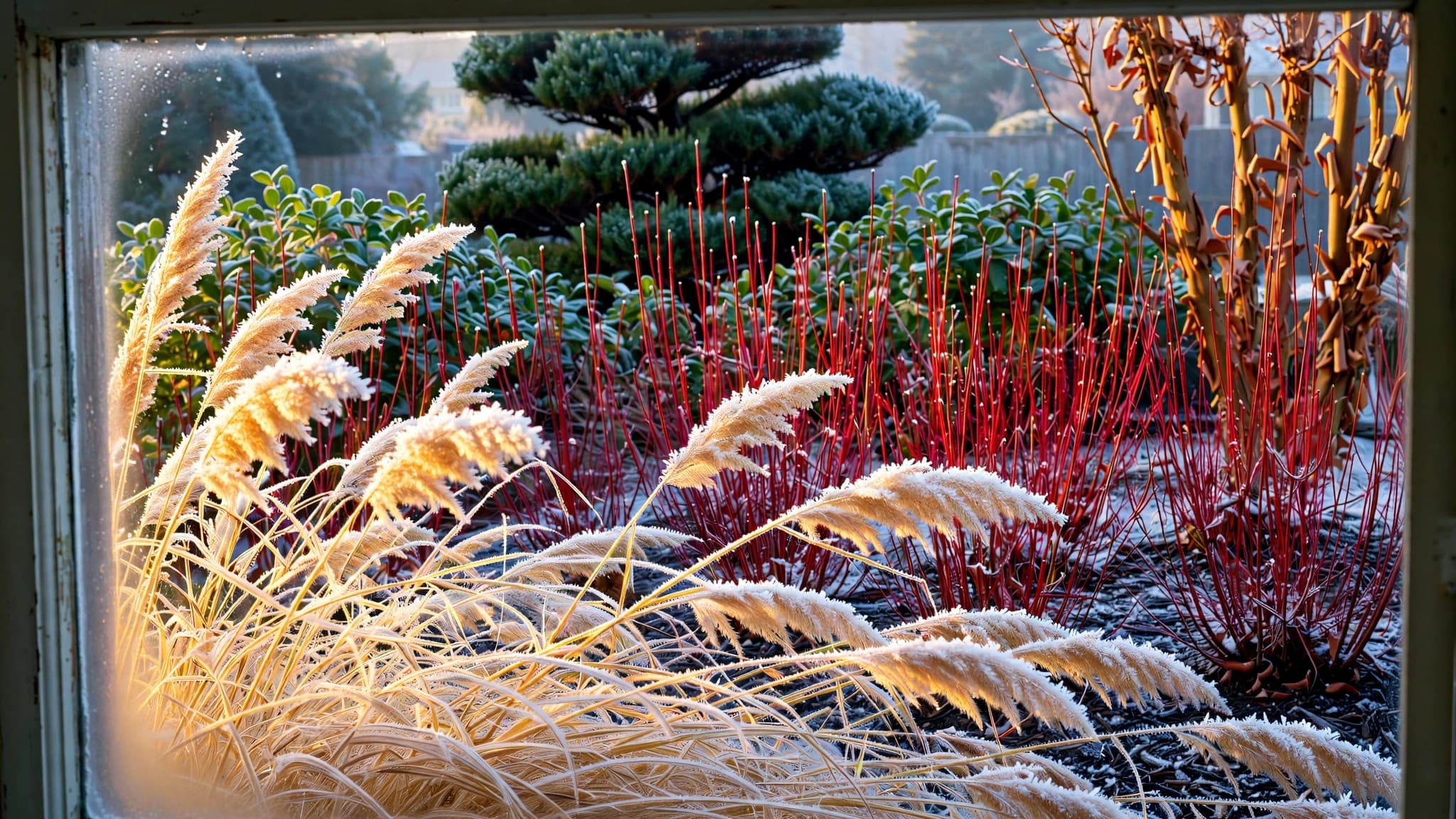
Imagine a gray January in Ohio, Pennsylvania or Minnesota. You are drinking coffee at the window of the kitchen and your yard is a crusty snow and a plain sheet of brown mulch. Imagine now, shiny red stems, and a plume of frosty golden grass and a deep green evergreen keeping its shape. This guide demonstrates how to create beds that are attractive in November through March with plants that can be purchased in the fall.
Quick Answer: Plant four layers in a cold-season bed evergreens to provide year-round bones, bark and colorful stems to provide eye-catching shape, tall grasses and seedheads to provide texture, and a few berries or early bloomers to provide accents. Fall planting, odd number grouping of plants and the bed where you can view it through a window or entrance. Trim away spent stems until late winter to allow the bed to retain its shape and provide food to wildlife.
Best Plants for Winter Interest: Build a Four-Layer Bed
Summer beds are flower beds. A cold-season bed is shaped, barked and textured hence the plan begins to be made in terms of structure as opposed to flowers. Imagine you are decorating a living room: you start with the large furniture and end with the small stuff.
The Four Layers Every Cold-Season Bed Needs
- Evergreen bones: The shrubs of needles and broadleaf provide the bed with a backbone that remains green even after the snow melts.
- Bark and stems: Branches are peeling, striped, or colored with bright colors, and they rattle against the snow and brown soil.
- Touch and seedheads: Tall grasses and wilted flower heads are frost-tipped and blown about by the wind.
- Accents: Late-winter and winter bloomers are like bursts of color and food to hungry birds.
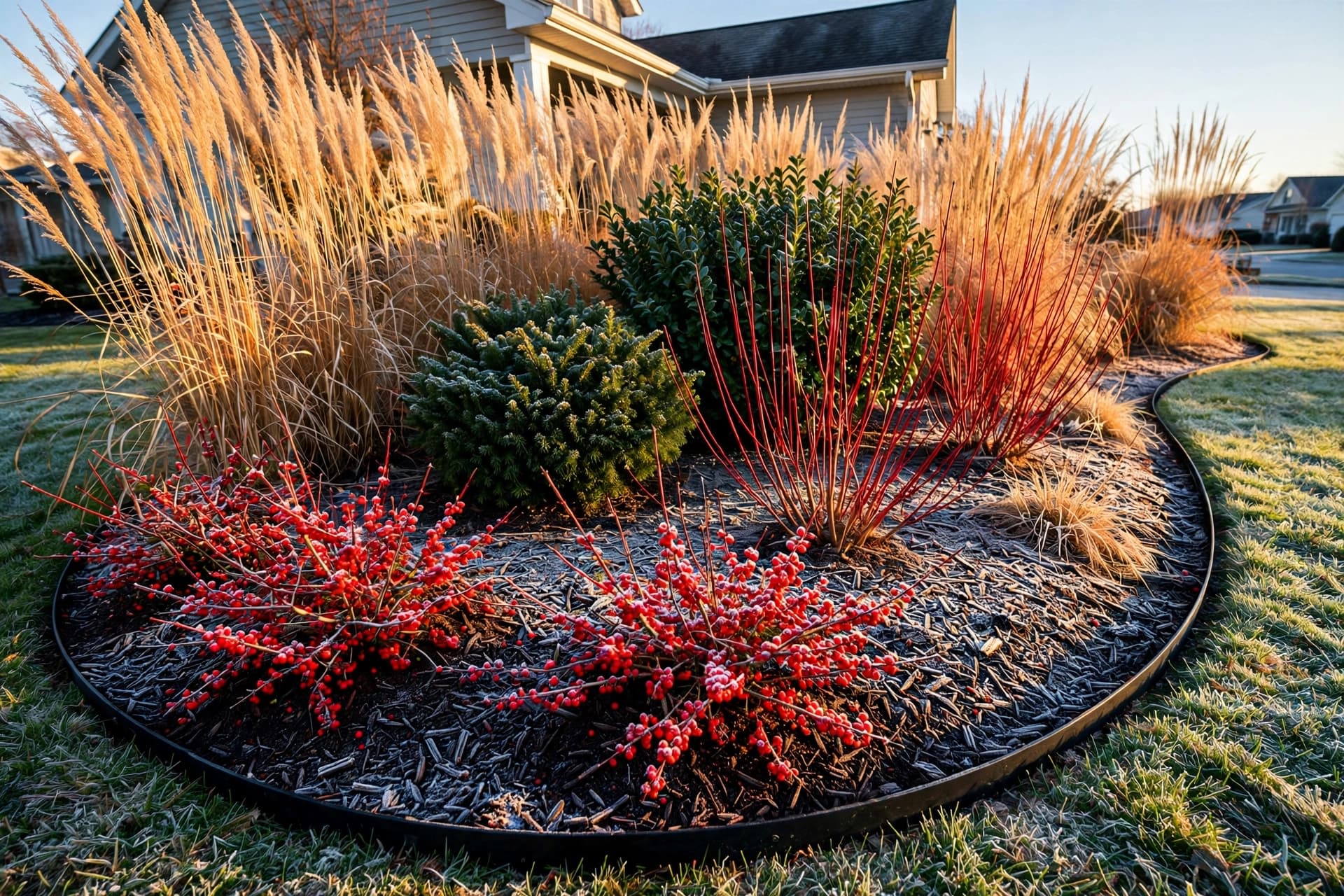
Even a foot of snow does not hide a bed constructed of four layers. The initial proportion is a mere one-third evergreens, one-third of the plants that are bark and stems and one-third of the grasses, perennials and accents. Modify it thereafter according to your sun, soil and space.
Top 10 Picks at a Glance
The following are ten trustworthy plants, which qualify their place once the leaves fall. The hardiness ranges are only approximate and therefore ensure that you verify your individual zone on the USDA Plant Hardiness Zone Map prior to purchasing. (Source: USDA Agricultural Research Service)
| Plant | Layer | Cold-season feature | Approx. zones |
|---|---|---|---|
| Inkberry holly (Ilex glabra) | Evergreen | Glossy, rounded green foliage | 4–9 |
| Hinoki cypress (Chamaecyparis obtusa) | Evergreen | Fan-shaped, sculptural branches | 4–8 |
| Paperbark maple (Acer griseum) | Bark | Peeling cinnamon-colored curls | 4–8 |
| River birch 'Heritage' (Betula nigra) | Bark | Creamy, salmon, and tan peeling bark | 4–9 |
| Redosier dogwood (Cornus sericea) | Stems | Bright red stems | 2–8 |
| Oakleaf hydrangea (Hydrangea quercifolia) | Bark and texture | Peeling bark and papery dried blooms | 5–9 |
| Feather reed grass 'Karl Foerster' | Texture | Upright golden plumes | 4–9 |
| Switchgrass (Panicum virgatum) | Texture | Tawny, airy seedheads | 3–9 |
| Winterberry holly (Ilex verticillata) | Accent | Red berries on bare branches | 3–9 |
| Hellebore (Helleborus × hybridus) | Accent | Leathery leaves and late-winter blooms | 4–9 |
How to Place and Plant the Bed
Place the bed where you will in practice see it: either outside the kitchen window, or on the walk to the front door, or at the end of the drive. A bed that you can only see through the back fence will not pay its own way. Even low winter sun illuminates grass plumes and shedding bark, so an open-sky location is a bonus.
The time to plant in the fall is so that the roots have time to stabilize before the ground is frozen; at least four or six weeks before a hard freeze. (Source: University extension service) What to do before the first frost Our checklist will help you know when it is just in time.
The most attractive cold-season beds repeat a handful of robust plants rather than gathering one of all. Keep in mind the following simple layout rules:
- Set the highest plants at the end, or in the middle of an island bed, and walk towards the sides.
- Plant in groups of three or five to give the bed an appearance of being designed rather than dumped.
- Repeat some critical plants in the bed to give rhythm.
- Space plants to the size they will be in the garden center, rather than their size at the garden center.
- Top with 2 to 3 inches of mulch maintaining a distance of a few inches between mulch and trunks and stems. (Source: University extension service)
Plant a few early-blooming bulbs between the shrubs to give you a surprise in late-winter. Daffodils and snowdrops are good choices, and our squirrel-proof bulb list indicates which of them are most likely to escape the attentions of squirrels.
Evergreen Shrubs for Winter Structure
The bones of the bed are evergreens. They retain the form of the garden when all the rest is naked, and their dark and peaceful hue contrast with the bark, stems, and berries.
Combine types of leaves to compare. Combine a fine, feathery structure such as hinoki cypress with a broadleaf structure such as inkberry holly that is glossy. Include a plant that is golden or blue-green to add some colour, but only one. There are too many accents, which make the bed busy.
Select small species that fit where. A shrub that reaches its full size of between 3-5 feet tall and wide can support a bed without shearing every year. Test the plant size of the plant tag and provide each plant room with the plant size.
Beware of winter burns. On cold windy days broadleaf evergreens lose moisture through the leaves and frozen soil prevents water uptake, thus the foliage appears brown and crispy. Plant them in case of strong wind, water till the ground is frozen, and place a layer of mulch.
Trees with Interesting Bark in Winter
After the leaves fall, the bark is now in the spotlight. Peeling, striped or shaggy trunks are sculptural against snow and you can see them every day through a window.
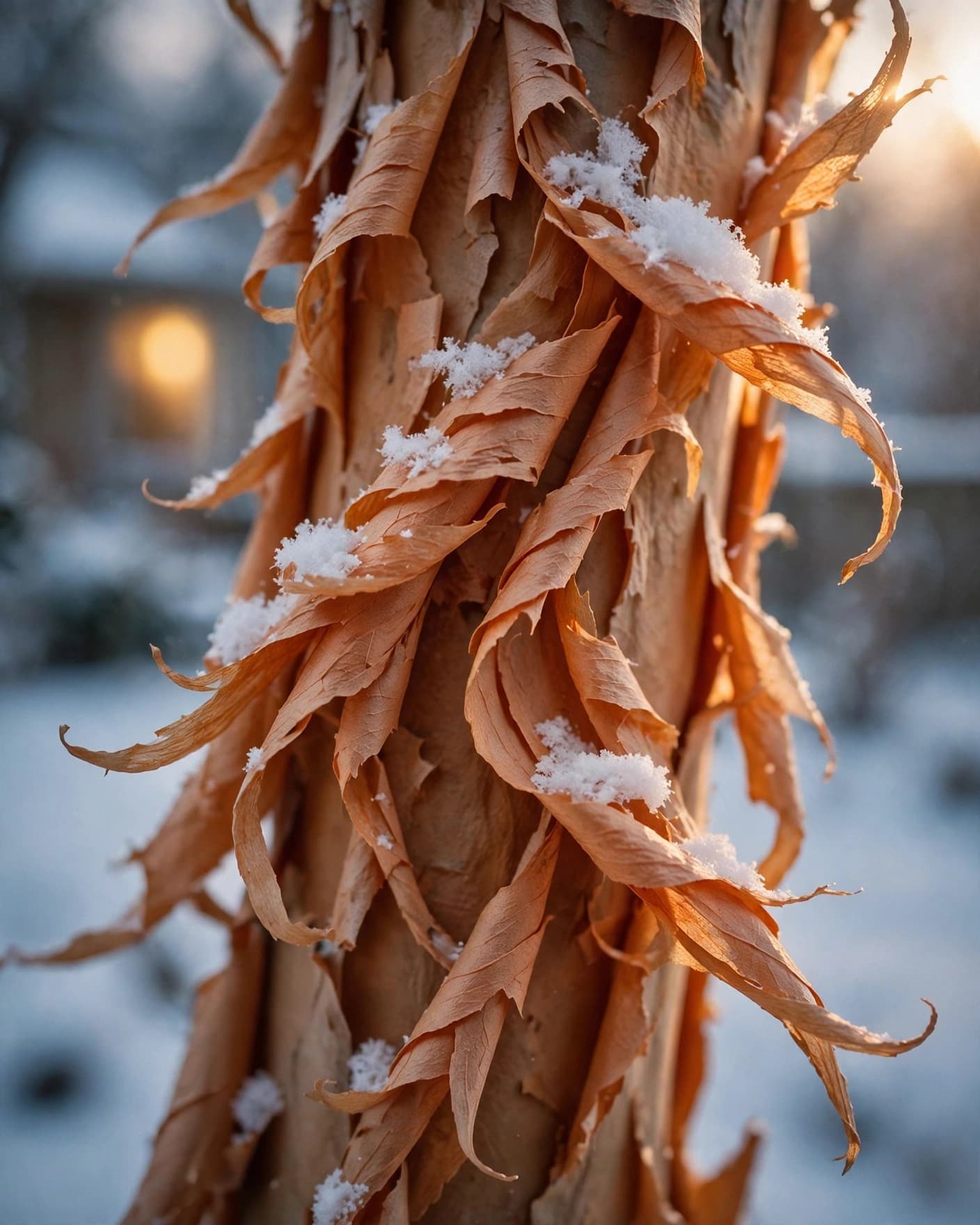
Paperbark maple is a highlight. It has a cinnamon-colored bark which peels off in thin, curling layers, and the tree remains small enough to occupy many yards, being about 20 to 30 feet high. River birch 'Heritage' is a larger variety, and its bark is creamy and salmon-colored, peeling off in strips, and being able to withstand damp soil. Coral bark maple is a bright twig of coral-red, which shines most in the coldest months.
Install these trees at a place where you can see the trunk closely: at a patio, near a window, or on a path. Plant low evergreens or hellebores on the base to make the base appear complete rather than bare.
Mature size matters. Find the profile of every tree in the Missouri Botanical Garden Plant Finder and maintain big trees far away-outside the house and power lines. They are best planted in the fall, and our planting trees in the fall advice includes digging, watering and staking.
Red Twig Dogwood Winter Color and Other Bold Stems
The inexpensive showstopper is redosier dogwood (Cornus sericea). Its bare stems will change bright red with the cold weather coming in, and a yellow-twig shape will provide you a sunny contrast should the red be too loud.
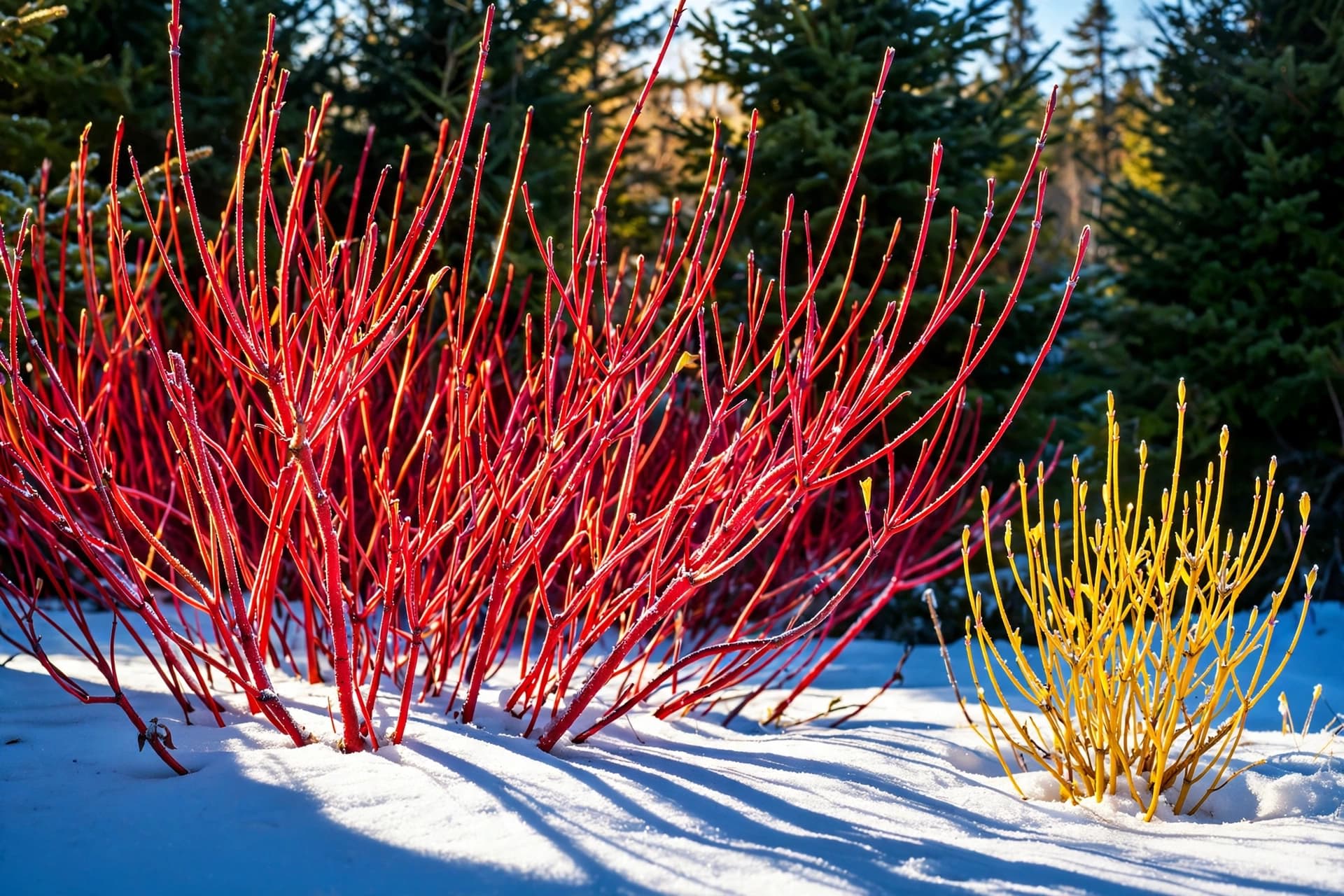
The secret is new growth. The stems are brightest when young, and lose their brightness to a dull gray-brown in old age. Every late winter cut away approximately one-third of the oldest stems leaving only a few inches of them above the ground. (Source: University extension service) There are detailed pruning instructions on shrubs such as this one, published by programs such as the University of Minnesota Extension. New sprouts grow up by summer and furnish you with whiter stems the following cold season.
Plant the shrub in the sun and in well-watered soil as shade tones the color. Have a three to five in a drift with an evergreen backdrop in order to make the red stand out.
Add berries to be a two-fer. Winterberry holly bears bright red berries on bare branches well past the dropping of the leaves and birds are fond of it. It requires a male plant to pollinate the females, and to find out what plants are compatible, look at the tag. (Source: University extension service)
Ornamental Grasses to Leave Standing in Winter
The cold-season bed is moved by grasses. Their withered blades and plumes are snared with frost, shook with the wind, and glowed as the low sun shone behind them.
Even standing clumps are busy at the service of wildlife. The seeds are eaten by birds and insects nest in the withered stems and crowns. (Source: National Wildlife Federation) The reduction of all of it in the fall deprives them of both food and cover.
Choose heavy varieties that do not fall in the snow:
- Feather reed grass 'Karl Foerster': upright and golden, narrow and can fit small beds.
- Switchgrass Northwind: stiff, erect blades, which turn golden and maintain their shape.
- Little bluestem: small clumps of fine text, which turn to copper and orange.
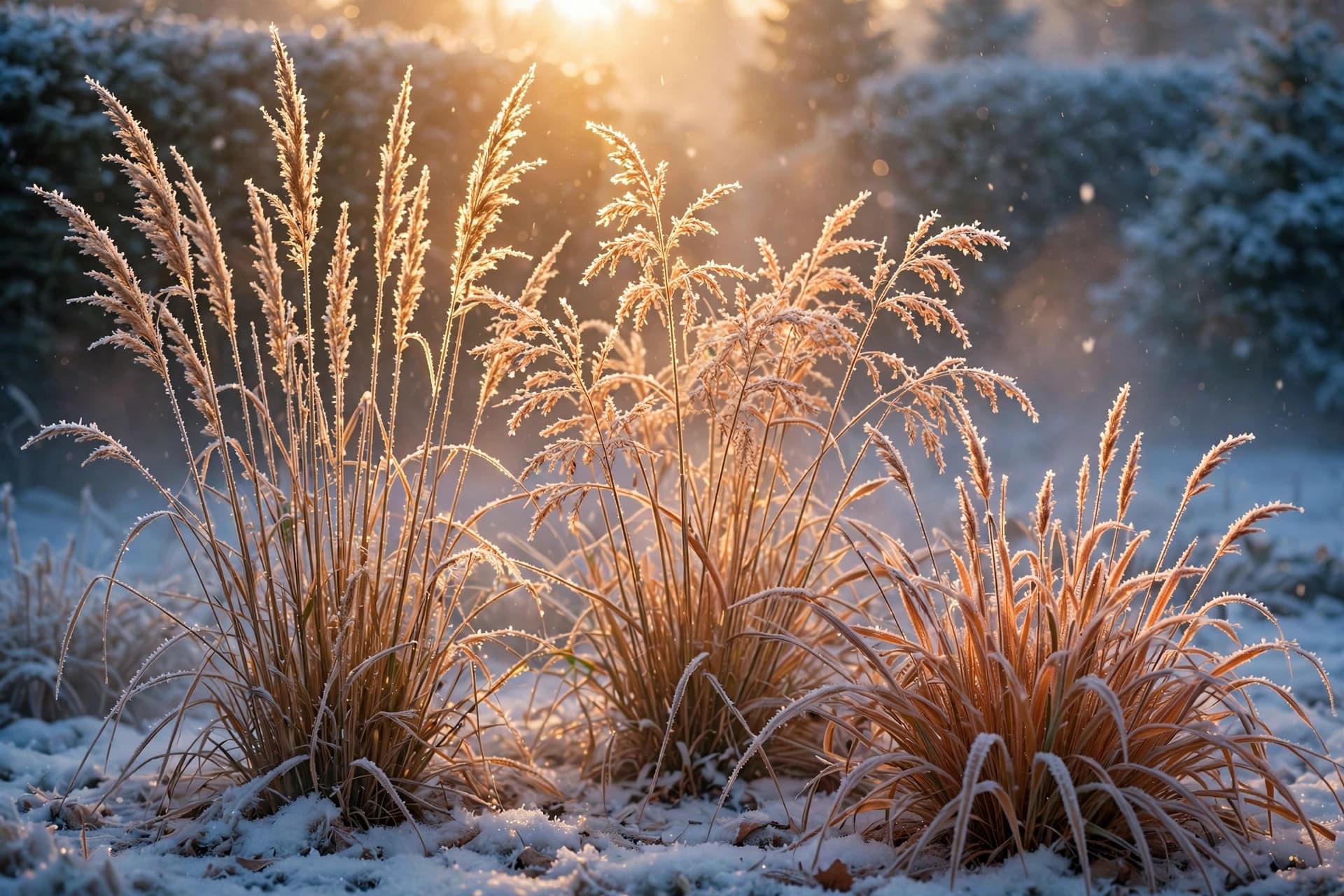
Allow the clumps to grow until late in the winter, after which they are cut to 4 to 6 inches above the ground and new growth starts. To prepare the cuttings, tie together each clump of them with twine so that they pull out in one bundle.
One safety tip: In a wildfire-prone area, the clumps of dry grass should be at least 5 feet away from the home. (Source: CAL FIRE) Grasses that grow in pairs with seed bearing flowers and you will also be protecting insects in our guide to plant a pollinator garden basics.
Should You Cut Back Perennials in Fall for Winter Interest?
Not all of them usually. Keep the strong and good-looking ones, and cut out those that become mush or are diseased.
A dishevelly stem is usually a working place. According to the Xerces Society, the native bees and other beneficial insects overwinter in hollow stems and litter in the leaf. Standing seedheads also provide food to the birds and provide form to the bed (Source: Xerces Society for Invertebrate Conservation).
Leave Standing vs. Cut Down: A Quick Comparison
| Leave standing | Cut down in fall |
|---|---|
| Purple coneflower and black-eyed Susan seedheads | Hostas and daylilies, which collapse into slimy mats |
| Sedum flower heads | Peonies, to reduce disease carryover (Source: University extension service) |
| Joe Pye weed and other tall, sturdy stems | Any plant with mildew, blight, or pest damage |
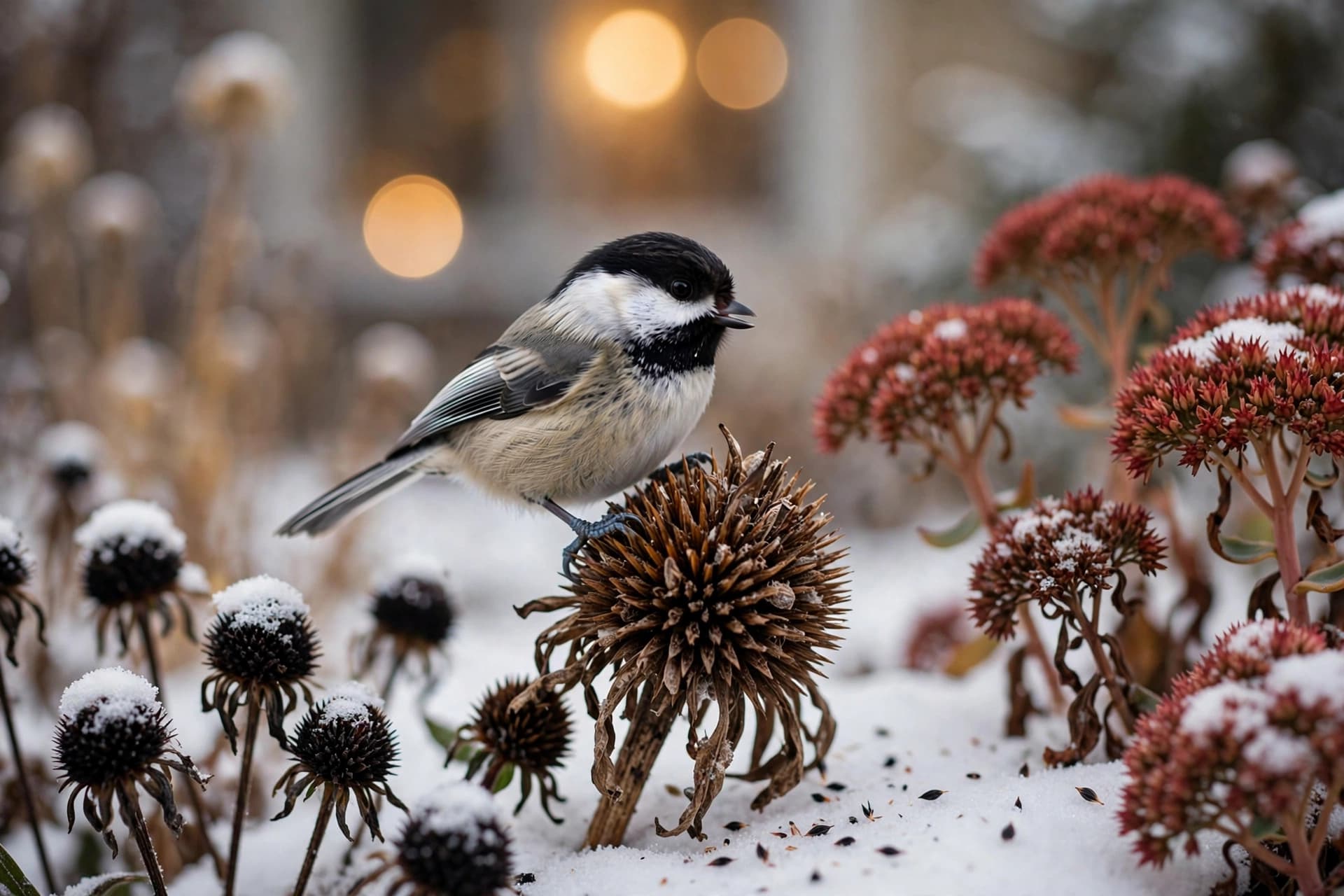
When spring cleanup comes, be sure to wait until daytime temperatures remain around 50oF, and leave some of the stubs to nesting bees. (Source: Xerces Society for Invertebrate Conservation) Fallen leaves may remain in bed as free mulch and insect shelter and our guide to leaving leaves in garden beds explains how much is too much.
Final Thoughts
A good-looking bed in January reduces to a handful of clever decisions: evergreens to use as bones, to use to give color and texture, to move, and lastly, you wait before you cut. Plant this fall before the ground gets hard and you will have an excuse to look out the window in the winter. Prepared to go on your next project? Next, read one of our garden design guides and continue to work out the rest of your landscape.
References:
- USDA Agricultural Research Service, "USDA Plant Hardiness Zone Map" (hardiness zones and zone lookup).
- Missouri Botanical Garden, "Plant Finder" (plant hardiness ranges, mature sizes, and bark, stem, and foliage features).
- Land-Grant University Extension Services (for example, Penn State Extension and Cornell Cooperative Extension): fall planting timing, mulch depth, winter burn on broadleaf evergreens, winterberry holly pollination, and peony fall cleanup.
- University of Minnesota Extension, "Shrub Pruning Guidance" (dogwood rejuvenation pruning).
- National Wildlife Federation, "Wildlife Gardening Guidance" (seedheads feeding birds and standing clumps sheltering insects).
- Xerces Society for Invertebrate Conservation, "Habitat and Garden Cleanup Guidance" (overwintering bees in hollow stems and waiting until about 50°F for spring cleanup).
- CAL FIRE, "Defensible Space and Ember-Resistant Zone Guidance" (keeping dry vegetation at least 5 feet from the house in wildfire-prone areas).
Frequently Asked Questions
How to create a winter interest garden in a small yard?
What are the best plants for winter interest in cold climates?
Which trees with interesting bark in winter fit small yards?
How do you keep red twig dogwood winter color bright every year?
Which ornamental grasses to leave standing in winter hold up best under snow?
When is the best time to cut back standing stems and grass clumps?
About Philemon John
Philemon John is the Lead Author of Broad Gardening and has more than 10 years of experience growing and caring for plants in the backyard. He is particularly passionate about vegetable gardening, soil building and pest management and offers real-life advice and tips to support home gardeners.