How to Grow Sprouts Safely at Home After the 2026 Recall

By Philemon John
Lead Author & Cultivator • Peer Reviewed & Soil Tested
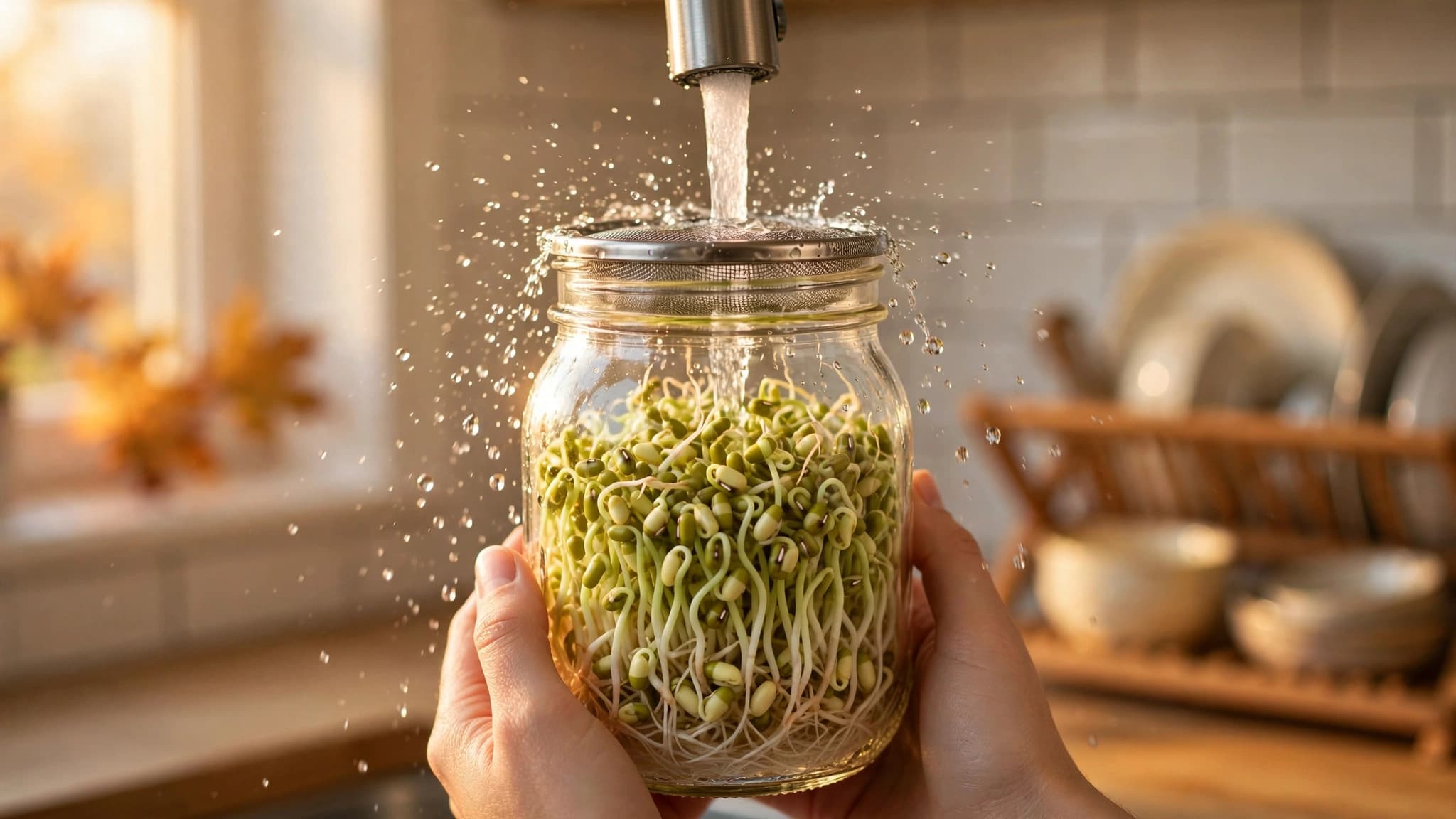
It is mid October, the garden is getting closed and a jar of crunchy sprouts on the kitchen counter seems like the easiest way to continue getting fresh green all winter. Then the news breaks: a multistate outbreak that is related to alfalfa sprouts has already affected 76 individuals in 16 states ( Source: CDC, Oct. 1, 2026). Do not put aside your growing jar. This instructional manual provides you with a straightforward, step-by-step regimen which reduces your exposure and teaches you how to examine your seed.
Quick Answer: Sprouts require warm, wet environments to grow and the same environmental factors aid bacteria to proliferate thus sprouting at home can be safer but not risk free (Source: CDC). Begin with sprouting seed, treat with 3 percent hydrogen peroxide, rinse after every 12 hours, keep jars clean and refrigerate sprouts at 40°F or lower (Source: UC ANR, FDA). Sprouts should be cooked and not eaten raw by children below the age of 5, adult persons above 65 years old, pregnant women and those with a weakened immune system.
Alfalfa Sprout Seed Recall 2026: What Home Growers Need to Know
This is the situation as of the update of October 1 by the CDC. The two germs involved in the outbreak are Shiga toxin-producing E. coli and Salmonella and has already left 76 individuals ill in 16 states with 6 hospitalizations and no fatalities (Source: CDC). These numbers could change as investigation continues.
Two recalls is important to you. First, Everything Sprouts, LLC of Minneapolis issued a recall of alfalfa sprouts sold under the Calco and Everything Sprouts brand followed by a recall of some lots of Robust Radish Sprout Mix due to potential cross-contamination (Source: FDA, CDC). These products were sold to wholesalers and grocery stores in Minnesota and Wisconsin (Source: FDA).
The second recall is the portion to be re-read by gardeners. FDA recalled one lot of alfalfa seeds, coded SAL2-24JB, and two alfalfa seed suppliers (Source: CDC). The case of one of them, Berlin Seeds of Millersburg, Ohio, where it retailed alfalfa sprouting seed in its retail store and online in the period between February 13 and August 23, 2026, to consumers in over 40 states (Source: FDA).
Test your seed immediately. The lot code is included on the 5-pound and 50-pound bags, yet the quarter-, half-, and one-pound bags have no lot code whatsoever (Source: FDA). In the event that you purchased Berlin Seeds alfalfa seed at that time, it should be treated as such. Neither sprout it, nor plant it, nor give it away.
Put the seed in a bag and place it in the rubbish, and dispose of any sprouts already growing out of it. Then wash dishes (jars, trays, and counters) in hot soapy water or dishwasher (Source: FDA, CDC). Call your health care provider in case you ate any and you feel sick. The company reports that so far it has one illness report that is directly related to its seed (Source: FDA).
Are Home Grown Sprouts Safe? The Honest Answer
They are not risk-free, but they can be. The conditions that are conducive to sprouting seed, such as warmth and moisture, are also conducive to bacteria (Source: CDC). The number of microorganisms on a growing seed may reach up to 1 billion in two or three days (Source: Clemson Cooperative Extension).
It is in this that many gardeners are shocked. Planting sprouts at home does not make them any safer than those ones in a store as the seed is, in most cases, where the trouble begins. Under clean environments, the germs may increase to high levels in case there are germs on the seed (Source: UC ANR).
This is the reason why consumer guidance provided by FDA targets more risky groups. These individuals are not to consume raw sprouts of any varieties such as alfalfa, clover, radish, and mung bean (Source: FDA):
- Young children
- Older adults
- Pregnant women
- Individuals who have low immune systems.
In the case of all others, FDA has not prohibited sprouts thus healthy adults may make their own choice provided they are aware of the dangers (Source: FDA). Comprehensive cooking destroys the harmful bacteria and sprouts can be consumed, which are hot as steaming or hotter than that (Source: Ohio State University Extension, UC ANR). Close routine further minimizes the risk, and the following paragraphs guide you through it.
Best Seeds for Sprouting Indoors (and Which to Skip)
Your largest safety lever is seed choice. Purchase seed that has been sprouted, since it has already been tested against germs causing illness (Source: Clemson Cooperative Extension). UC experts also recommend that one requests the seller to certify the product as pathogen-free (Source: UC ANR).
Pass over garden bed, bulk pantry beans, and bulk seed, which was a garden cover crop. These are not cultivated to be eaten raw, but to be planted, and therefore are not produced or tried to sprout.
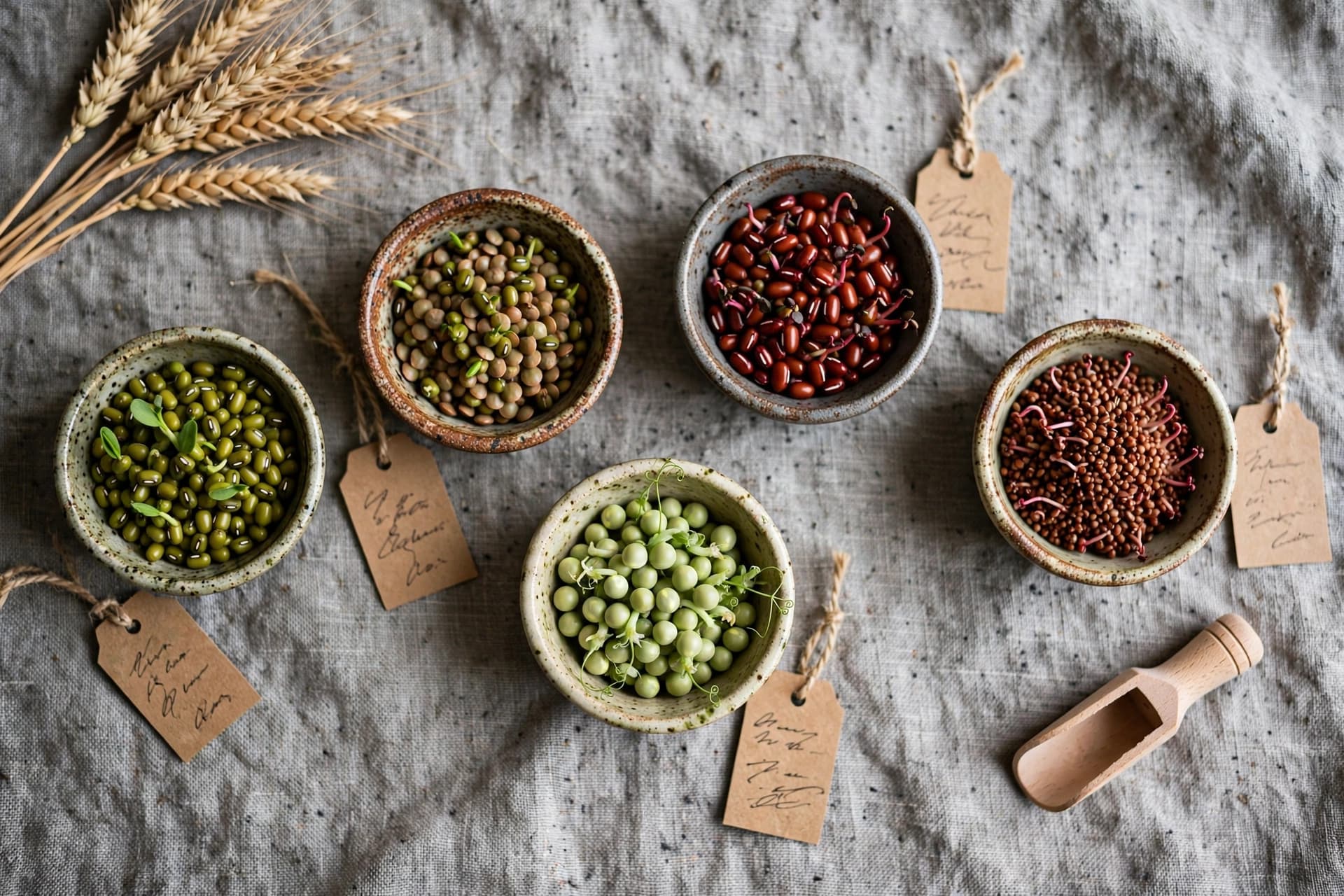
Select a starting seed with this rapid comparison:
| Seed | Seed size | Taste and texture | Safety note |
|---|---|---|---|
| Mung bean | Large | Mild and crunchy | Easy to rinse and drain; great stir-fried |
| Lentil | Medium | Earthy and tender | Forgiving for beginners; cook for higher-risk eaters |
| Green pea | Medium | Sweet and nutty | Rinses well; cook lightly before eating |
| Adzuki bean | Medium | Nutty, slightly sweet | Rinses well; good in soups |
| Broccoli | Tiny | Peppery | Harder to clean; cook if anyone is higher-risk |
| Radish | Tiny | Spicy | A store-bought radish mix joined the 2026 recall; stay cautious |
| Alfalfa and clover | Tiny | Mild and fluffy | Most often tied to outbreaks; skip for now |
FDA has always claimed that alfalfa and clover sprouts are the most frequent causes of outbreaks, but all raw sprouts are potentially harmful (Source: FDA). Small seeds are difficult to rinse and drain as well. We would begin with large legumes and revise alfalfa once the investigation is finished.
How to Sanitize Sprouting Seeds Before You Start
Bacteria may be deposited on the seed surface and a brief treatment prior to soaking is beneficial. There is no domestic process that can ensure the absence of germs, but experts at the University of California suggest a home kitchen soak in hydrogen peroxide. Commercial growers apply significantly stronger chlorine solutions, not recommended in the home (Source: UC ANR).
The process step by step (Source: UC ANR):
- Gather supplies. You will require 3 percent hydrogen peroxide which is available at the drugstore, a small saucepan, a food thermometer, a fine mesh strainer and a timer.
- Warm the peroxide to 140o F. Warm it first and maintain the temperature throughout.
- Soak for 5 minutes. Put the seed in the strainer in the solution and stir occasionally to treat all the seeds evenly.
- Rinse for 1 minute. Wet the seed in running tap water.
- Discard the peroxide. Do not apply on a second lot.
Use 3 percent peroxide, keep at the stove until it becomes hot and apply it only to the seed you wish to germinate.
Then sterilize your equipment. Wash all containers and surfaces that come in contact with seed or sprouts, and only use clean and drinkable water to soak and rinse (Source: Virginia Cooperative Extension). Jars, lids and strainers are to be done in hot soapy water or in the dishwasher. Pre-wash your hands.
Another guideline: in case you cannot ascertain the source of the seed lot, or someone in your home is more at risk, bypass the raw pathway and cook all batches.
Growing Sprouts Indoors Without Soil: Step-by-Step
Sprouting without the use of soil is inexpensive and easy. Sprouts grow in water and air, and you do not need the potting mix, or the fertilizer or the fungus gnats that thrive in wet soil. Imagine it as a quick, miniature companion during your outdoor vegetable farming when the garden falls silent.
What You Need
- A large, four-mason-jar.
- A mesh sprouting lid, or cheesecloth and a rubber band
- A bowl or dish rack to hold the jar at an angle.
- Seed of the above section treated.
- Clean, potable water
Jars require space, not a sunny sill. It comes in handy when you carry houseplants in the house over the winter and the sills get too full.
Your Daily Routine
- Soak. Take the seed in the jar, cover it with cool, clean water and wet it as long as your seed packet states.
- Drain. Add the water in the mesh lid and shake off the excess. The water in the container should not be left to stand, otherwise it is trouble waiting to happen, drain well (Source: Virginia Cooperative Extension).
- Prop the jar. Place it in the dish rack, mesh side down, allowing air passing through and water to drip.
- Rinse every 12 hours. Sow and sprout rinsing: Rinse seeds and sprouts at minimum of 12 hour intervals (Source: Virginia Cooperative Extension). Fill, swirl and drain, morning and evening, using fresh water each time.
- Harvest. The majority of seeds take 2 to 10 days to be ready, therefore, read your package. Final rinse, drain thoroughly and refrigerate immediately.
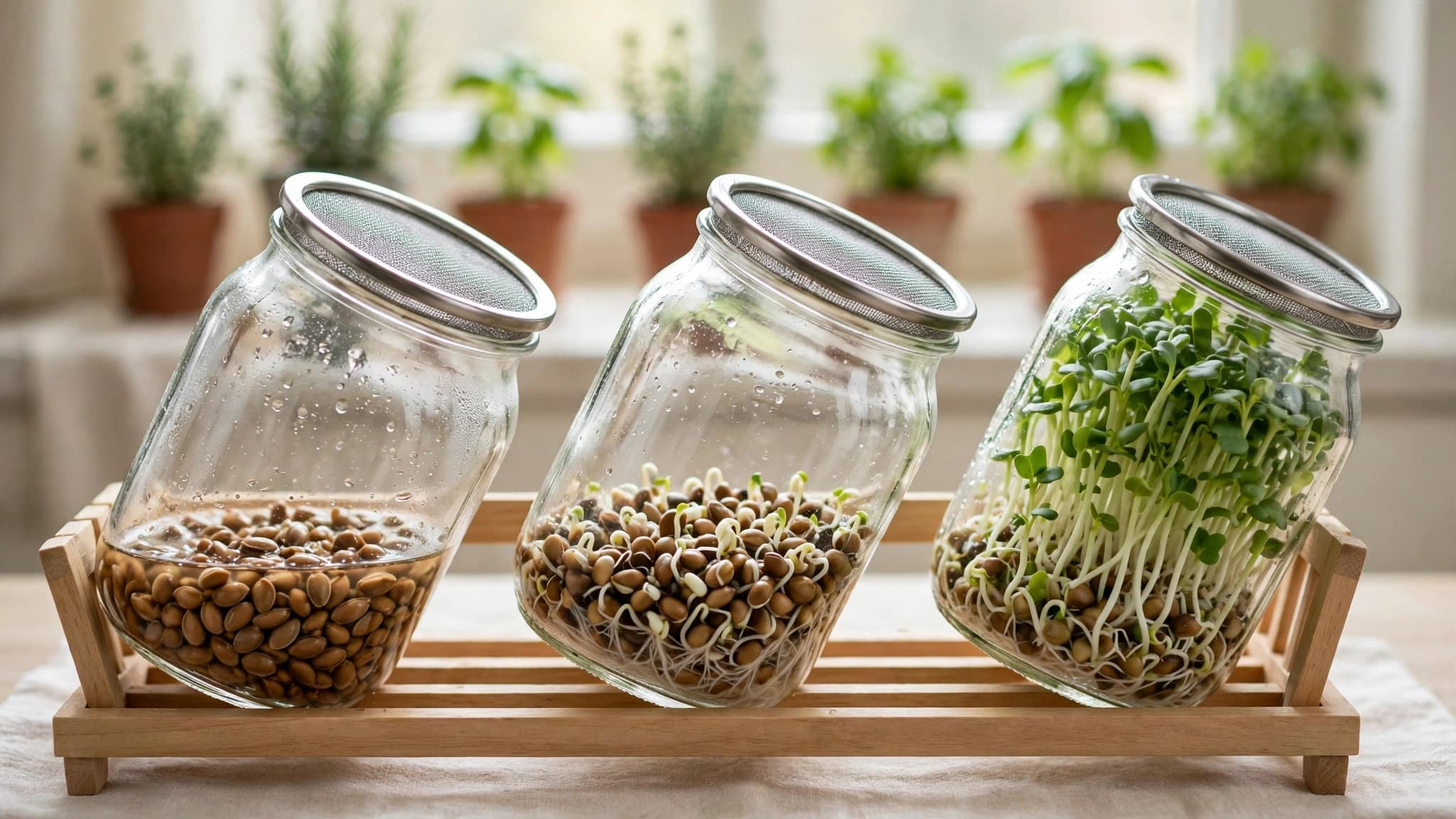
Do not keep the jar in close proximity with raw-food preparation and pets (Source: Virginia Cooperative Extension). An unoccupied part of the counter, not within the splash zone of the sink, is okay.
When to Throw a Batch Out
Discard sprouts with musty odors, slimy or dark surfaces (Source: Ohio State University Extension, summarizing FDA tips). It is normal to have tiny white root hairs, but not fuzzy mold. In case of uncertainty, dispose of it and clean the jar prior to your next production.
Sprout Food Safety Tips From Rinse to Refrigerator
Safe handling is not done when the jar is full. Apply the following habits per batch:
- Chill fast. As soon as they are ready, refrigerate at 40F or lower (Source: FDA). A low-end fridge thermometer makes sure your settings are correct.
- Eat at the right time. Anyone in a more at-risk group heat sprouts to a steaming hot (Source: UC ANR). Stir-fries, soups, and omelets all will do.
- Wash up. Wash hands immediately before and after touching seed, sprouts and jars.
- Keep it separate. Keep jars out of the raw meat, eggs, and unwashed produce.
- Start fresh. Wash jars between batches, and do not fill an old batch with new seed.
- Order smart. In case you belong to a riskier category, request the restaurants to consider the raw sprouts and check sandwiches and salads (Source: FDA).
Symptoms and When to Call a Doctor
Immediately call your health care provider with diarrhea and a fever over 102°F, diarrhea lasting longer than 2 days, bloody diarrhea, diarrhea that will not keep liquids down, and dizziness when standing (Source: CDC). The symptoms of E. coli are generally 3 to 4 days after exposure, whereas Salmonella may start symptoms 6 hours to 6 days later (Source: CDC). Today I feel fine does not clear a batch of suspects.
The Bottom Line
Even sprouting at home will still work into your winter routine when you treat seed, rinse on timetable, chill fast and cook someone at a greater risk. Verify the alfalfa seed you may have on hand with the recall information. Ready to have additional fresh greens without the worry? Our herb hydroponic garden guide will help you choose the best indoor hydroponic garden, and our houseplant guides can help keep your windowsill alive.
References:
- Centers for Disease Control and Prevention, "E. coli and Salmonella Outbreak Linked to Alfalfa Sprouts" (food safety alert, updated Oct. 1, 2026).
- U.S. Food and Drug Administration, "Berlin Seeds Recalls Alfalfa Sprouting Seed Because of Possible Health Risk" (Sept. 23, 2026).
- U.S. Food and Drug Administration, "Outbreak Investigation of Shiga Toxin-producing E. coli & Salmonella: Sprouts" (August 2026).
- U.S. Food and Drug Administration, "Sprouts: What You Should Know" (higher-risk groups, refrigeration at 40°F or below, rinsing, ordering when dining out).
- Penn State Extension, "What You Should Know About Sprouts" (FDA sprouts advisory; alfalfa and clover most often involved).
- University of California Agriculture and Natural Resources, "Growing Seed Sprouts at Home" (Publication 8151: heated 3% hydrogen peroxide seed treatment, cooking, pathogen-free seed).
- Clemson Cooperative Extension, Home & Garden Information Center, "The Food Safety of Sprouts" (microbial growth on seed, pre-tested sprouting seed).
- Virginia Cooperative Extension (Virginia Tech), "Sprouts: Safe Production at Home and Outbreak History" (Publication FST-344: clean containers, potable water, rinsing every 12 hours, keeping jars away from raw foods and pets).
- Centers for Disease Control and Prevention, "Salmonella Outbreak Linked to Alfalfa Sprouts" (December 2022; warm, humid growing conditions; higher-risk groups).
- Ohio State University Extension, "Chow Line: Be aware of risks from eating sprouts" (FDA tips on spoilage signs and cooking).
Frequently Asked Questions
Can beginners learn how to grow sprouts safely at home?
How to sanitize sprouting seeds without using bleach?
Does the alfalfa sprout seed recall 2026 affect seed I bought online?
What are the best seeds for sprouting indoors if I’m a beginner?
Can you eat sprouts while pregnant?
Do rinsing and other sprout food safety tips remove bacteria?
About Philemon John
Philemon John is the Lead Author of Broad Gardening and has more than 10 years of experience growing and caring for plants in the backyard. He is particularly passionate about vegetable gardening, soil building and pest management and offers real-life advice and tips to support home gardeners.