Asters vs Mums for Fall: Why Asters Win

By Philemon John
Lead Author & Cultivator • Peer Reviewed & Soil Tested
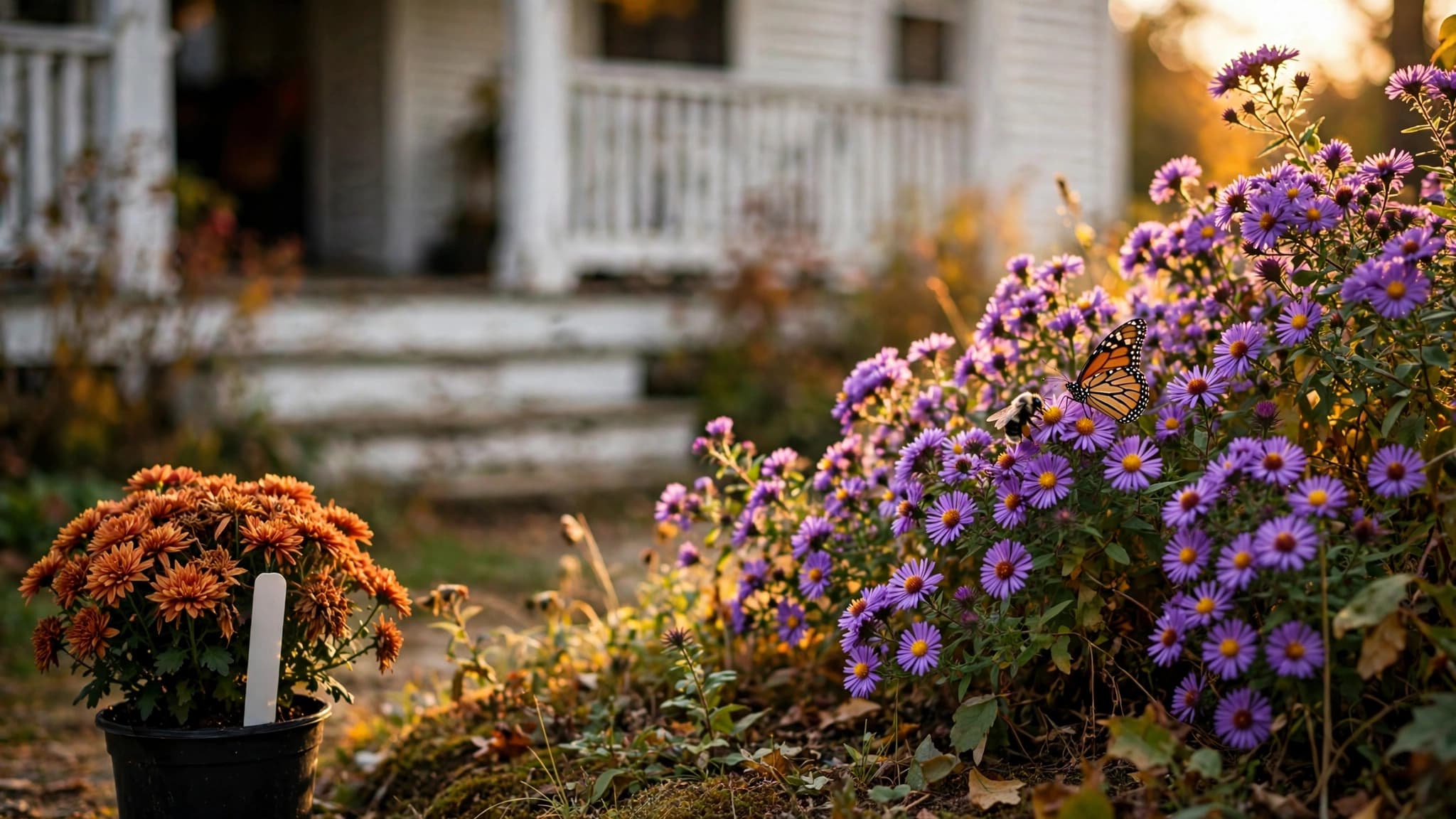
It's October, and all the front steps of America are identical: a pot of mums at the grocery store door, another one at the door of your neighbor, and one more that is withering on your own door. By January, there are a lot of those $10 pots that are brown, crispy and are going to the trash. This is how to replace the disposable porch pot with a hardy native perennial that flower weeks, returns year after year and nourishes the bees and butterflies still in flight.
Quick Answer: Asters are tough native perennials, which reappear every year and nourish bees and monarch butterflies towards the end of the season, whereas most of the mums available in the fall are one-season porch plants. Mums prevail in color instant. Asters are best in terms of long-lasting value, wildlife, and low maintenance, thus select asters in case you desire fall flowers that will reappear.
Are Mums Perennials or Annuals? And Are Asters Perennials?
The confusion starts at the checkout line. Both mums and asters are daisy-like, both flower in the fall, and fall on every display of fall colors. Their staying power, though, is very different.
Garden Mums: Annual in Practice, Perennial on Paper.
Garden mums are technically hardy perennials, typically zone 5-9 but hardiness differs based on variety (Source: university extension services). Confirm the plant tag, and compare it to the USDA Plant Hardiness Zone Map of your ZIP code.
The gimmick is the way mums are marketed. They are packed into a tight dome-shaped bunch of flowers by growers, and the roots are frequently solid inside of the pot (Source: university extension services). Planted in October, such roots hardly get a chance to spread before the ground freezes. Florist mums, the foil-wrapped type are not typically outdoor hardy.
Asters: Real Perennials That Come Back Better.
Asters are real perennials and native varieties are much tougher than their delicate blossoms might indicate. An example is New England aster which is hardy in zones 4 to 8 and flowers at the end of summer till October (Source: Missouri Botanical Garden). Every spring it re-grows out of the same roots, and the clump grows larger every year.
In several seasons, a nursery pot can grow to be a lush, blooming mound to be divided and shared with neighbors. A brief remark about names: botanists have transferred a number of North American asters to the genus Symphyotrichum, although nurseries and gardeners refer to them as asters.
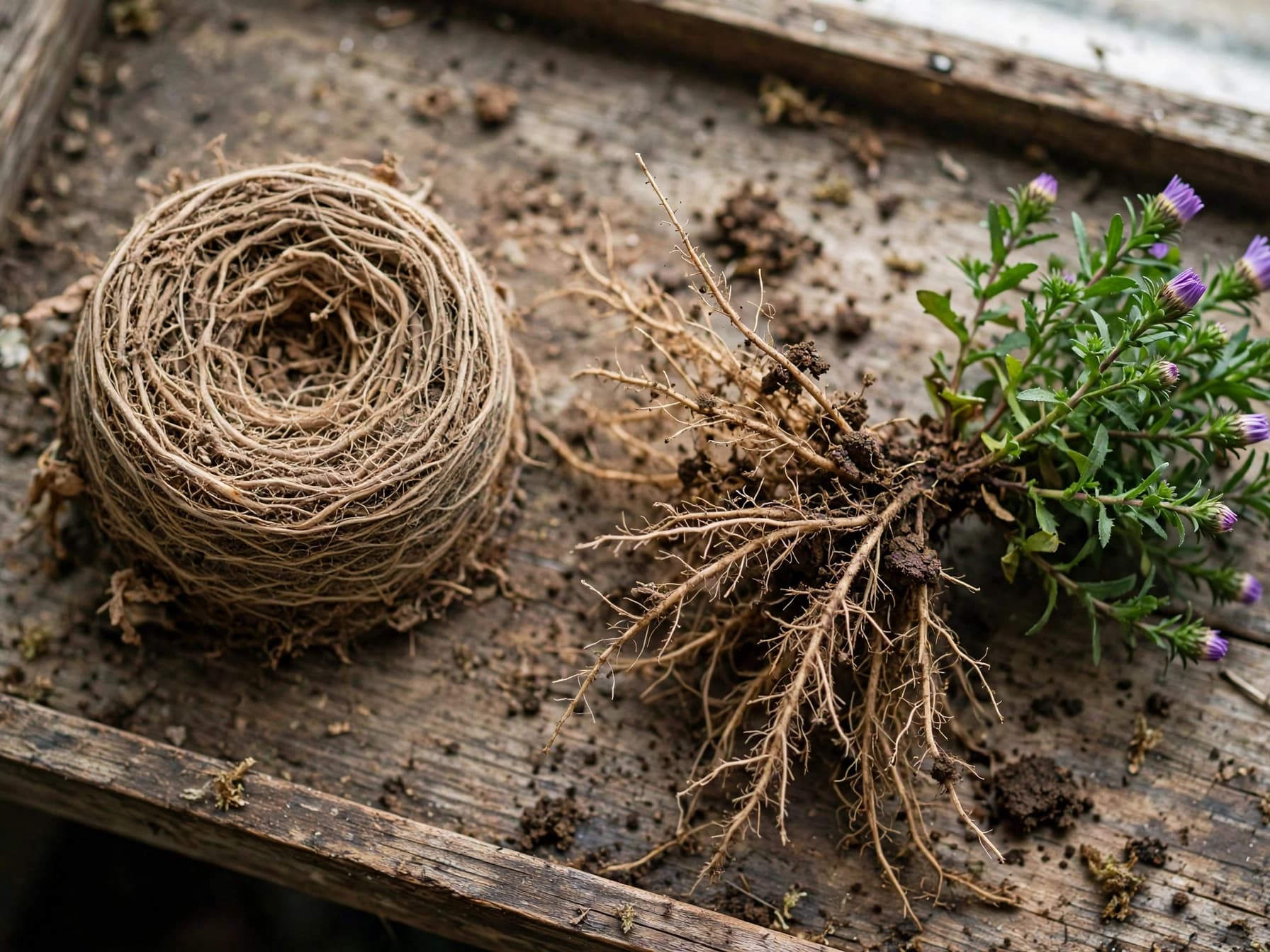
Asters vs Mums for Fall: Side-by-Side Comparison
Here is the comparison of the two in terms of the things which matter most to porch-pot shoppers and bed planners alike.
| Feature | Native Asters | Garden Mums |
|---|---|---|
| Lifespan | Perennial; returns for years | Often short-lived; many gardeners replace them yearly |
| Typical hardiness | Many species zones 3–8 (New England aster: zones 4–8) | Varies by variety, often zones 5–9 |
| Bloom window | Late summer through late fall | A few weeks, peaking in September and October |
| Size | 1–6 ft tall, depending on type | 12–24 in. tall mounds |
| Pollinator value | High; open flowers with easy access | Low for double-flowered types |
| Upfront cost | About $10–$20 per 1-gallon pot | About $5–$12 per pot |
| Long-term cost | Drops every year as the plant returns | Repeats each fall if replaced |
| Best use | Borders, meadows, pollinator beds | Porch pots and short-term color |
Prices are commonplace and differ depending on type and location (Source: Missouri Botanical Garden; university extension services; typical U.S. garden center pricing).
The following is the calculation, rounded to whole numbers. The cost of a 10-dollar pot of mums every five years is 50. A single $15 aster can multiply, flower in all the five seasons and give you free divisions to plant in the other parts of the yard.
Mums will get you three weeks of instant color by the front door. Asters win, should you desire a plant that merits the spot. Consider mums as ornament, and asters as an investment.
Can't decide? Use both. Have two of the potted mums at the door and plant asters in the front beds. Ornamental peppers can be used in fall containers and will tolerate more cheaply than other porch color.
Best Fall Flowers for Pollinators: Why Asters Beat Mums
Most summer flowers are over by October and the remaining bees, butterflies and hoverflies have less to feast on. There are late bloomers who occupy that gap, and asters do it best of all.
The open, daisy-like flowers of aster consist of numerous small florets and thus insects can easily land on them, feed on the pollen and nectar (Source: Xerces Society). It is not the case with many double flowered mums. Breeders filled the center with additional petals that are capable of concealing or getting rid of the pollen and nectar that insects require (Source: pollinator conservation organizations). The single, daisy-type mums are the exception, as the open centers provide insects a better access, and so select them in case you cannot do without mums.
The chips are down. Monarch butterflies use fall nectar to energize their long journey to Mexico and native asters and goldenrods are among the best food plants in late seasons ( Source: Monarch Joint Venture). Some native bees even have a particular specialization with the aster family and time their lives to the fall flowering (Source: Xerces Society).
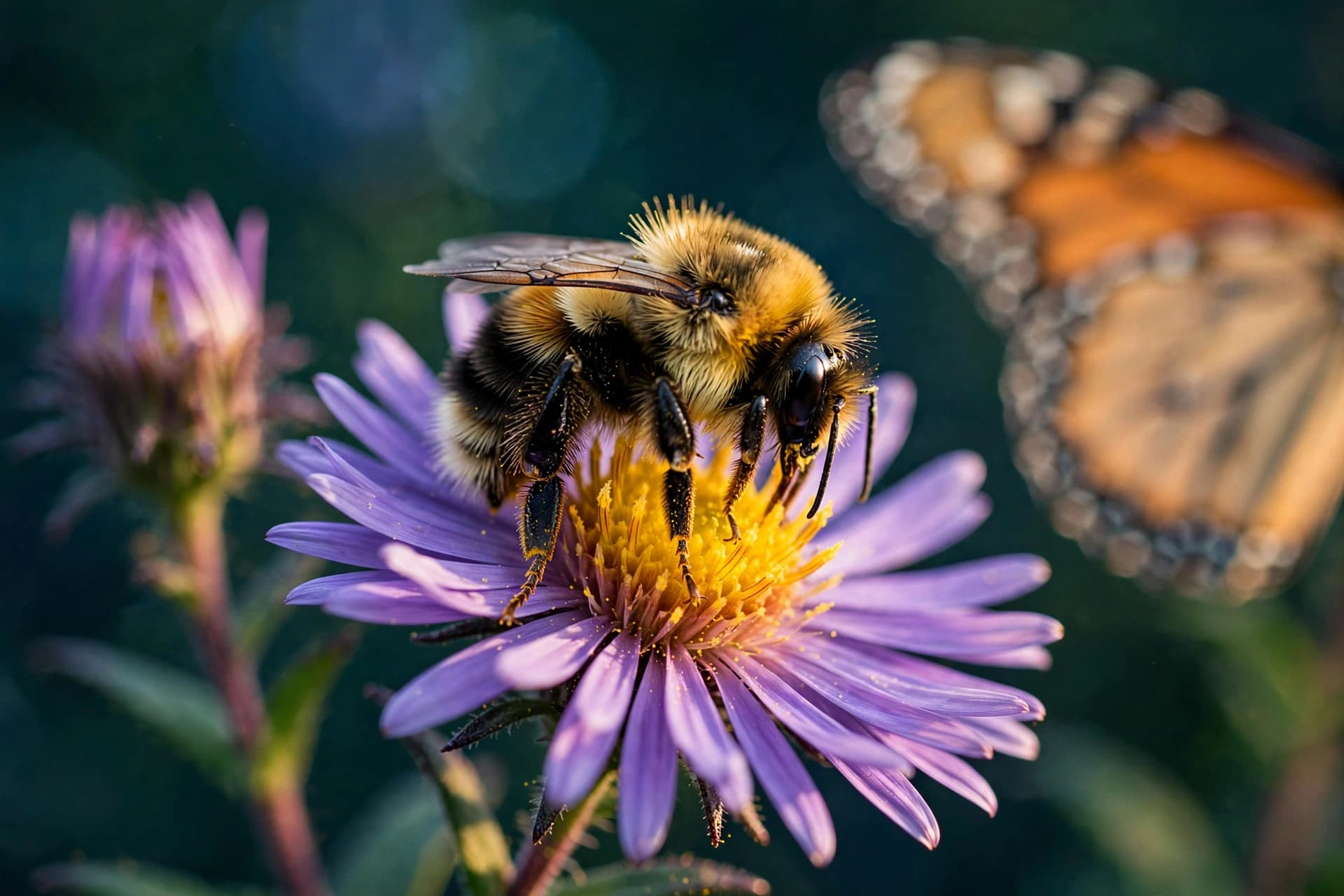
Here's what you may spot on aster blooms in October:
- Bee queens stocking up in time of winter.
- Stopping-to-refuel Migrating monarchs.
- Native mining bees and other solitary bees.
- Useful flies, hoverflies.
A flower can be pollinator-friendly: it must be accessible to insects that can access the flower and her pollen and nectar. Combine pair aster with other local bloomers and you will be on your way to a complete season pollinator garden. To choose plants specific to the region, visit free Xerces Society pollinator plant lists.
Native Fall Flowers Instead of Mums for Pollinators: 4 Top Picks
You don't have to stop at one plant. These four natives are all fitting to a particular location and they all beat a purchased mum as a way of appreciating wildlife. Native ranges are different, and to make sure what is native in your area, enter your ZIP code in the National Wildlife Federation Native Plant Finder.
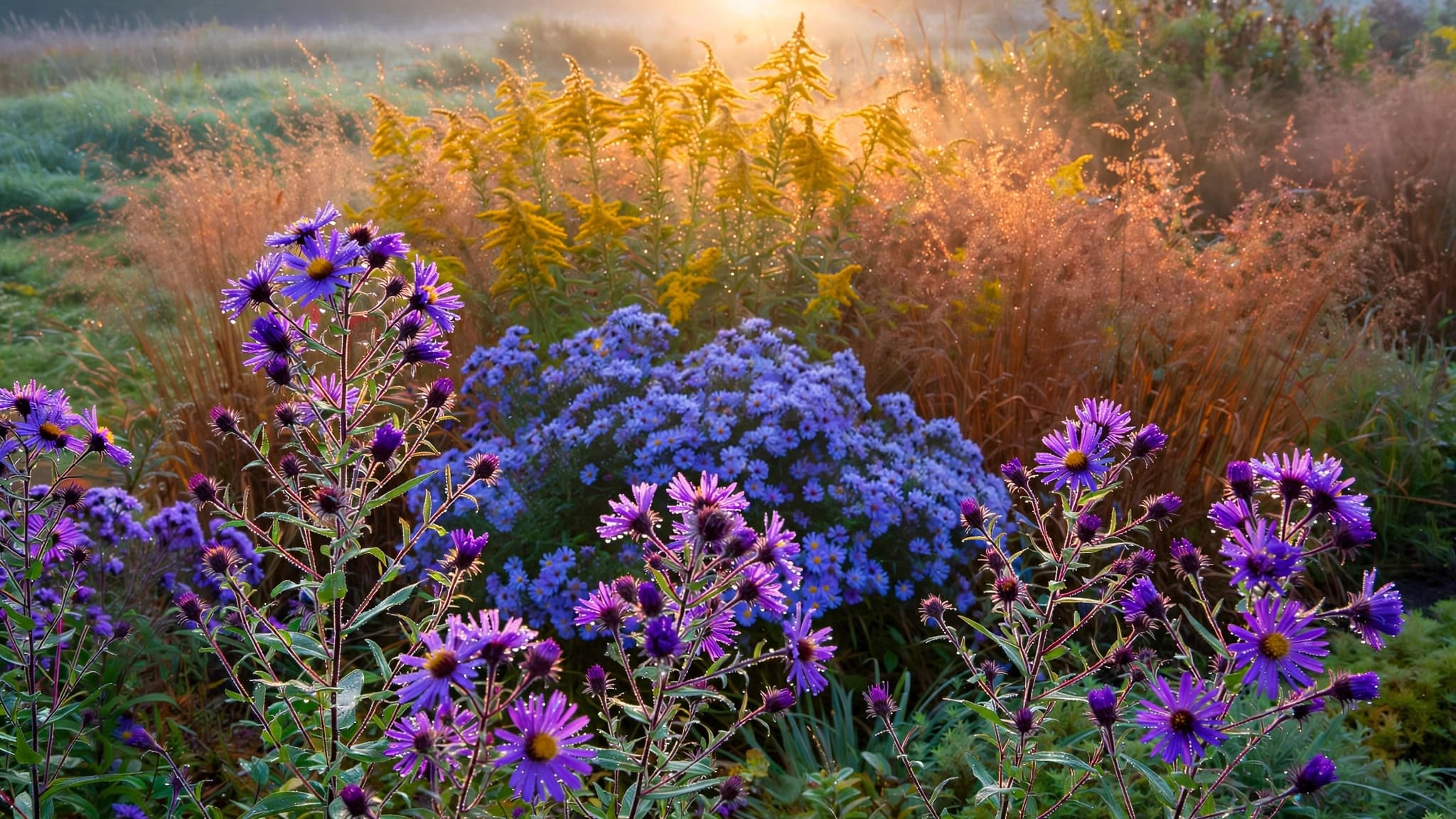
New England Aster (Symphyotrichum novae-angliae)
The classic. The violet has golden centers on long, thick stems and the wild type may grow 3 to 6 feet (Source: Missouri Botanical Garden). Smaller varieties such as Purple Dome are only about 2 feet, and fit smaller beds. Best for: full sun and average to moist soil.
Aromatic Aster (Symphyotrichum oblongifolium)
This is the choice in dry, tough areas. It makes a neat heap, which blankets itself in lavender-blue flowers deep into the fall. Such cultivars as October Skies remain small. Best use: hot, sunny, well-drained locations.
Smooth Aster (Symphyotrichum laeve)
The smooth aster is covered with glossy blue-green leaves and soft lavender-blue flowers. It manages dry soil, a bit of shade and often appears neater than taller types. Best uses: where your borders are to have a more peaceful appearance.
Goldenrod (Solidago species)
Goldenrod is no aster, but the best of all. Purple asters and yellow plumes are a classic fall combination. And goldenrod does not cause fall hay fever; ragweed does since it is a heavy pollen that is transported by insects (Source: university extension services). Best on: sunny meadows and borders. Select a species of clumping as opposed to an aggressive spreader.
To achieve a stratified appearance, tall New England asters at the back, aromatic or smooth asters in the middle, and goldenrod or ornamental grasses nearby. This type of mixing of bloom extends the color in late summer until the first hard frost.
When to Plant Asters in Fall (and What to Do If You're Late)
The rule of thumb: plant asters in the ground approximately 6 weeks prior to when your area first freezes (Source: university extension services). The window makes the earth time to root before the earth hardens. Precise dates are variable, and therefore refer to your local average first-freeze date.
| Region (USDA zones) | Typical planting window |
|---|---|
| Northern states (zones 3–5) | Late August to mid-September |
| Mid-Atlantic, Midwest, Pacific Northwest (zones 6–7) | Early September to early October |
| Southern states (zones 8–9) | October to mid-November |
Windows are general guidelines (Source: USDA Plant Hardiness Zone Map and local average frost dates).
Missed the window? Plant as long as the ground is not frozen. Water thoroughly, sprinkle with 2 to 3 inches of bark or shredded leaves mulch, and omit the fertilizer. The nursery pot can be sunk into a garden bed in the coldest areas, covered with mulch then planted in the spring. Planting during spring is also good and the plants tend to take root with minimal stress.
Planting Asters in 4 Easy Steps.
- Pick a sunny spot. Select a location that receives more than six hours of sunlight and air circulation.
- Dig wide, not deep. Half the depth of the pot should be the hole, and twice as wide.
- Loosen the roots. Separate any roots that circle around and then put the plant in.
- Space them out. Space plants 18 to 30 inches apart, based on size.
- Water and mulch. Wet the soil, sprinkle 2 to 3 inches of mulch, but not on the stems.
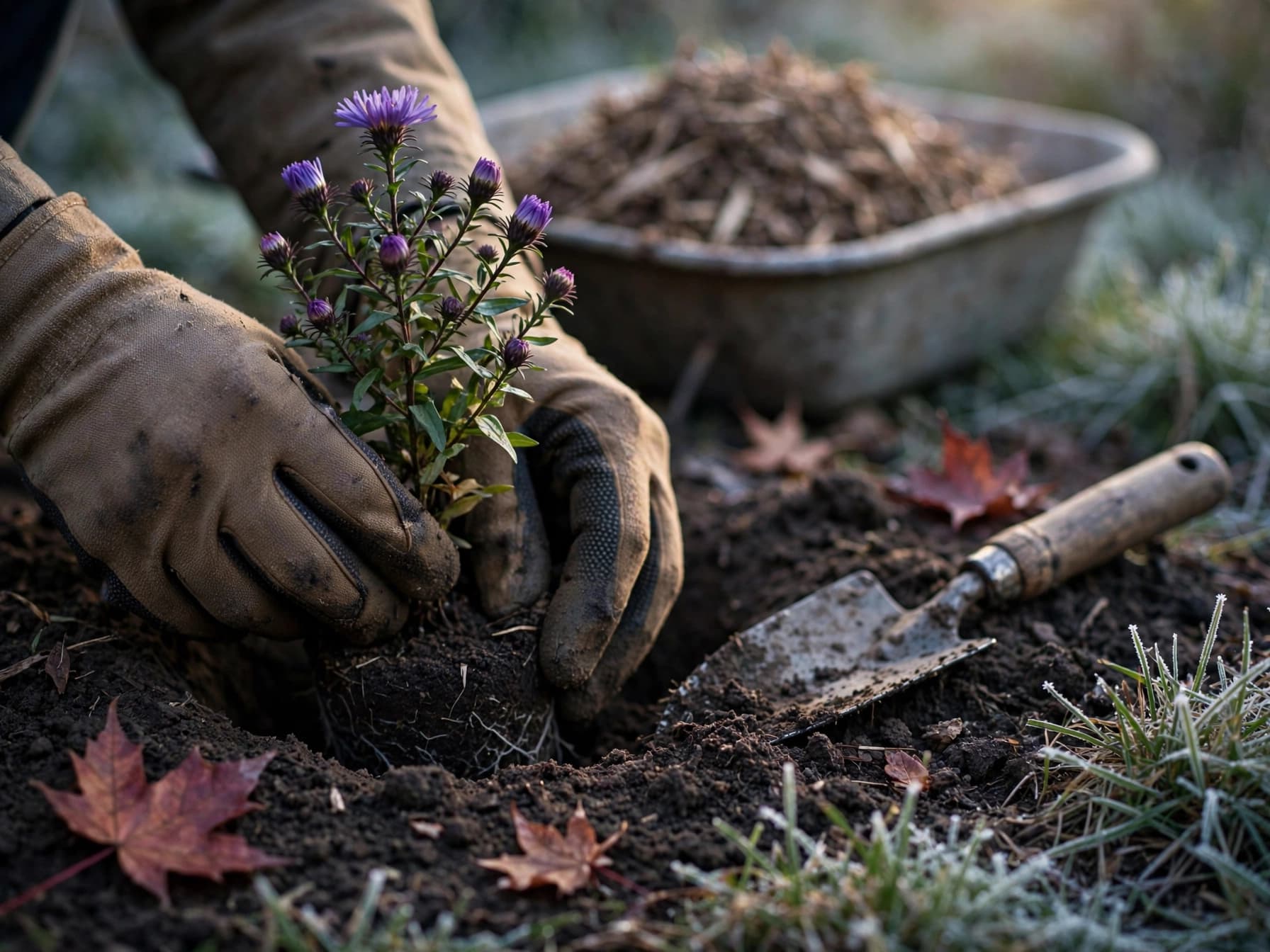
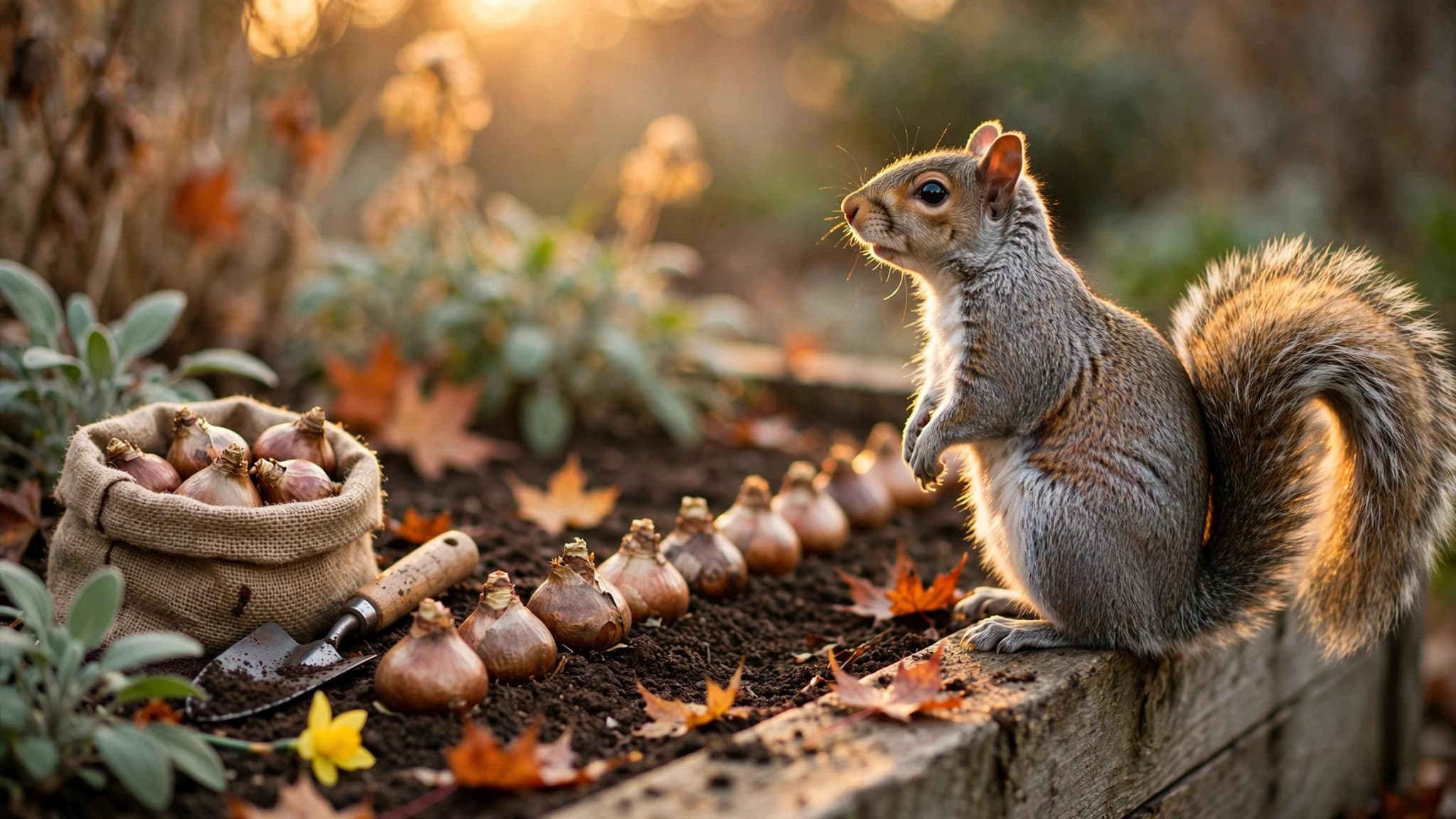
Add this job to your checklist of what to do before the first frost. You have to dig, you see; and you might as well put in a few of those squirrel-proof bulbs in case they should come into bloom in spring.
New England Aster Plant Care: A Simple Season-by-Season Routine
New England aster is easy to tend to once established. It is compact, healthy and full of blooms with a few well-timed chores.
Sun, Soil, and Water.
Plant in the full sun and in average to moist well-drained soil. Water not more than 1 inch per week the first season, and only in protracted droughts. Avoid fertilizer that is rich, and causes stems to be tall and floppy. The Missouri Botanical Garden Plant Finder has information on individual varieties.
Pinch Back on Harder Plants.
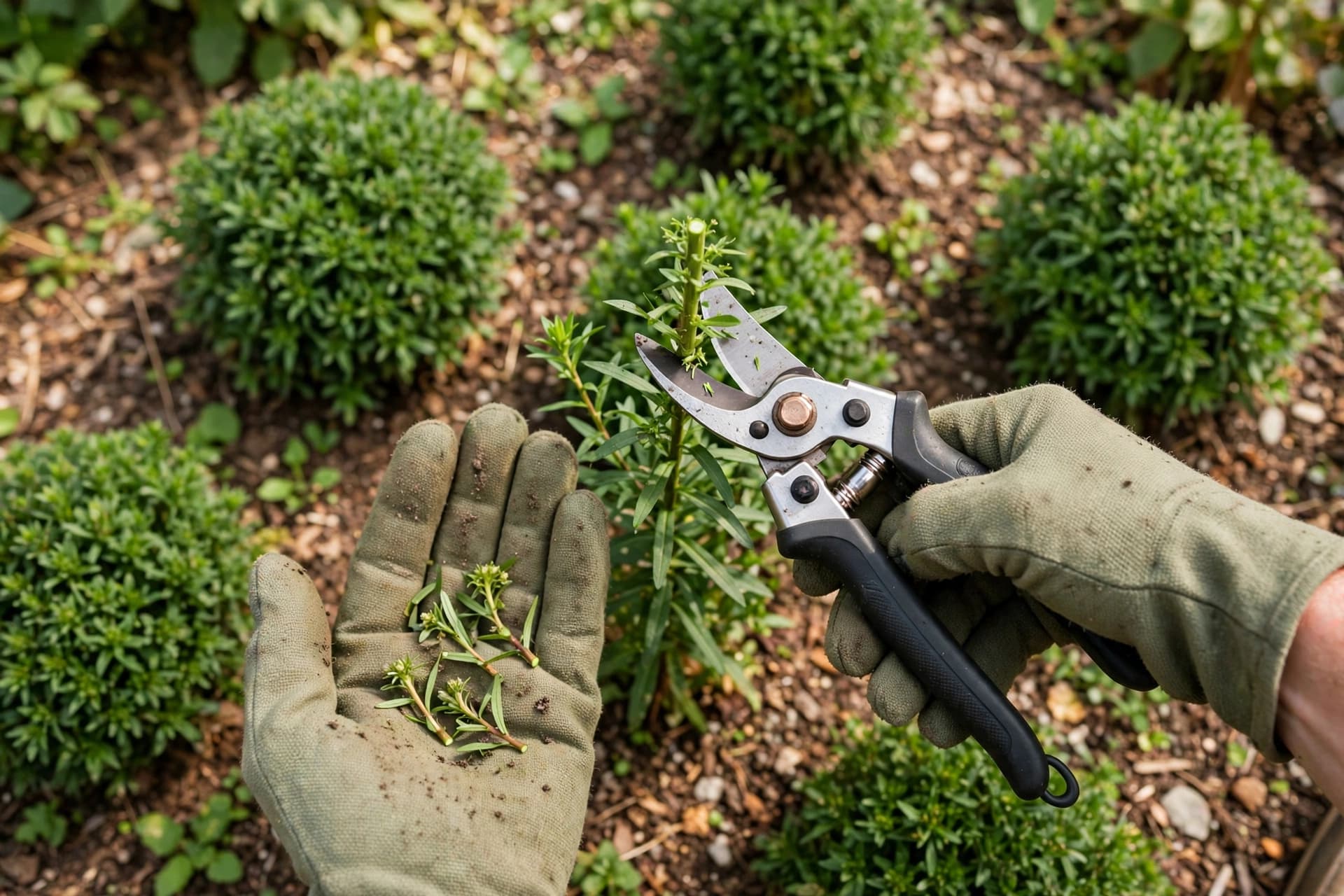
Tall asters have a tendency to fall. Remedy that by trimming stems one-third to one-half late in the spring or early in the summer, and cease about the Fourth of July. The plant is spreading and shorter in length, carries more flowers. A week or two later flowering can begin, however the plant is more erect.
Prevent Powdery Mildew
The most prevalent complaint during humid summers is that of white, powdery leaves. Provide air to plants, water at the ground level in the morning and separate the congested clumps after every two to three years to enhance air circulation. Mildew tends to impact appearance over plant wellbeing.
Winter Cleanup
Leaves remain over the winter. The hollow stems provide shelter to useful insects and seed heads, provide food to the birds. Use the same concept with the floor in the garden and leave the leaves in the garden to serve as free mulch around the crowns. Prune stems in early spring, and split clumps at that time when they are becoming congested.
Final Thoughts: Plant It Once, Enjoy It Every Fall
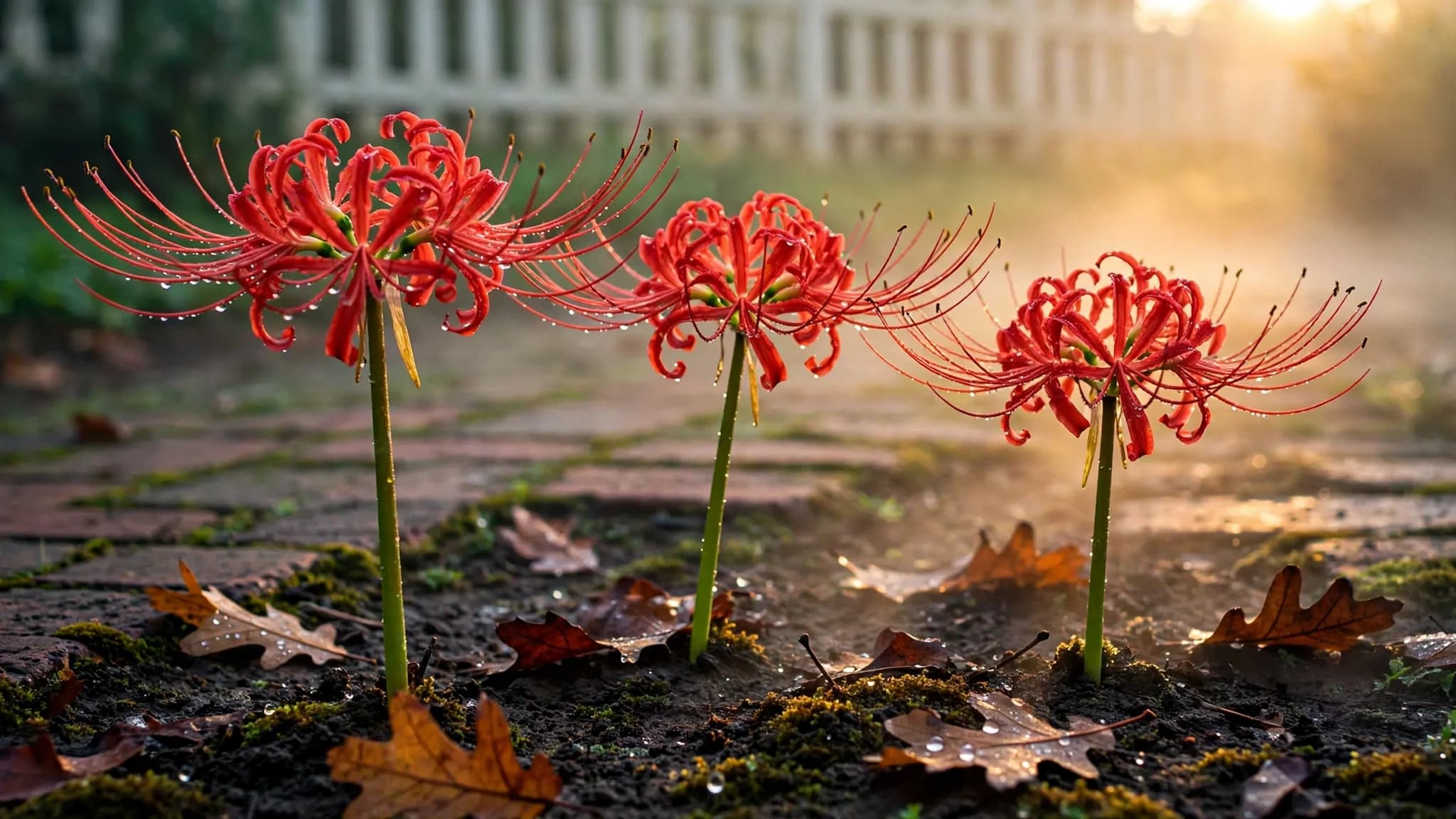
Mums are a flash of porch colour. Asters would be a long-term improvement: they come back each year, and become larger with the years, and nourish wildlife when few other plants are in flower. Begin with one or two of the hard natives this season, and increase the number with each fall, as far as your means will admit. Have more fall colour? It is not too late to plant spider lily bulbs, another favorite to plant in the fall and expect to see year after year. Read our guide on when to plant spider lily bulbs.
References:
- University Extension Services (for example, University of Minnesota Extension and Penn State Extension): garden mum hardiness, pot-bound nursery roots, fall planting timing, and goldenrod versus ragweed. (Confirm specifics with your own state's extension office.)
- Missouri Botanical Garden, Plant Finder, "Symphyotrichum novae-angliae Plant Profile" (hardiness zones, height, bloom time, light and soil needs).
- USDA Agricultural Research Service, "USDA Plant Hardiness Zone Map"
- Xerces Society for Invertebrate Conservation, "Selecting Plants for Pollinators and Specialist Native Bees" (late-season pollinator plants, open flower structure, native aster-specialist bees, and double-flowered cultivar guidance).
- Monarch Joint Venture, "Monarch Migration and Fall Nectar Plants"
- National Wildlife Federation, "Native Plant Finder"
- Retail Price Ranges: General U.S. garden center and big-box pricing. (These are market observations, not a formal study, and vary by region and season; check local prices.)
Frequently Asked Questions
Asters vs mums for fall: which is better for bees and butterflies?
What are the best fall flowers for pollinators?
How do I know when to plant asters in fall in my area?
Is New England aster plant care difficult for beginners?
Do deer and rabbits eat asters?
Will mums bought in October come back next year?
About Philemon John
Philemon John is the Lead Author of Broad Gardening and has more than 10 years of experience growing and caring for plants in the backyard. He is particularly passionate about vegetable gardening, soil building and pest management and offers real-life advice and tips to support home gardeners.