Chainsaw Safety Tips for Storm Cleanup: A Homeowner's Guide

By Philemon John
Lead Author & Cultivator • Peer Reviewed & Soil Tested
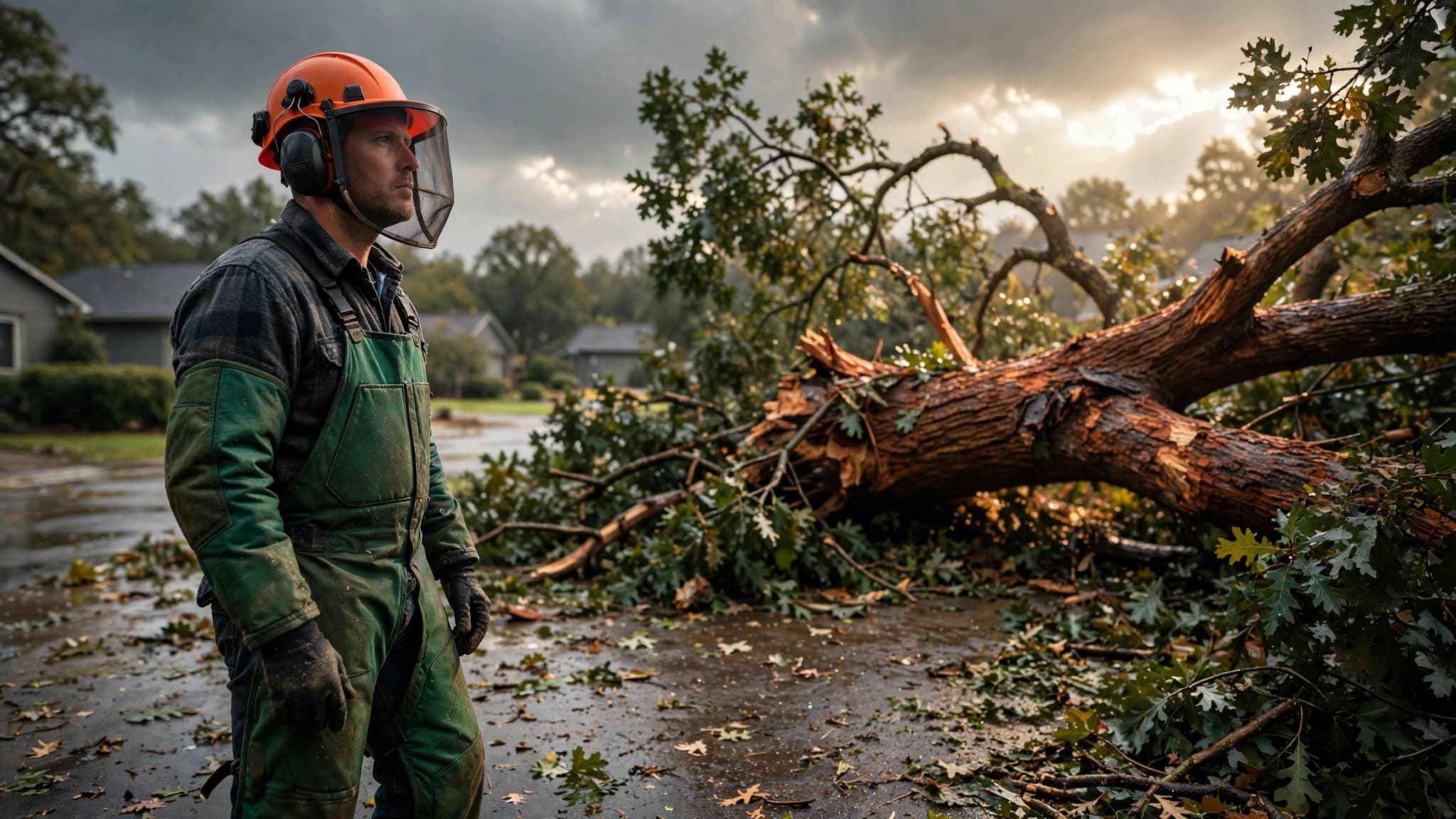
There was a fall storm the other day, and a 40-foot oak fell across your driveway. Your next-door neighbor has already started his saw, and you feel like taking yours. Hold that thought. Damaged wood, which has been blown in a tempest, is twisted, and there is a straining in it, and it is much less forgiving than a healthy backyard log. This guide will demonstrate how to defend yourself, assess the job, and understand when to retreat.
Quick Answer: Before you begin using a saw, look to identify utility wires, hanging limbs, and tension-bent wood. Wear a helmet with a face screen, hearing protection, cut resistant chaps, gloves, and heavy boots and do not work alone. When a tree is rubbing on wires, lying on your house or is simply too large to cut with your saw, then get a certified arborist.
How to Size Up a Storm-Damaged Yard Before You Cut
The most dangerous thing about the post-storm work occurs prior to the saw being started. Spend 15 minutes slowly strolling through the property and examining all of the trees, limbs, and piles twice. The majority of injuries start with rushing in.
Injuries and falls are some of the frequent ways people were injured in the course of cleanup as identified by the CDC storm-recovery safety guidance flags (Source: CDC). This is simply because storms disorganize the way trees sit, hang and bend, and thus the rules of thumb no longer apply.
The Look Up, Look Down, Look Around Scan
- Peep up: There were hanging branches, broken limbs and broken tops, all stuck in the trees around. These are known as widow-makers as they may fall anytime.
- Peep through: Raised root balls, wet ground, bent or pinned trunks.
- Glance around: Utility wires, gas meters, propane tanks, roofs, fences and whatever a rolling or moving log can strike.
- Self-assessment: Be forthright about your energy and experience combined with job size.
Above all, take pictures of the damage in various angles before you move anything. Those pictures will be desired by your insurance company ( Source: Insurance Information Institute).
When you find any wires in the mix, make sure to read the next section before proceeding to do anything.
Fallen Tree Near Power Lines: What to Do First
Always consider all the wires live until the utility company declares it otherwise. A line does not necessarily spark or hum to be lethal, and wet wood, soil, fences, and metal roofing can all carry current.
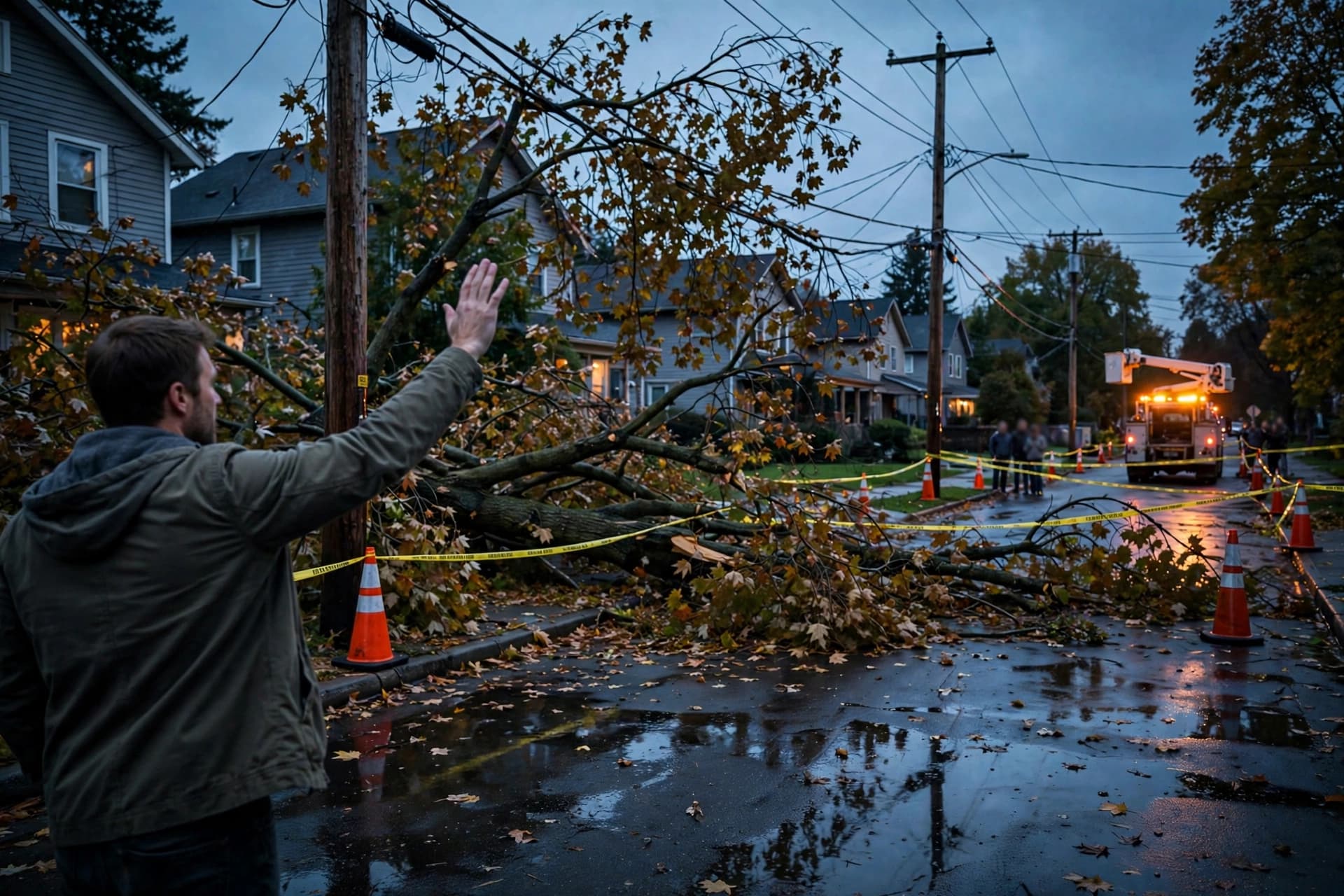
The following is your short list:
- Stay back. Maintain 35 feet distance, approximately school bus length (Source: electric utility and ESFI guidance).
- Touch nothing. Do not touch a tree, fence, gutter or a vehicle that might be in contact with a wire.
- Clear the area. Keep children, pets and inquisitive neighbors far out of the tree.
- Make the calls. In an emergency (wire on a person or a vehicle) or a fire has begun, dial 911. Report downed or sagging lines to your electric utility then.
- Hold on when a wire is on your automobile. Wait unless fire: Crews. Should you need to jump, do so with both feet together, and wiggle away in little steps.
The federal rules require even trained line workers to maintain minimum approach distances (Source: OSHA). It is no training of home owners to attempt to remove branches of a line with a rake or broom or pole.
Crews often proceed without removing your tree, once the utility has rendered the lines safe. The trees in your yard remain your business, or that of your arborist.
Chainsaw Safety Gear, Chaps and Helmet: What to Wear Head to Toe
Minimizing protective gear can not make a painful experience painless but can transform the ER visit to a near-death experience. Consider it as a whole outfit not an item.
| Item | What it protects | What to look for | Typical price |
|---|---|---|---|
| Helmet with face screen and ear muffs | Head, face, hearing | Forestry-rated combo unit with a mesh visor | $40–$120 |
| Safety glasses | Eyes | ANSI Z87.1 marking, worn under the screen | $8–$25 |
| Cut-resistant chaps | Thighs and shins | Layered fiber pads; label citing ASTM F1897 | $60–$150 |
| Work gloves | Hands | Snug, grippy, padded against vibration | $20–$50 |
| Steel-toe, cut-resistant boots | Feet and ankles | Deep tread and ankle support | $100–$250 |
| First-aid kit | Emergencies | Pressure bandages and gauze | $20–$50 |
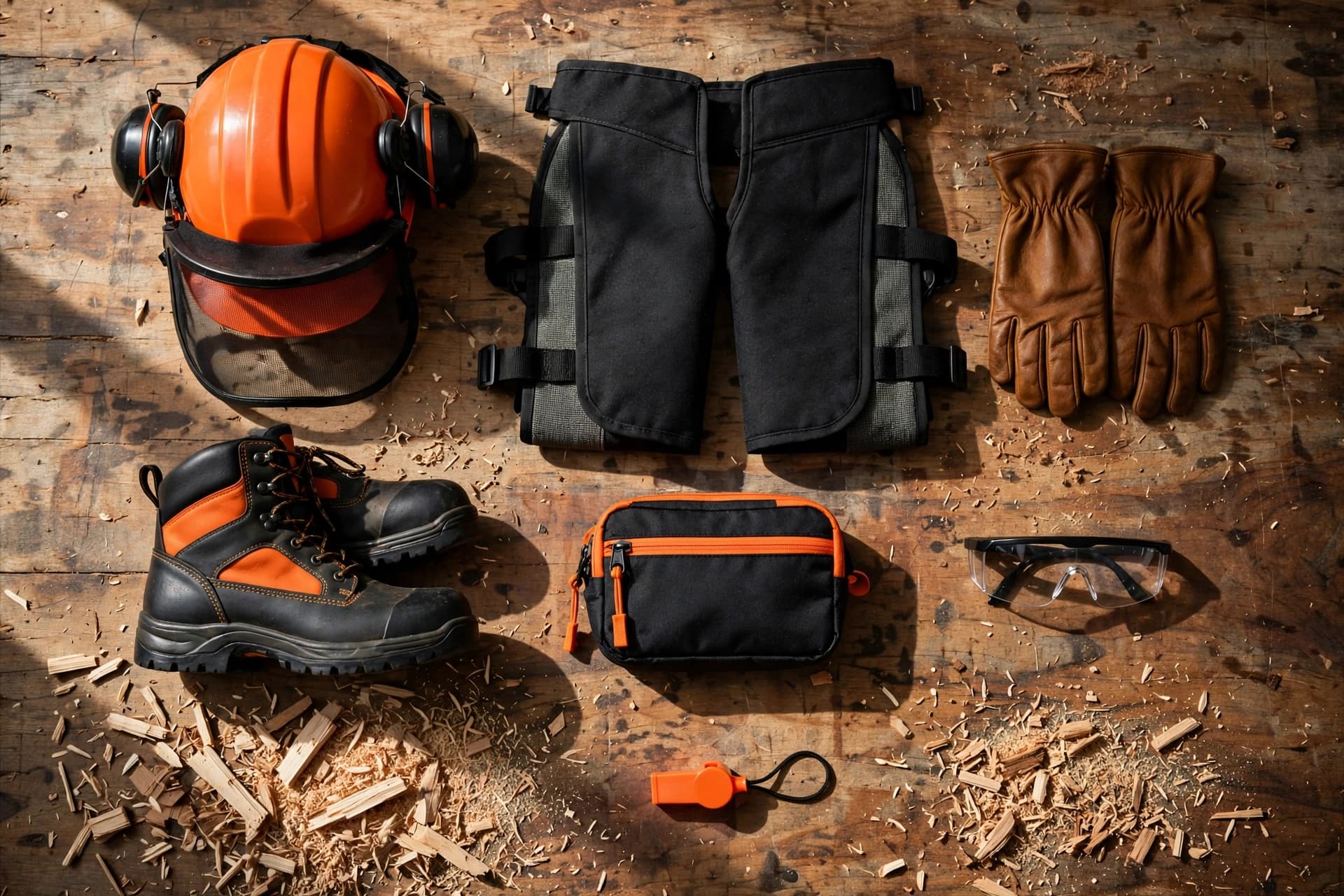
The following are the approximate retail prices of these products in the United States: ( Source: typical U.S. retail pricing; ASTM International and ANSI/ISEA standards)
Get the rest of you dressed up, as well. Do away with loose sleeves, draw strings and hanging jewelry that can snag. Put on tight long trousers beneath your chaps, and a bright top so the helpers can see you. Always have a charged phone in a pocket and avoid working alone. The second adult is to remain in the range of hearing but not in the drop zone.
Check the saw as carefully as you check yourself. Check sharp chain, correct tension, full bar oil, tight bolts and chain brake which pulls the chain on command. A saw that has been sitting since the spring can contain stale fuel as well, and our guide to winterizing outdoor power equipment addresses fuel, filters, and storage.
New to saws? An introductory handling course by a local dealer or county extension office is an afternoon.
How to Cut Up a Fallen Tree With a Chainsaw, Step by Step
When the wires are cleared and you have got geared up, then work in a quiet and repeatable sequence. Smart cutting is primarily planning and reading in which the weight is located.
Prep the Saw and the Work Area
- Always keep the saw on a solid, flat surface with the chain brake on and never in the air.
- Pulled loose branches and trip hazards off your footing.
- Prepare a way out at a 45 degree angle in the opposite direction and behind the log and leave it clear.
- Stay 30 feet away from helpers, kids and pets.
Limbing: Remove the Branches First
Limbing is cutting away the branches of the trunk. Always work at the thick end upwards and whenever possible, you must have the trunk between you and the saw.
- Cut on the farther side of the trunk, and proceed.
- When on a slope, sit uphill of the log so that it cannot roll over you.
- Hold all cuts below the shoulders. Use a pole saw or pro to leave higher branches.
- Never put the chain in the dirt, which makes it dull.
- Bend or pinned limbs should be last to do, the section on tension should be read first.
Bucking: Trunk into Sections.
Bucking refers to cutting the trunk to a shorter length. The trick is in the direction in which side of the log you are compressing ( compression ) and in which direction you are stretching ( tension ). When cutting on the wrong side, first the wood squeeches your bar (university extension saw-handling guides and USDA Forest Service).
| How the log is supported | Squeezed side | Stretched side | Cut order |
|---|---|---|---|
| Both ends propped up, like a bridge | Top | Bottom | Cut down from the top about one-third of the way, then cut up from the bottom to meet it |
| One end propped up, overhanging | Bottom | Top | Cut up from the bottom about one-third of the way, then finish with a cut down from the top |
| Lying flat on the ground | Little difference | Little difference | Cut about two-thirds of the way down, roll the log if it's safe, and finish from the other side |
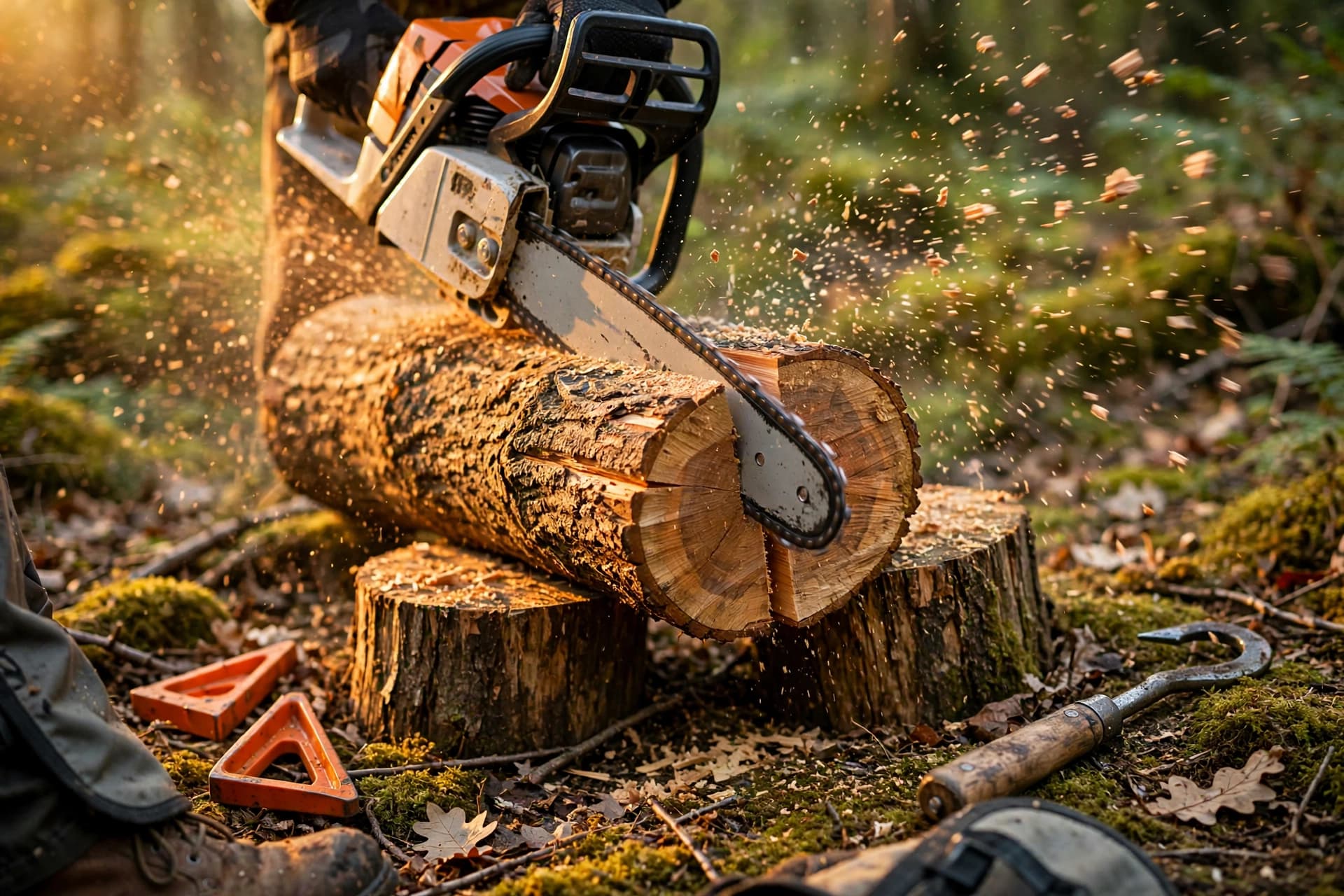
Wedges made of plastic come in handy. Tap one into the cut to leave it open and have your bar free. Skip metal wedges, which may destroy the chain. In case the bar remains pinched, turn off the saw and release it using a wedge or lever instead of pulling.
Chop logs of convenient length you can carry, say 16 inches when you intend to burn. Have a break at intervals of 30-45 minutes, as fatigued cutters are very expensive to err.
Wrap Up: Chock, Stack, and Sweep
Stack cut logs on flat ground and chock the bottom row in such a way that nothing rolls. Twigs and leaves left behind could be cut down into the grass, which our guide to mulching leaves into your lawn explains, and the rest is easily done with a battery-powered leaf blower.
How to Prevent Chainsaw Kickback
The sharp upward and backward jerk caused by hitting anything solid with the end of the bar or pinching by the chain is named Kickback. It is quicker than you can react and this time is only a fraction of a second. Prevention is better than reflexes.
- Be aware of the hazard zone. Most kickback begins at the top of the bar. Clean it out, get the logs, branches, the ground, and all out of it.
- Hold on, like you mean it. Hold with both hands, with thumbs all the way round the handles. Loose or one handed grip allows the saw to cut into your face.
- Stand slightly to the side. Always have your body not in the line of the saw, but never behind it.
- Maintain the chain keen. One chain is a dull chain, seizing and skipping along: the other a sharp one, cutting its way through timber.
- Choose the appropriate equipment. Chains and bars marked low-kickback, and a chain brake that functions, give an extra protection.
- Detect concealed metal. Nails, fence wire, shingles, and rocks can be found in storm debris. Check any wood that has come in contact with a building or a fence.
- Don't cut with the tip. Do not plunge cut or overreach and leave your feet at a shoulder-width.
- Brake and then proceed. Turn off the saw when carrying it or stepping over obstacles.
The chain brake and your protective outfit is your safety net should a saw kick, and this is just one more reason to wear all of it.
What Is a Spring Pole When Cutting Trees?
Any tree, limb, or log that is bent, pinned or loaded with tension by another is a spring pole. Sawing it liberates energy stored in it in an instant, and the wood may whip back with sufficient force to inflict life-threatening injuries.
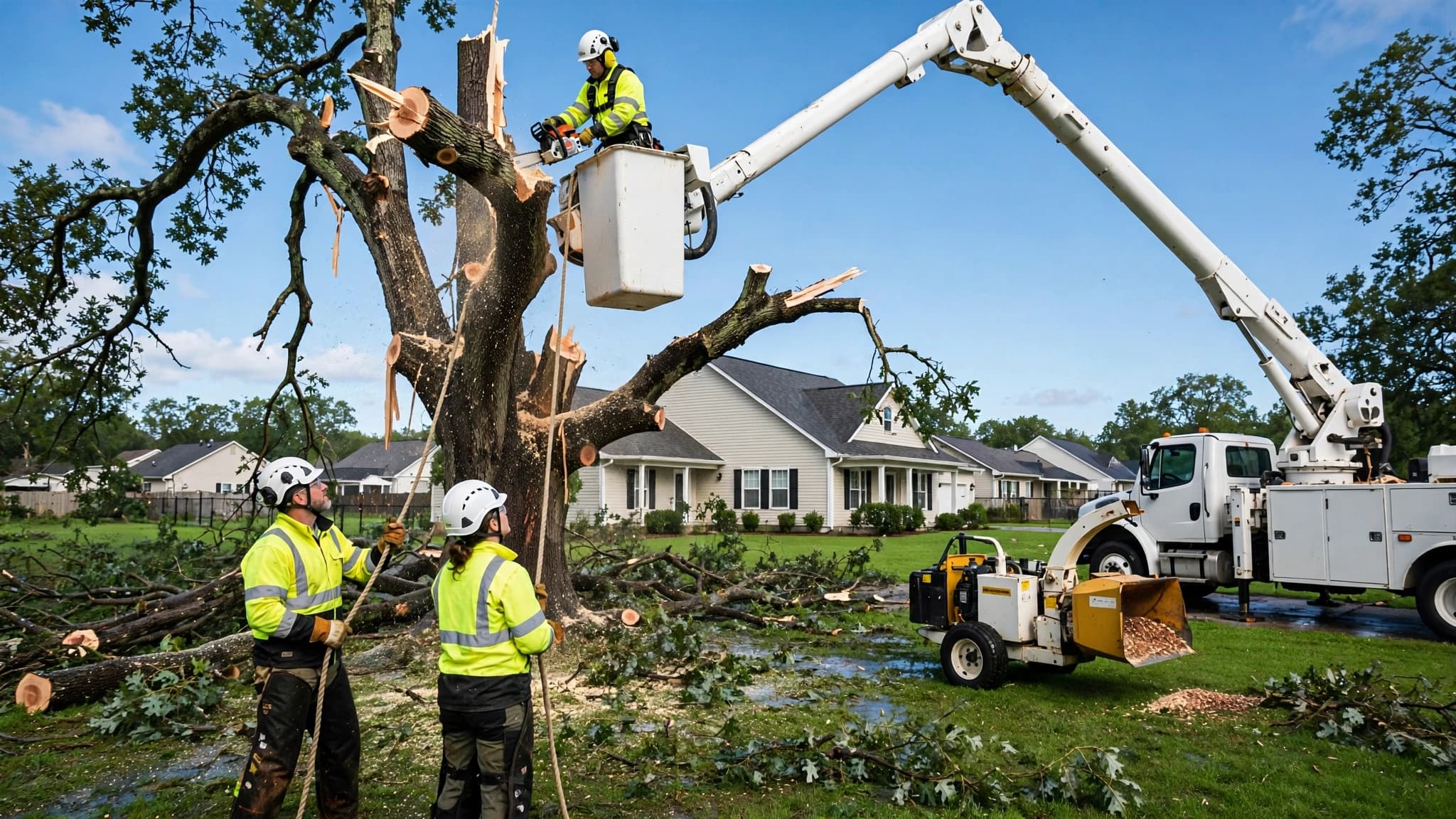
They are formed everywhere by storms. Imagine a sapling under a fallen tree, a branch bent down by the weight of another tree, a tree bent into a curve by an inverted root ball.
How to Spot Tension in Storm-Damaged Wood
- Bowed or arched wood, particularly of thinner trunks beneath the heavier wood.
- Trees hung up and leaning against other trees
- Root plates lifted out of the ground
- Fractured or curved fibers around a fracture.
What to Do When You Find One
- Keep off the strike zone that is the arc that the wood will follow once released.
- You can only cut small wood that is pinned when you can read the load. Proficient cutters relieve tension in bits extrinsic to the arc.
- Avoid elevated root plates. Elimination of the weight of the trunk may cause them to tip or bang back.
- You cannot guess where the energy will go; then don't cut. Anything stouter than your forearm is that of an arborist.
When to Call a Professional Tree Service After Storm Damage
It is no big deal to delegate a job. Pros who do it day to day still request an assist with larger removals.
Red Flags That Mean Stop
- Any wire that comes into contact with the tree or a limb.
- A tree on your house, garage or fence, as the structure may be supporting the weight.
- Wood thicker than your saw's bar is long
- The trees suspended in other trees, or the thick branches above.
- Bent wood or raised root plates you can not be sure of.
- A shattered trunk that leans towards your house.
- You're tired, hurt, or have never run a saw
What Tree Removal Costs After a Storm
Prices vary by area and challenge, though such are the common U.S. ones:
| Job | Typical cost |
|---|---|
| Small limb removal and debris cleanup | $150–$500 |
| Cutting and hauling one fallen tree (no damage) | $400–$1,500 |
| Tree on a roof or house, crane needed | $1,500–$5,000+ |
| Emergency or after-hours rates | Often 1.5x–2x normal |
( Source: national home-services cost guides like Angi)
How to Hire Without Getting Burned
Request an arborist certified by ISA who has passed an industry exam on the care and safety of trees (Source: International Society of Arboriculture).
Ask to see evidence of workers compensation insurance and liability insurance and check it with the insurers.
Get an estimate on paper, and compare two or three, time permitting.
Watch out of door-to-door crews that arrive immediately after the storm, and never pay in advance. The advice to the FTC on hiring storm-damage contractors (Source: Federal Trade Commission).
Discuss with your homeowners insurer prior to any work done as removal is not usually covered except when the tree has damaged a structure (Source: Insurance Information Institute).
When the debris has disappeared, think about planting a replacement tree in the fall, and go through our first-frost checklist to make sure that the rest of your yard is winter-ready.
The Bottom Line
Work after the storm pays off. Look for wires, first, dress up to the last inch, review all the tension in each log, and pass on any task that causes your stomach to tighten. Speed will never be able to beat a sharp saw and a calm plan. When you've put the final log into place, put your tools in good condition to deal with the next storm. Next, read our garden tools and equipment guides to learn how to maintain them, new battery-powered products, and clever methods to approach yard work all season long.
References:
- Centers for Disease Control and Prevention (CDC), "Natural Disaster and Severe Weather Recovery Guidance" (chain saw safety and storm-related injuries)
- Occupational Safety and Health Administration (OSHA), "Electrical Safety Requirements and Minimum Approach Distances"
- Electrical Safety Foundation International (ESFI), "Overhead Power Line Safety and Downed Line Guidance"
- ASTM International, "ASTM F1897 - Standard Specification for Leg Protection for Chain Saw Users"
- American National Standards Institute (ANSI) / ISEA, "ANSI/ISEA Z87.1 Personal Eye and Face Protection Standard"
- USDA Forest Service & Land-Grant University Extension, "Chain Saw Safety and Cutting Techniques" (compression, tension, and bucking cuts)
- Angi, "Tree Removal and Storm Cleanup Cost Guide"
- International Society of Arboriculture (ISA), "TreesAreGood: Certified Arborist Hiring Guidance"
- Federal Trade Commission (FTC), "Picking Up the Pieces After a Disaster: Hiring Contractors"
- Insurance Information Institute (Triple-I), "Does Homeowners Insurance Cover Tree Damage?"
Frequently Asked Questions
What are the most important chainsaw safety tips for storm cleanup?
What is a spring pole when cutting trees?
How to prevent chainsaw kickback?
What should I do if a fallen tree is near power lines?
When should I call a professional tree service after storm damage?
Does homeowners insurance cover tree removal after a storm?
About Philemon John
Philemon John is the Lead Author of Broad Gardening and has more than 10 years of experience growing and caring for plants in the backyard. He is particularly passionate about vegetable gardening, soil building and pest management and offers real-life advice and tips to support home gardeners.