Gas Leaf Blower Bans Are Taking Effect This Fall: Your Homeowner's Guide to Switching to Battery Power

By Philemon John
Lead Author & Cultivator • Peer Reviewed & Soil Tested
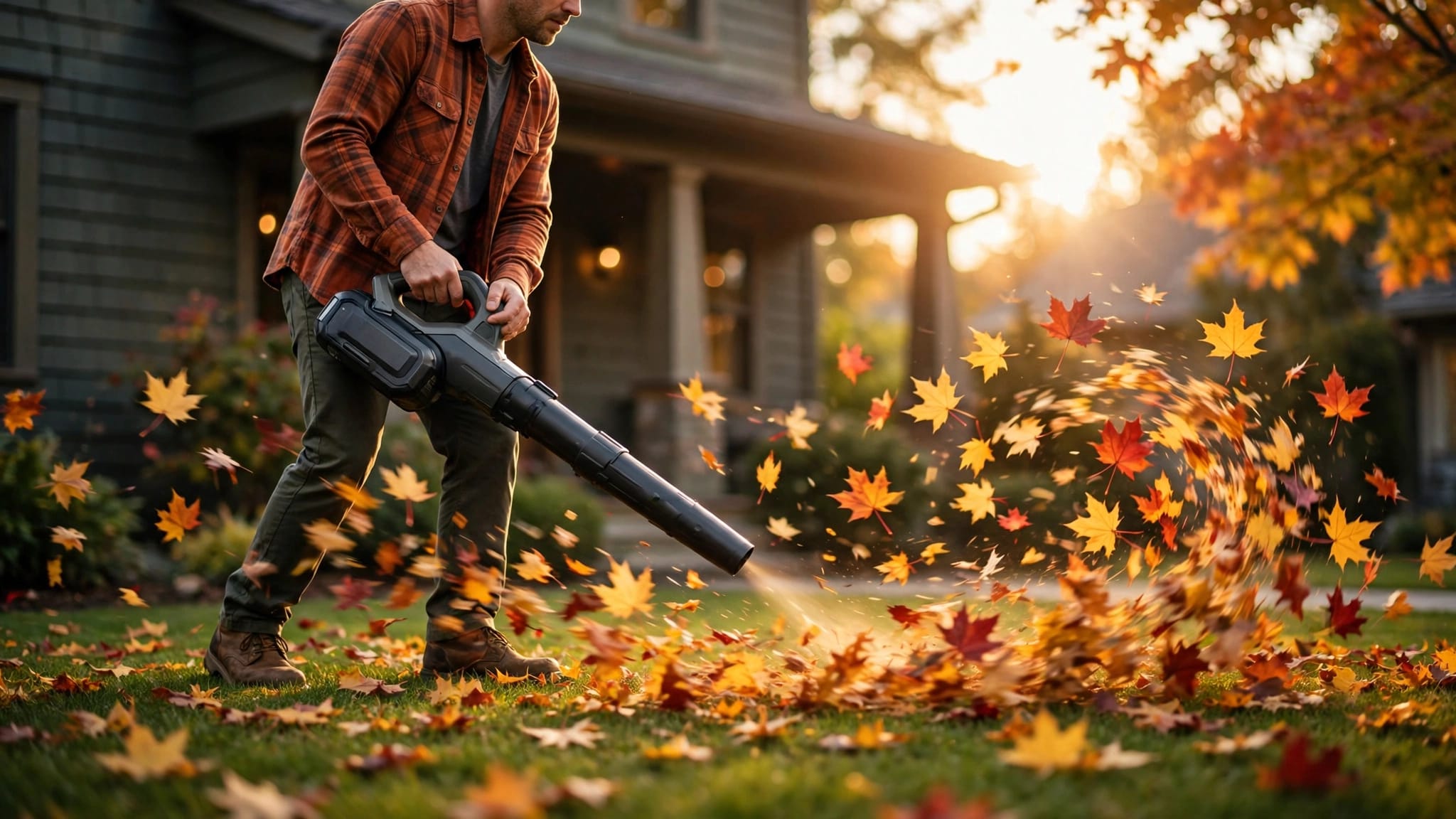
It is crispy, October Saturday, the maples are falling and your neighbor has just received warning notice about the raving gas machine in his garage. Sound familiar? Nationwide, gas-powered yard tools are being phased out of service, and it is in the fall that a lot of rules go into effect. This is what you will receive, a simple English overview of the new regulations, actual expenses, operating periods, and how to select a cordless model that really blows the wet leaves away.
Quick Answer: Yes, more and more U.S. cities and counties are prohibiting or limiting gas-powered blowers, and a few deadlines come to pass this fall. Most home yards are now operated with cordless models, which run approximately 15-30 minutes on high power, and cost about 100-400 dollars as a good homeowner package. Check your own regulations, select a battery system that you can share with other tools and put your old machine to rest safely.
Gas Leaf Blower Ban Rules Taking Effect This Fall
There are years of tightening of the rules on the gasoline yard equipment in the local governments, and this season is accompanied by new deadlines. Over 200 cities in 27 states are now restricting gasoline lawn mowers one way or another (Source: gardening trade publication). Some use outright prohibitions. Others restrict to spring and fall, sell, or have reimbursement to go electric.
The primary target is two-stroke engines. They are inefficient in burning fuel and about one-third of the exhaust goes unburned, contributing to smog-inducing pollution (Source: local news report on Portland phase-out). The other major complaint of neighbors and of the crews who operate these machines all-day long is noise.
Cities and Counties Acting First
The following are some of the destinations that already have the rules in place or that are coming soon:
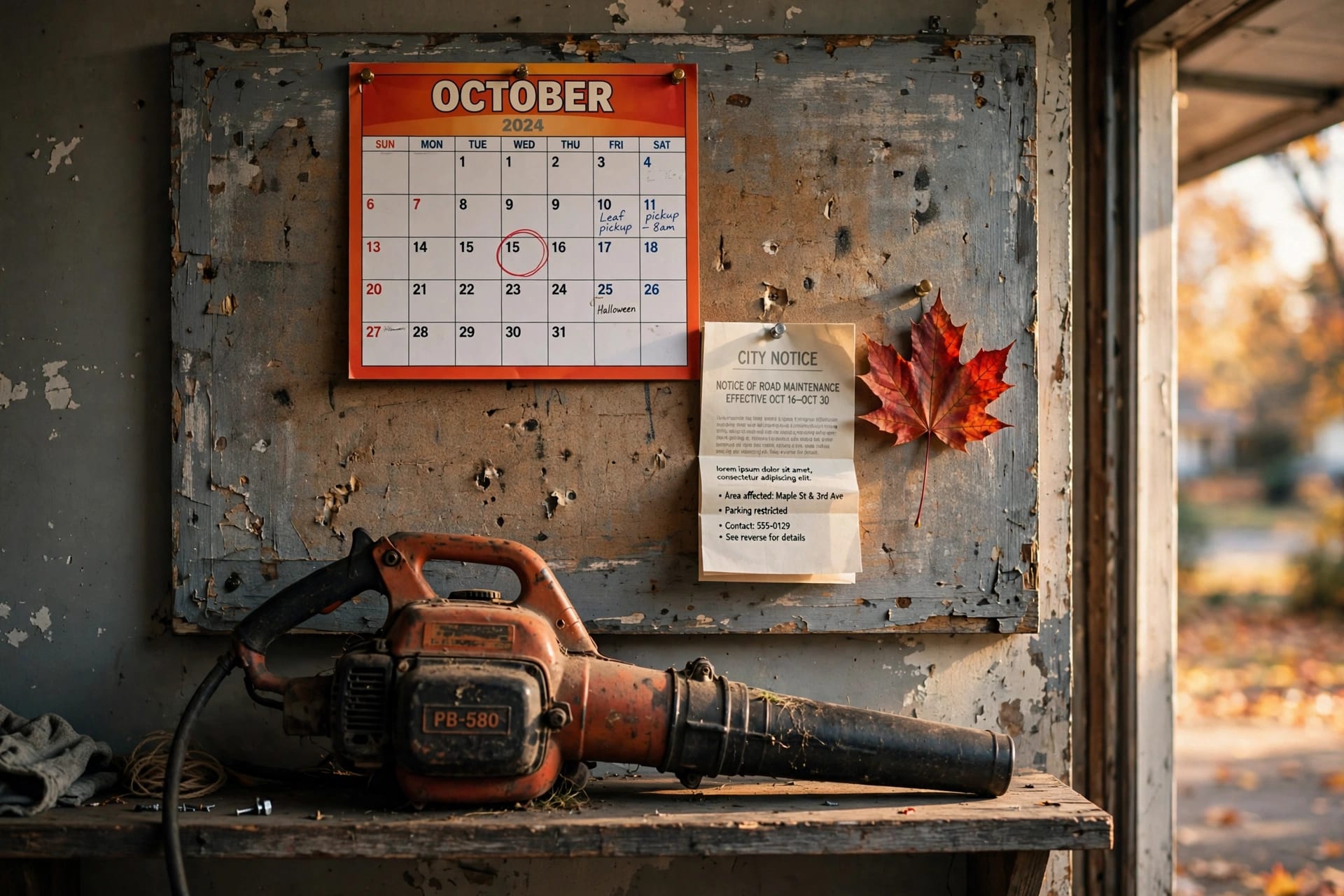
- Portland, Oregon: Phase-out started January 1, 2026. In 2026 and 2027, gas-powered blowers will still be allowed between October and December, but will be prohibited throughout the year beginning January 1, 2028 (Source: City of Portland). The fines begin at $250 (Source: news coverage).
- Baltimore, Maryland: The use will be banned by the end of 2026 (Source: gardening trade publication).
Montgomery County, Maryland: Since July 1, 2025, use has been banned (Source: gardening trade publication). - Rye, New York: In February 2026, the city enacted a year-round ban, which would take place on May 1, 2026 (Source: local news report).
- Cambridge, Massachusetts: A ban was declared in 2025 (Source: encyclopedia summary of municipal actions).
Most of the suburbs around Chicago as well as towns in New York, New Jersey and Massachusetts do not permit gas-powered blowers except in the spring and fall cleaning up periods. Regulations are regularly updated, so ensure that you verify the wording on your respective city or county websites as well before you purchase or sell anything.
Are Gas Leaf Blowers Being Banned Everywhere?
No. In the majority of the country there is no statewide ban and the regulations are a mosaic of local ordinances. Cities are getting increased latitude in some states. In 2026, a bill was introduced in Virginia legislature, which would allow densely populated areas to ban or regulate such machines (Source: Virginia Legislative Information System).
The best bet is to assume that there are restrictions that are coming to your area. Seasonal limits are used as a starting point in cities, and once cordless tools demonstrate that they can maintain them, the limits are narrowed.
Battery vs Gas Leaf Blower: Power, Cost, and Noise Compared
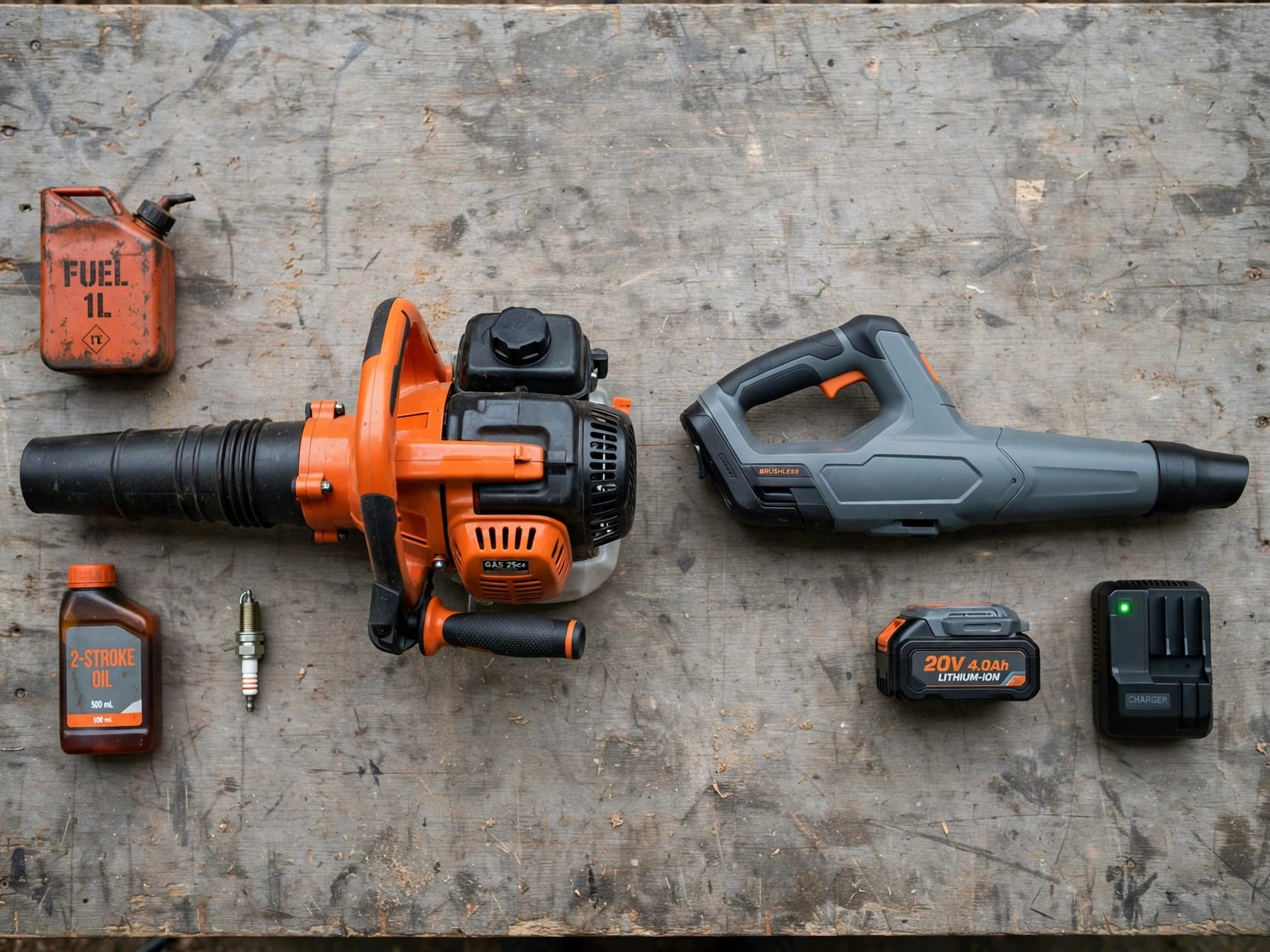
The gap has been narrowed to a great extent in recent years with cordless tools. In crude, drawn-out muscle, gas prevails. Cordless is victorious in terms of convenience, quiet and hassle.
| Feature | Cordless Battery | Gas-Powered |
|---|---|---|
| Common householder price | $120 -300 | $100 -400 (with battery and charger) |
| Run time | Until the tank is drained | Approximately 15-30 minutes on full, and even longer on low. |
| Noise | Sufficiently loud to need hearing protection | Perceptibly less noisy, but still beneficial with earmuffs. |
| Maintenance | Spark plugs, cleaning of carburetors, wipe down and fuel mixing. | None |
| Exhaust at point of use | Yes | None |
| Wet, matted leaves | Strong | Good on higher end models, slower on low end models. |
(Source: manufacturer specifications and independent consumer tests. Ranges are typical, not guaranteed.)
Power and Performance
The measurements of airflow and air speed are in CFM (cubic feet per minute) and MPH, respectively. Most gas models drive 400-700 CFM. Mid and higher-end cordless models are now capable of the same range, when used in short bursts on a turbo setting.
That is enough of a typical suburban lot of less than a quarter acre. The point at which cordless fails is an expansive lawn with thick, wet piles of leaves. This is precisely the reason why the rules of some cities were also introduced gradually in years, so that the equipment could have time to develop (Source: City of Portland).
Noise and Emissions
Cordless motors are much quieter than small gas motors, and early-morning clean up is much easier on your neighbors. Both types are intelligent when it comes to protecting the ears because a long-term exposure to loud devices may cause hearing loss (Source: CDC/NIOSH noise guidance). You also leave out the exhaust, and this is important in case you are operating in a small, fenced yard or by open windows.
Cost Over Time
Gas expenses are accumulating silently. The costs of fuel, two-stroke oil, spark plugs and carburetor cleaning are easy to reach 30-60 a season, not to mention the irritation of stale fuel every spring (estimate based on average small-engine maintenance). It is just a penny to charge a cordless pack. The additional cost that is essential is a second battery, and it is worth the price.
What is the Duration of Battery operated Leaf Blowers?
There are two answers to this question: the length of the charge that one runs and the years the tool will provide you with. Both are not as difficult as most individuals assume.
Runtime Per Charge
The highest maximum power consumption of most homeowner models is 15-30 minutes and 40-60 minutes or longer at low speed (Source: manufacturer spec sheets). The size of the battery is important. A pack with a rating of 5.0 amp-hours (Ah) will have a significantly longer life than a pack with a rating of 2.0 Ah.
In case of a normal fall clean up, a spare battery will be the simplest solution. Change as soon as the first one fades, empty one as you work.
Overall Lifespan
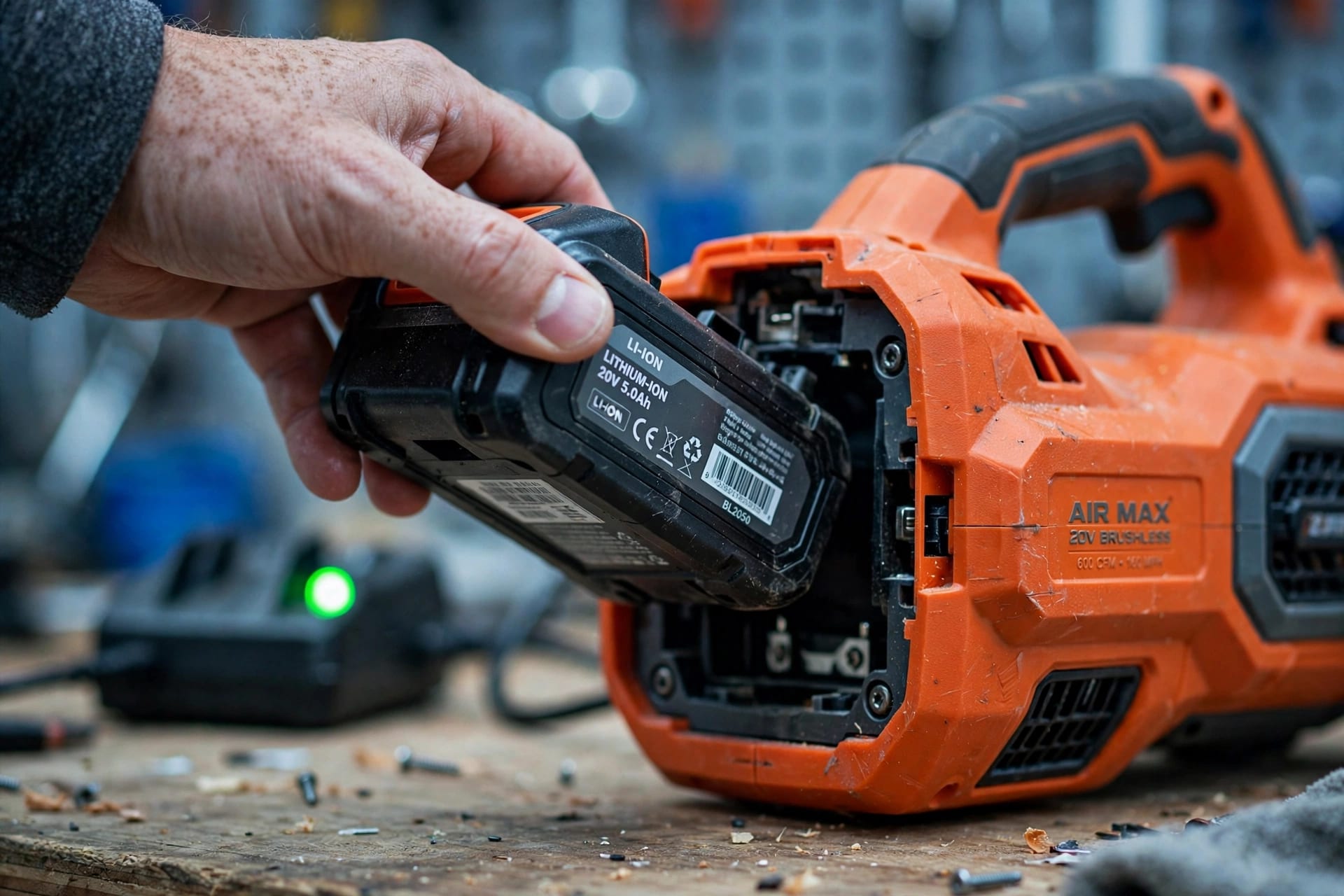
The blower body, its brushless motor and plastic casing usually have a life of 5-10 years under normal care. The wear item is a lithium-ion battery. The packs have typically a few hundred charge cycles, typically equating to 3-5 years of frequent homeowner usage (Source: lithium-ion battery industry guidance).
Some of our ways lengthen that life:
- Keep the packs in a dry and cool place, not in a hot car or in a freezing shed.
- Do not leave them drained out months long.
- Charge in your owner manual at a temperature range, typically above freezing and below approximately 105 deg F.
- Do not leave the vents full of dust and leaves.
Several brands have three to five year warranty on the tool and battery, so read the fine print before you make a purchase.
What to Do With a Gas Leaf Blower After a Ban
In the majority of local regulations, use, but not ownership, is constrained. Still, a machine you can't run in your own yard is just taking up garage space. The following are your choices, in order of difficulty.
- Keep it within the permitted windows. You will be able to retain it until you are allowed to use it seasonally in your town. And just remember not to depend on it in the long run.
- Sell it or give it away. On the local market, working blowers have a short shelf life, or you can give one to a neighbor or community group in a local area without limitations. See if your city restricts sales as well.
- Find trade-in or rebate. Certain governments and utilities have provided incentives on the replacement of gas equipment therefore search before you toss. It is important to note that Portland did not report any individual consumer assistance with up-front costs (Source: City of Portland).
- Recycle it. A scrappable machine can typically be taken to a scrap metal place, or a household hazardous waste drop-off.
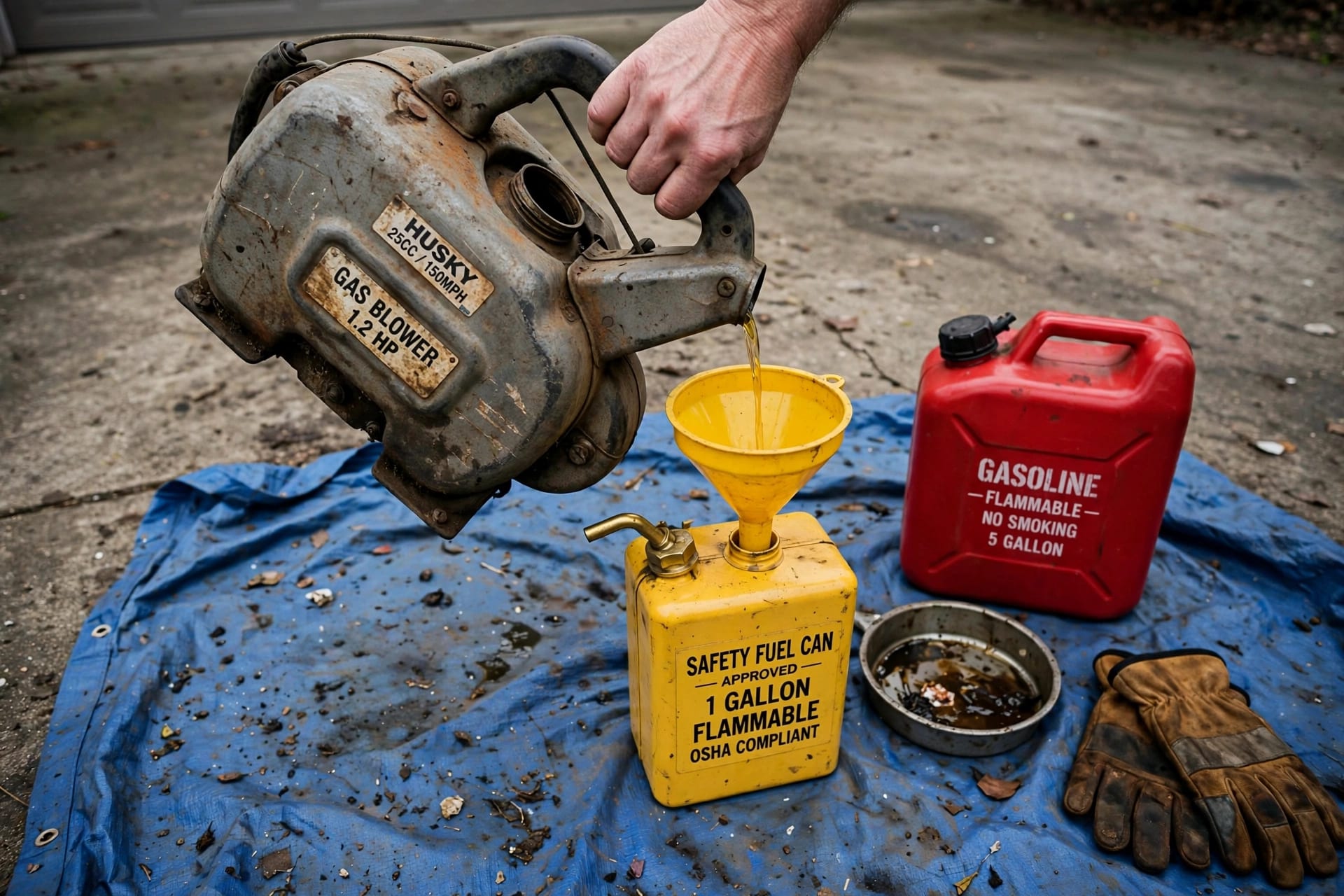
Preliminarily to any of these--do the fuel. Turn off the engine until it stalls, empty the remaining into a approved container and transport it to a hazardous waste collection facility (Source: EPA household hazardous waste guidance). Do not pour fuel into drain, ground or garbage.
How to Choose the Best Cordless Blower for Your Yard
Among dozens of models that are available, concentrate on the specs that are really important.
- Airflow (CFM): 300-500 CFM is normally sufficient to cover a small yard. With bigger lots or heavy oak and maple drop, target 500 or more.
- Air speed (MPH): The faster the better to lift off stagnant, wet leaves off grass.
- Battery platform: When you have a cordless drill or trimmer already, spending real money on a compatible "bare tool" can be saved. Pick up our guide of other cordless yard tools to assemble a complimentary set.
- Motor type: Brushless motors are less expensive to operate, more durable and extract more power out of a single charge.
- Weight: The handhelds, most of them, weigh 5-10 pounds including the battery. As much as possible, see how to hold one at the store.
- Controls: A turbo button and a variable-speed trigger provide you with finesse and muscle in a single tool.
As a crude estimate, entry-level models cost approximately 100-180, good mid-range models cost around 200-300 and near-pro models cost around 300-500 (Source: retail price ranges). When you travel a lot, invest in battery capacity and not additional bells and whistles.
Tips for Your First Fall Season With Cordless Tools
The habits which are working on a gas machine require a little adjustment with a cordless one. These optimizations will lengthen your execution time and accelerate the task.
- Low speed when using dry leaves and use turbo with wet piles. This can almost increase your working time by 2 times.
- Never work against the wind, but with it; and never push leaves in long strokes, but in short ones.
- Blow onto a tarp. The hauling of a single large load is better than the running about after the fallen leaves in the yard.
- Go after the dew burns off. Wet leaves weigh more and consume battery life.
- Keep the spare charged (when you are working) so that you never run out of a pack.
When you have the leaves raked up, employ them. Fallen leaves are shredded into excellent free mulch to use in flower beds and excellent carbon-rich material when processing fallen leaves into compost. All you have to do is not let a thick, spongy layer to rest on turf during the winter. Our tips to keep your lawn healthy through leaf season explain how to avoid smothered grass.
When you make plans on changes to be made next year, consider the implications of your beds and trees on cleanup. An intelligent design, such as the thoughts in our garden design and landscaping section, can channel leaves into convenient locations.

References:
- City of Portland (Portland.gov), Bureau of Planning and Sustainability: Equitable Gas Leaf Blower Phase-out and FAQ pages (phase-out dates, fall allowance, and 2028 year-round prohibition).
- Garden Know How: "Gas Leaf Blower Bans Are Coming Into Force Across the US" (locality and state counts, Baltimore, Montgomery County).
- MyRye.com: local news coverage of Rye, New York's February 2026 vote (effective May 1, 2026).
- Local news coverage of Portland's phase-out: (fines starting at $250; two-stroke emissions estimate from Hillsdale News).
- Virginia Legislative Information System (lis.virginia.gov): HB881, 2026 Regular Session.
- Wikipedia, "Leaf blower": summary of municipal actions, including Cambridge, MA.
- CDC/NIOSH: occupational noise exposure and hearing protection guidance.
- U.S. Environmental Protection Agency: household hazardous waste guidance.
- Consumer Reports: and manufacturer specification sheets for typical price, CFM, and runtime ranges.
- Lithium-ion battery industry guidance: typical cycle life and storage recommendations (see Battery University).
Conclusion
Stricter local regulations are driving more American lawns to cordless equipment and the current models are up to the task. Find out your local deadlines, select a battery system that you can expand, and safely dispose your old machine. Your neighbors, or your ears, will thank you. Ready to have your next project? Find additional fall schedules, planting schedules and the like.
Frequently Asked Questions
Is a battery powered leaf blower strong enough for wet leaves?
Is switching to battery powered leaf blower gear worth it for a small yard?
How long do battery powered leaf blowers last before needing replacement?
What should I do with my gas leaf blower after a ban takes effect?
Does a gas leaf blower ban apply to homeowners or only landscapers?
Can I charge cordless blower batteries in a cold garage?
About Philemon John
Philemon John is the Lead Author of Broad Gardening and has more than 10 years of experience growing and caring for plants in the backyard. He is particularly passionate about vegetable gardening, soil building and pest management and offers real-life advice and tips to support home gardeners.