How to Winterize Outdoor Power Equipment in 8 Steps

By Philemon John
Lead Author & Cultivator • Peer Reviewed & Soil Tested
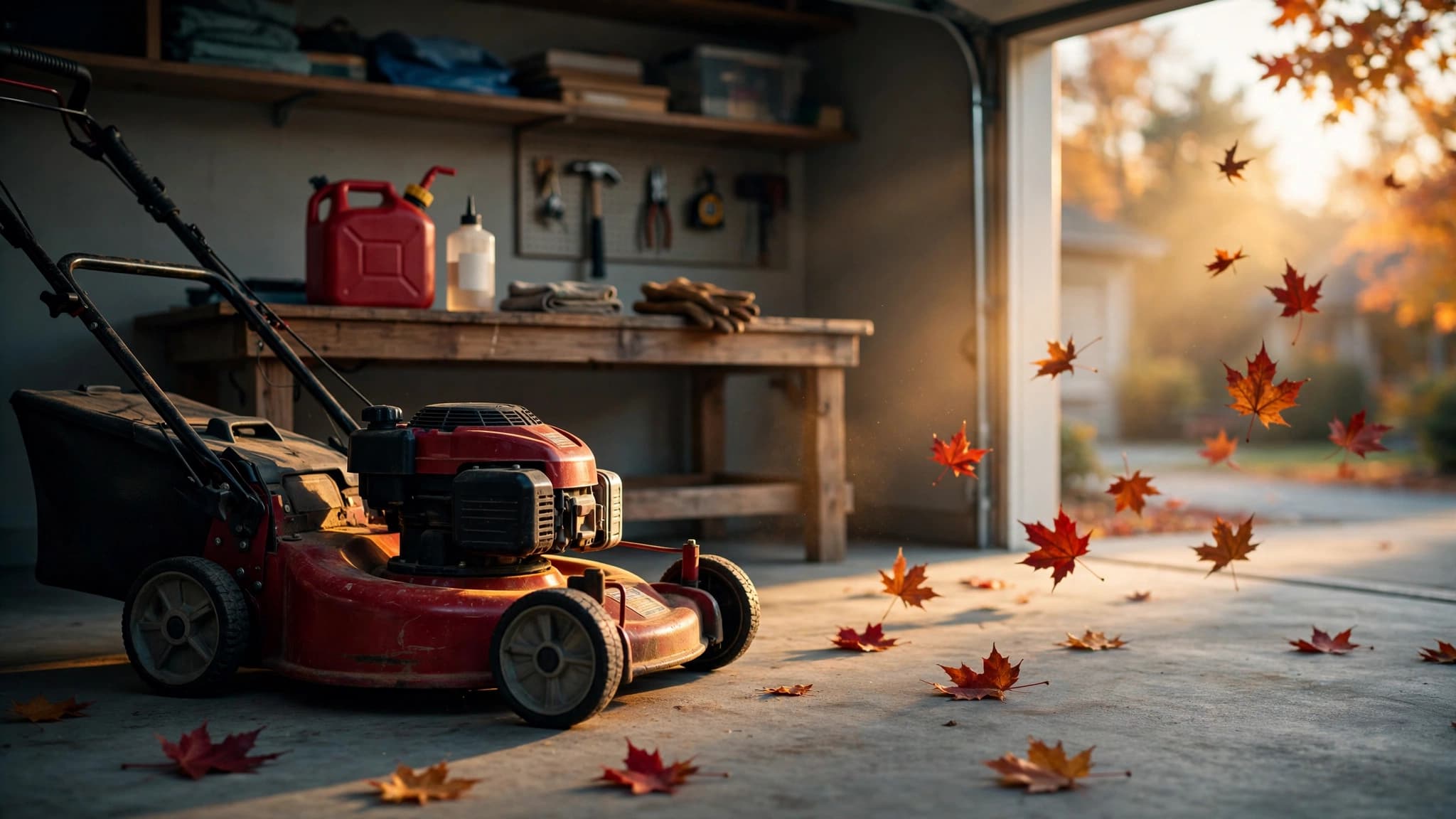
It's early October. The leaves are heading to the curb, the mower is parked in the corner of the garage, and there's still gas sloshing around in the tank. March will see that fuel stale, and you will be pulling a pull cord on a coughing engine. The eight-step routine of the Outdoor Power Equipment Institute can preempt all that next weekend and this guide takes you through each of the steps.
Quick Answer: Have your equipment parked clean, dry and with the fuel taken care of. Either empty all tanks or stabilize the gas, charge and store batteries in a building, change the oil, and cover everything with a cover. This has been condensed by the Outdoor Power Equipment Institute (OPEI) into eight steps, and you could complete most of them in one weekend.
When to Winterize Lawn Mower and Other Gas Tools
Waiting on a calendar date. The last time that you use each machine is your trigger. OPEI indicates that the routine commences after the final cut of grass and management of leaves. (Source: OPEI)
Here's a handy yardstick. When a small engine will not be used at least three or four weeks, it must be prepped to be stored. Alabama extension service (Source: University of Georgia Cooperative Extension) documents that a mower that has not been used in 30 days or more should be dealt with using a fuel stabilizer. What is your viewpoint on this matter?How do you feel about this?
Climate changes the calendar, not the rule. The last mow can fall in late October in the Upper Mid West and Northeast. As far down along the Gulf coast, you can continue mowing well into late fall. Before the initial hard freeze when the job is colder, slower and easier to defer.
| Equipment | Get it ready when | Quick note |
|---|---|---|
| Push and riding mowers | After the final mow | Do these first; they hold the most fuel |
| String trimmers and leaf blowers | After the last leaf cleanup | Quick jobs that fit in the same weekend |
| Hedge trimmers and chain saws | After the last pruning | Same fuel rules apply |
| Snow throwers and generators | Before the first storm | These get pulled out, not put away |
And you still have some late-season lawn feeding in mind? Do that first. Our fertilizer timing guide to winterizers will tell you when to use the fertilizer, so your final mow and your equipment preparation do not bump into each other.
How to Winterize Outdoor Power Equipment: The 8-Step OPEI Checklist
OPEI is the trade association of the companies that produce outdoor power equipments, small engines, battery systems, generators, etc. Its list of falls is not long and is practical (Source: OPEI). Here is its quick overview, and more detail by extension experts and safety agencies.
| Step | The one-line version |
|---|---|
| 1. Check the manual first | Your model's rules beat any generic advice |
| 2. Clean and service each machine | Scrape, change oil, swap filters, fix problems |
| 3. Handle the fuel | Run tanks dry or use fresh, treated gas |
| 4. Care for the batteries | Charge, then store indoors and away from metal |
| 5. Give your gear a dry home | Summer tools clean and covered; winter tools handy |
| 6. Clear space and yard hazards | Make room and pick up debris before snow hides it |
| 7. Get the generator ready | Outdoor-rated cords and a safe setup spot |
| 8. Keep kids and pets safe | Indoors and supervised whenever engines run |
Step 1: First Check the Manual.
The manual of your owner gives final say in fuel, oil, and batteries. In case you have lost it, you can download one with the model number that is printed on the label of the machine. Study how to use the switch to turn the engine off, and do not switch a safety mechanism off or off the vehicle. (Source: OPEI)
This is most important with fuel and batteries, in which brands conflict. Whatever this article conflicts with in your manual, use the manual.
Step 2: Wash and Maintenance of Every Machine.
The recommendations of OPEI are to wash the machine, replace the oil, replace the filters, and perform repair before parking the machine. (Source: OPEI) Work in light with drip pan. Disconnect the spark plug wire to make sure the engine does not fire unintentionally. (Source: OPEI safety tips)
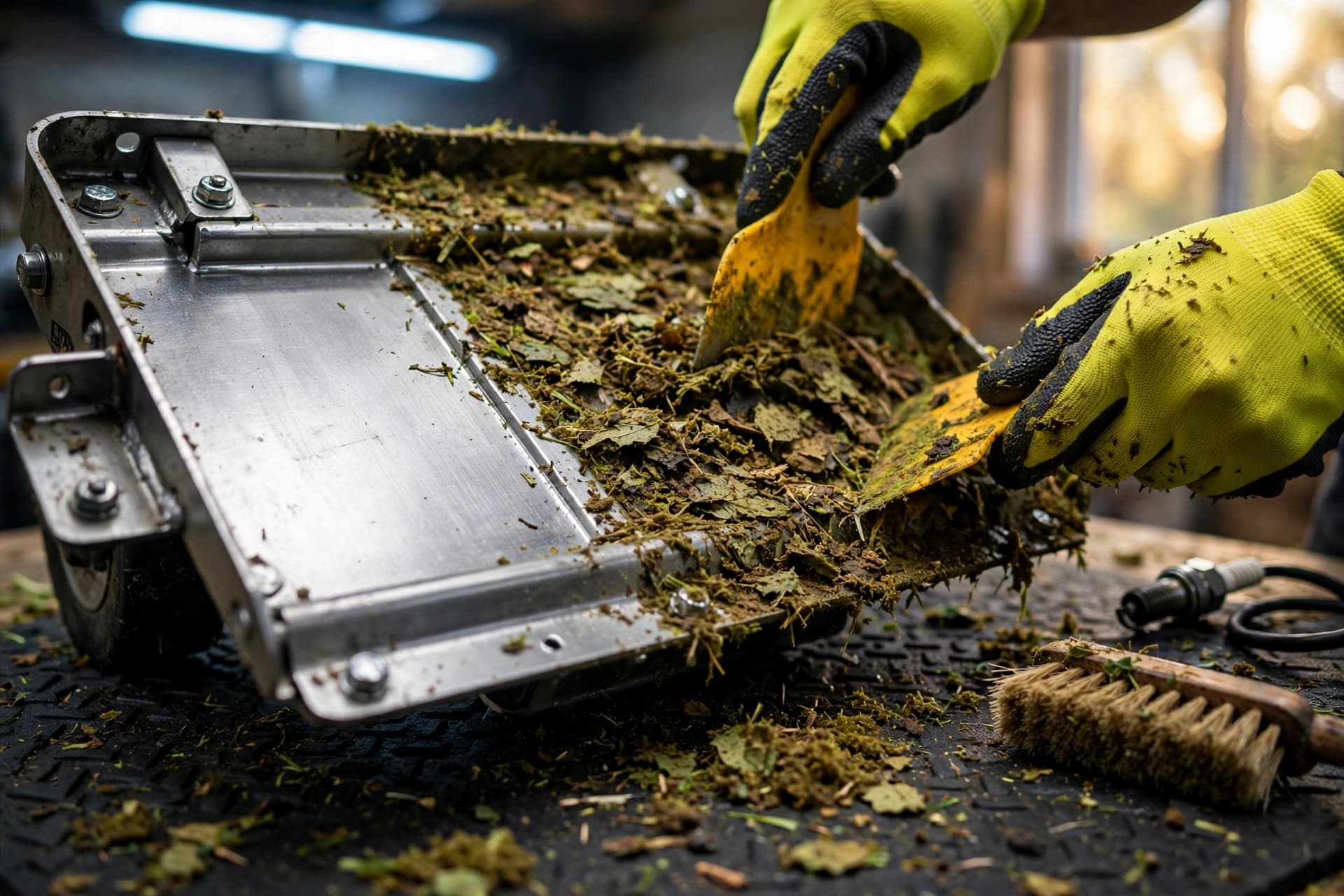
Work through this brief list, then:
- Scrape the deck. When you have been raking leaves into your lawn, it will be covered with dirt. It is done with a plastic putty knife and a stiff brush. Lean the mower as instructed in your manual, which is generally with the air filter facing upwards.
- Replace the oil when the engine is hot. The contaminants remain in suspension in warm oil and leak out easily as compared to cold oil. (Gardening column in Salisbury Post)
- Hone and sharpen the blade. Change when damaged, and have a spare one.
- Inspect the spark plug. A clogged or damaged plug is a cheap thing to replace now and a pain in April to track down.
Should I Drain Gas or Add Fuel Stabilizer? (Step 3)
Either method works. What you choose is what you and your machine choose, and what your manual tells.
Gas does not store well, particularly blends of ethanol. OPEI advises to use fuel within 30 days when the equipment is used in winter. (Source: OPEI) The idea is simple, therefore, don't leave old gas in a machine lying around months.
Option 1: Dry it out. OPEI recommends emptying tanks prior to storage. University of Georgia Extension includes one more step: After emptying the tank, turn on the engine a few times to clean the carburetor. It refers to this dry storage as the most effective method to prevent problems with restarts. (Source: UGA Extension)
Option 2: Recycle the fuel. Install a stabilizer designed to fit small engines then operate the engine a few minutes with treated gas getting to the carburetor. Briggs & Stratton recommends that treated fuel may remain in the engine, whereas untreated gas must be emptied. A bottle is not expensive (Source: Briggs and Stratton) less than ten dollars. (Source: Alabama Cooperative Extension System)
One drawback: stabilizer slows aging, but it is powerless to restore stale gas. Do not put it in old fuel. Begin with a new fill.
| Your situation | Best move |
|---|---|
| Mower, trimmer, or blower parked until spring | Run the tank dry, then pull the cord a few times to clear the carburetor |
| Machine whose manual allows treated fuel | Add stabilizer to fresh gas and run the engine a few minutes |
| Snow thrower or generator you may use this winter | Fresh gas with 10% ethanol or less, plus stabilizer, used within 30 days |
| Leftover gas in a can | Treat it and keep it in an approved container away from living areas |
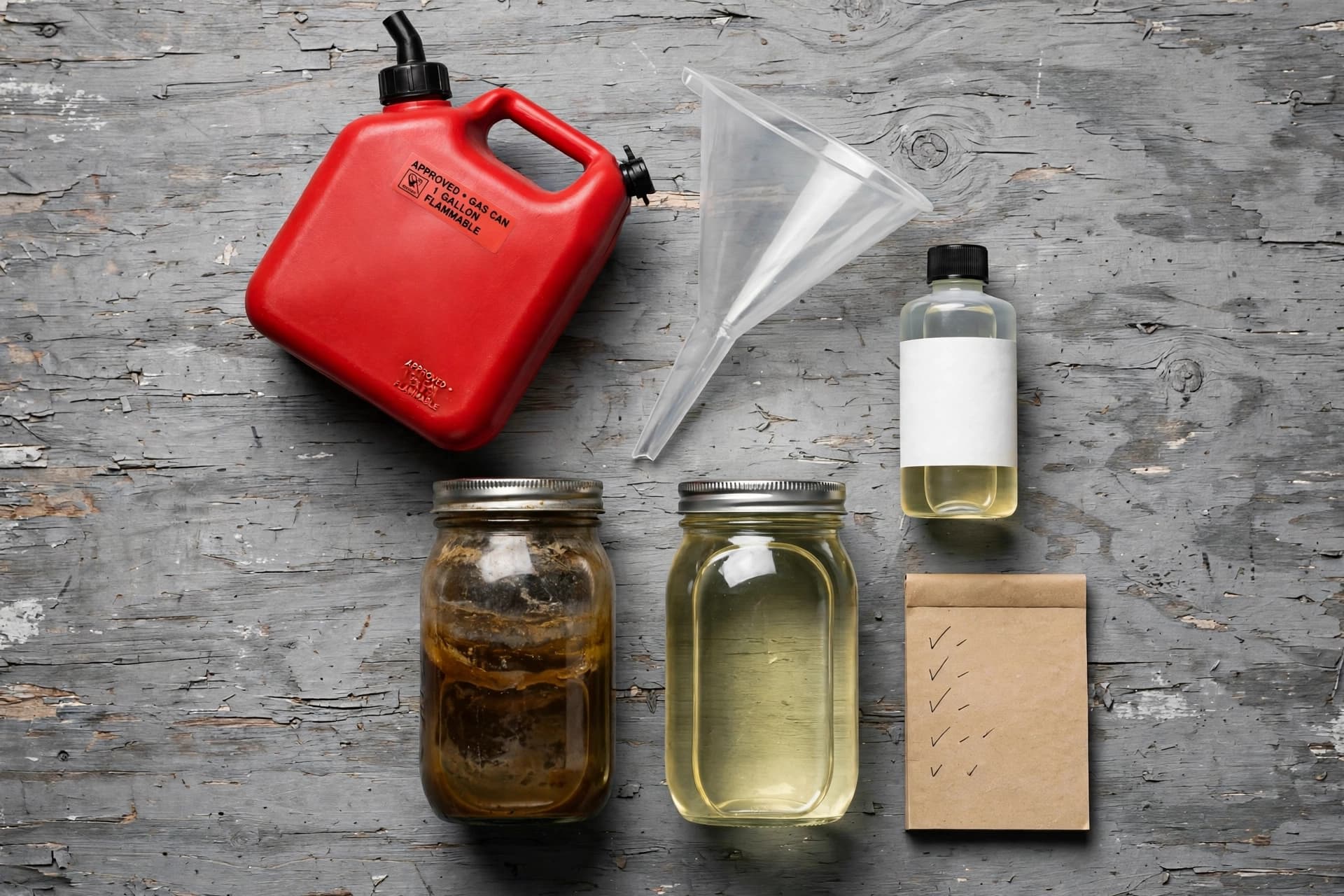
Dispose of it and store it in a safe place not close to the places of life.
Look at the pump label and then fill up. Ethanol in the form of gas with 15 percent ethanol (E15) which is commonly referred to as Unleaded 88 is not compatible with the mowers. According to the EPA, the use of E15 is not compatible with the engines in nonroad equipment like mowers and chain saws. (Source: EPA) OPEI notes most engines are built for gas with no more than 10% ethanol.
Don't stockpile fuel, either. Briggs & Stratton believes that it is not safe to keep more than a 30-day supply in the homeowner.
How to Store Lithium Ion Batteries in Winter (Step 4)
Battery tools avoid the hassles of fuel, but the pack requires maintenance. The list created by OPEI includes the recommendation to charge the batteries completely, store them outside of metal, and place them in a place with controlled climatic conditions. (Source: OPEI)
The trick is as follows: brands do not come to an agreement regarding the level of charge. DEWALT recommends the need of a full charge on a pack prior to storing it over six months. Other instructions, such as a How-To Geek roundup of tool-maker advice, recommend a partial charge of about 40 to 60 percent and caution against emptying the packs. The reason is that your manual is the winner (Source: How-To Geek). When it says nothing, do not keep packs empty, and fill them up when they run low.
No matter the brand: follow these habits:
- Removal of the pack of the tool. Before long-term storage, DEWALT recommends the removal of the battery out of the tool.
- Don't leave it on the charger. The National Fire Protection Association recommends not to continue charging when the battery is full. (Source: NFPA)
- Keep it inside the house, without exposing to extreme temperatures. NFPA cautions against storage of batteries in extremely hot or cold locations. An unheated shed is beaten by a heated utility room.
- Store it out of loose metal. The Power Tool Institute recommends that packs should be kept out of reach of keys, coins, nails, screws and the likes. (Source: Power Tool Institute)
- Never charge a frozen pack. A New York State consumer safety guide recommends not to charge lithium-ion batteries below 32 F or more than 105 F. (Source: NY State DHSES)

The same applies to riding mowers with a starter battery. The previous fall guidance of OPEI instructs to empty it and completely charge it before storing. Remind yourself to check all your packs midwinter.
Considering going cordless in 2015? What to look to to switch to a battery-powered leaf blower is discussed in our guide.
How to Winterize a Lawn Mower and Park It Right (Steps 5–6)
Step 5: Have Your Gear a Dry Home.
OPEI recommends to keep summer equipment clean and dry, to keep winter equipment in place but not in the weather. All work is a garage, barn, or shed. Store all machines away, out of reach of children and animals.
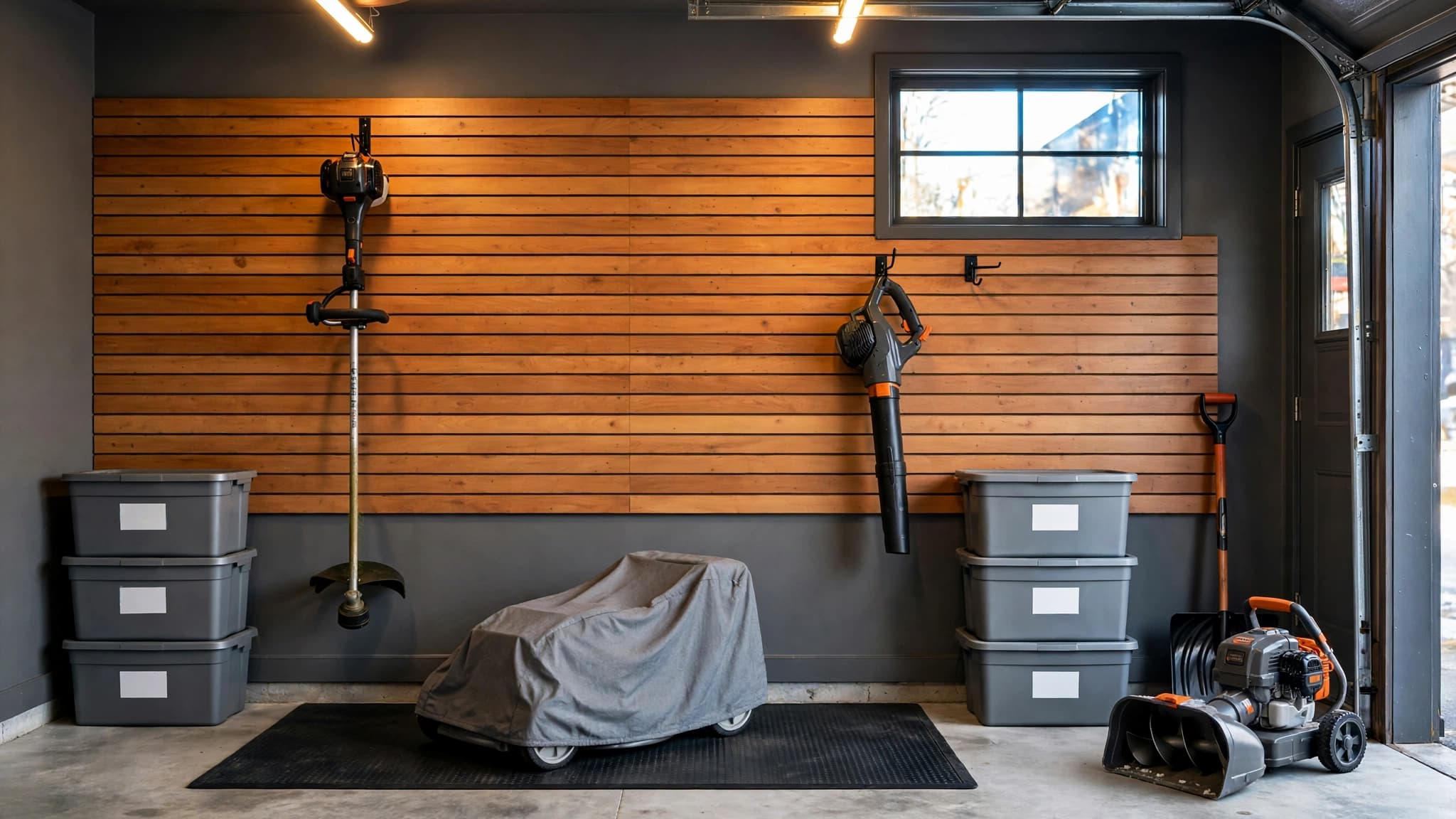
Do not keep mowers beside pool chemicals, cleaners or fertilizer, as the spill may lead to corrosion. *(Source: OPEI safety tips) It is better to use a breathable cover instead of a sealed plastic cover that can trap moisture. Hook handheld tools on walls and release floor space. To get additional maintenance ideas, go through our garden tools and equipment guides.
Step 6: Clean Space and Yard Hazard.
Prepare in advance what you need. OPEI suggests that now is the time to clear the garage or shed and that one should take up the rubbish, toys and other dangerous objects before the leaf heaps or snow conceal them. Then take the snow thrower and generator to the front where you can pick them up quickly. To complete the rest of your fall lawn care list, refer to our fall lawn care guides.
Winterize String Trimmer and Leaf Blower in 10 Minutes
The same applies to handheld tools that can be used instead of a mower, which are faster to use. Two-stroke fuel that has been pre-mixed is also prone to staling, and should be treated as any other gas.
| Header 1 | Header 2 | Header 3 |
|---|---|---|
Generator Readiness and Family Safety (Steps 7–8)
Half the work is packing summer tools up. The other half is getting winter tools ready.
Step 7: Prepare the Generators.
Stock outdoor-rated, heavy-duty cords that are long enough to run the generator at a safe distance of the house. (Source: OPEI) CDC recommends running a generator outdoors beyond 20 feet of windows, doors, and vents, and never in a home or garage, regardless of the presence of open doors and windows. Add a carbon monoxide detector with a battery inside. (Source: CDC)

Test it now, ere a storm befalls. The CEO of OPEI encourages owners to fill up fuel, recharge batteries and check equipment before adverse weather.
Step 8: Safeguard Kids and Pets.
Kids and pets must be inside and under supervision when any outdoor power equipment is running. (Source: OPEI) Store fuel cans and battery packs where small hands can't reach them.
References:
- Outdoor Power Equipment Institute (OPEI), "Eight Autumn Outdoor Power Equipment Tips to Avoid Headaches Later" (NAPSI release, Oct. 3, 2026): the eight tips, the 30-day fuel guidance, the 10% ethanol guidance, battery storage, shelter, clearing space, generator cords, and kids and pets.
- OPEI, organization home page.
- OPEI safety tips as published in WSMAG: disconnecting the spark plug and keeping equipment away from chemicals.
- OPEI, "9 Tips to Help Getting Your Outdoor Power Equipment Ready for Winter" (Green Industry Pros): starter battery guidance.
- OPEI WeatherItBetter announcement (ForConstructionPros): test equipment before storms.
- U.S. EPA, "E15 Fuel Registration": E15 can't be used in lawn mowers or chain saws.
- University of Georgia Cooperative Extension, "Winterizing Motorized Equipment": the three-to-four-week rule and dry storage.
- Alabama Cooperative Extension System, "The 10 Steps of Lawn Mower Maintenance": 30-day stabilizer rule and the under-$10 price.
- Briggs & Stratton, "Fuel Recommendations" FAQ: treated versus untreated fuel and the 30-day supply.
- Family Handyman, small engine maintenance tips: don't add stabilizer to old gas.
- Salisbury Post, "Storing mowers for the winter" (Darrell Blackwelder): warm oil change, blade, and spark plug.
- DEWALT, "Lithium Ion Battery Storage & Safety Tips": charge before storage longer than six months, and remove the pack from the tool.
- How-To Geek, "You're storing your power tool batteries wrong": the partial-charge range.
- National Fire Protection Association, "Lithium-Ion Battery Safety": stop charging when full, and avoid extreme temperatures.
- Power Tool Institute, "Cordless Battery Safety": keep packs away from metal objects and extreme temperatures.
- New York State DHSES, "Lithium-Ion Battery: A Consumer Safety Guide": charging temperature limits.
- Centers for Disease Control and Prevention, "Carbon Monoxide Poisoning Basics": the 20-foot generator rule.
Your Weekend Wrap-Up
Eight steps, a weekend, and a far easier March. Read the manual, service every machine, work with the fuel, store batteries inside, cover your equipment, clear the path and prepare your generator and family. Each step safeguards your gear and your pocket. Then get to your other fall to-do list with our ideas of what to do before the first frost.
Frequently Asked Questions
How to winterize outdoor power equipment if I only have one afternoon?
When to winterize lawn mower: should I wait for the first frost?
Should I drain gas or add fuel stabilizer before storing my mower?
How to store lithium ion batteries in winter if my garage freezes?
Do battery-powered tools need the same prep as gas tools?
Is it safe to use E15 gas in a lawn mower or chain saw?
About Philemon John
Philemon John is the Lead Author of Broad Gardening and has more than 10 years of experience growing and caring for plants in the backyard. He is particularly passionate about vegetable gardening, soil building and pest management and offers real-life advice and tips to support home gardeners.