Mulching Leaves Into Lawn: Skip the Rake This Fall
By Philemon John
Lead Author & Cultivator • Peer Reviewed & Soil Tested
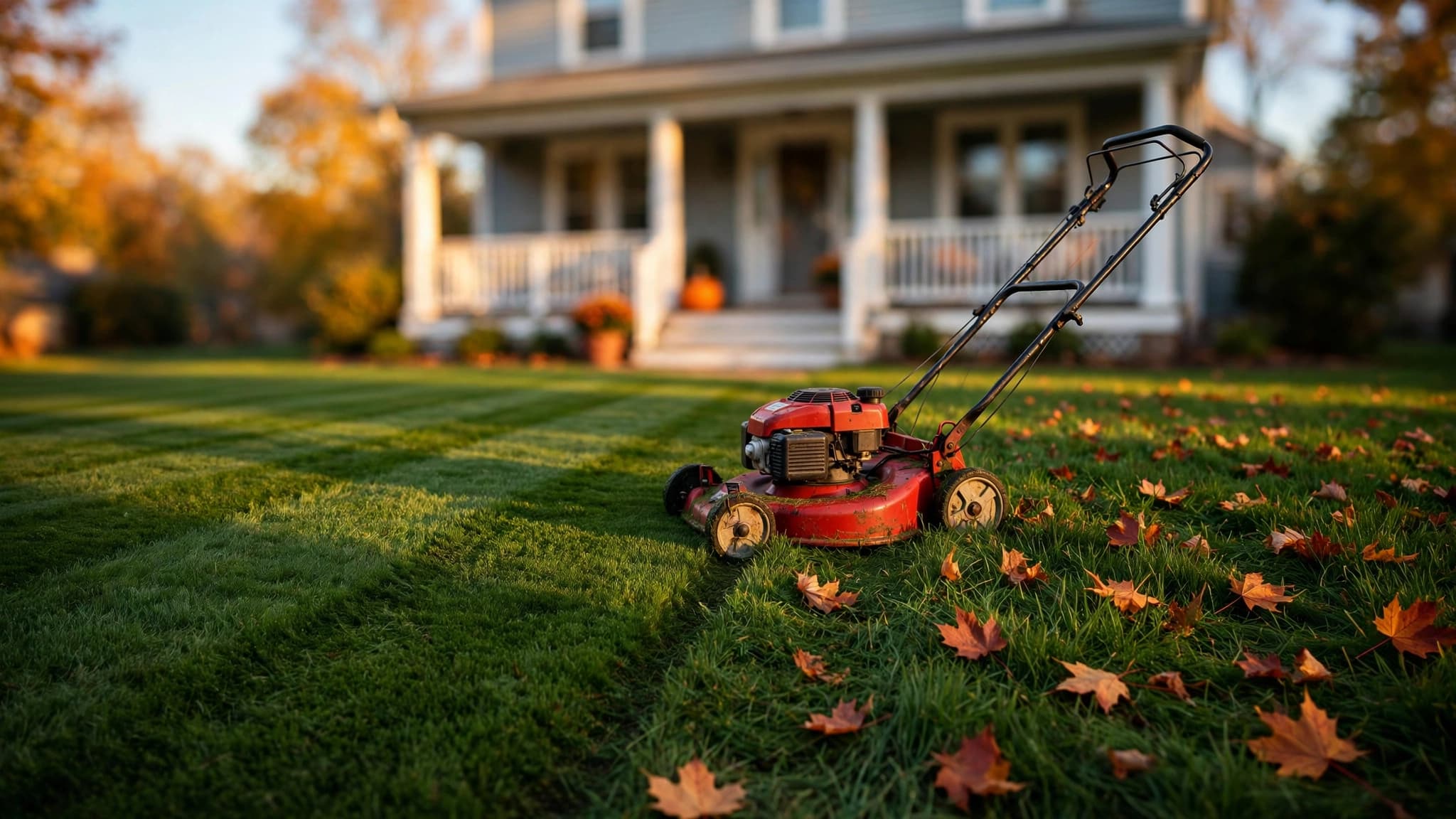
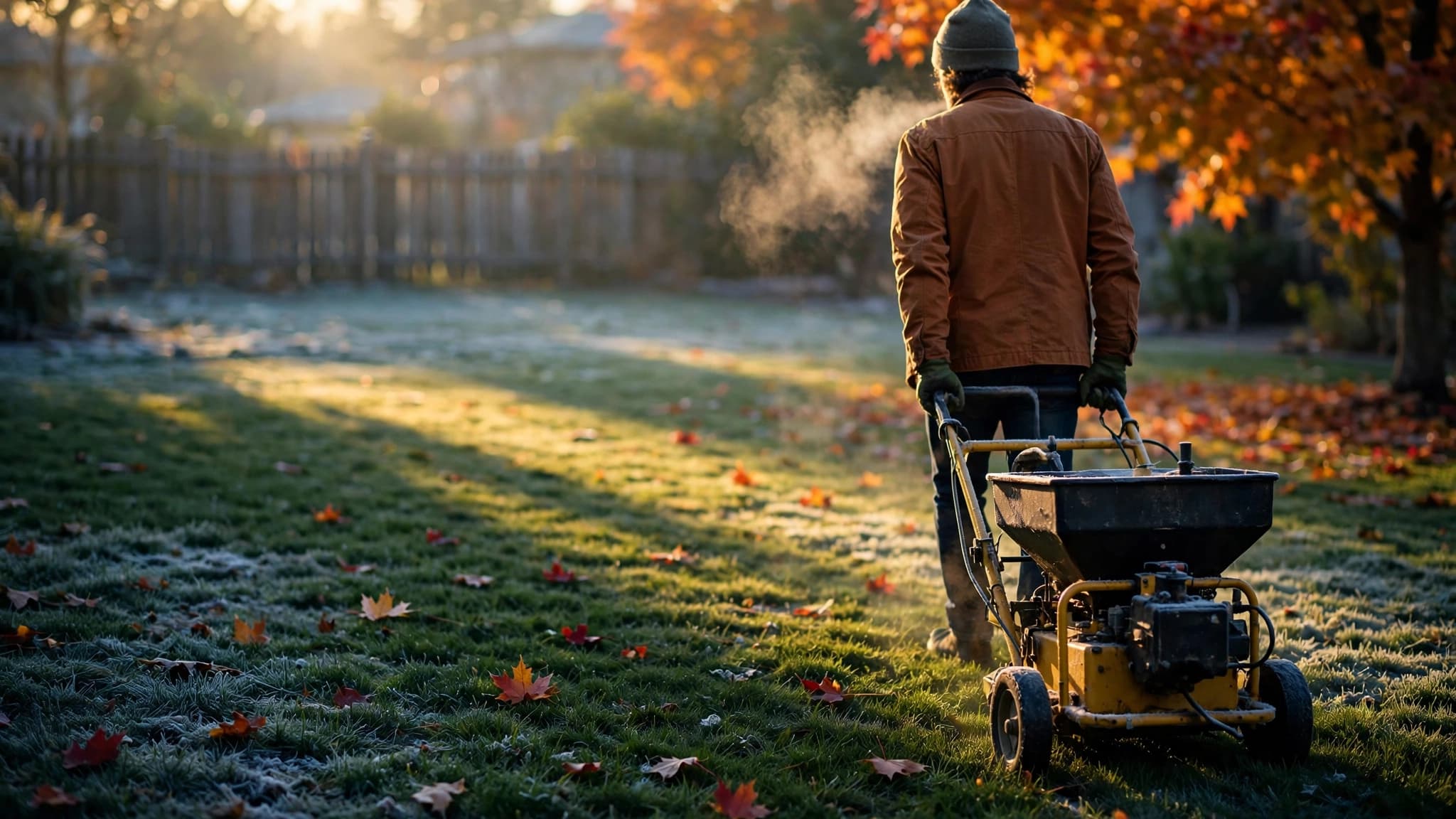
It's a cold, October Saturday and the maple tree in the front yard has lost its entire canopy in the dead of night and the lawn is now covered with a thick, orange layer of fallen leaves. You have a rake, a pile of yard-waste bags and a football game starting at noon. The good news is that you can do this in about the time that it takes to mow the grass, with your mower! This guide will take you step-by-step to a healthier lawn.
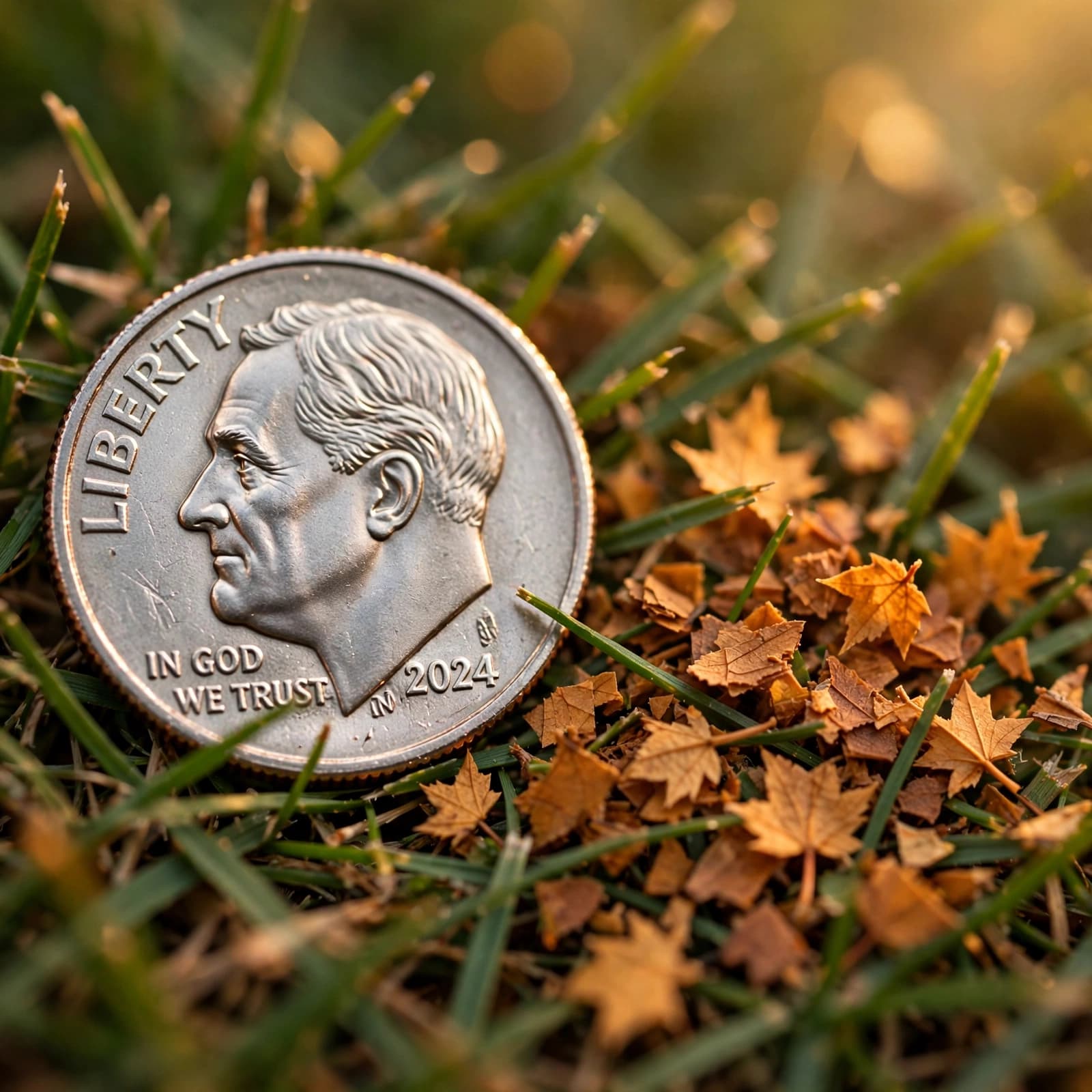
The short answer: In most lawns in the U.S., it is easier to cut up fallen leaves with the mower than to pick them up and remove them from the yard, and it is good for the soil. The deck should be at least 3" high, pieces should be dime size or smaller after chopping, and you should be able to see grass blades through the deck. Rake or bag excess leaf layer if it is very dense or diseased.
Should You Rake or Mulch Fall Leaves? The Short Answer
Should You Rake or Mulch Fall Leaves? The Short Answer
Your trees are giving you a free soil booster every fall! A tree that is pulled from the ground throughout the summer will have a lot of minerals and organic matter in the leaves. (Source: extension research from the university). When put in a bag, they all go down the road.
There's a price to taking leaves away as well as your Saturday. In the U.S., yard trimmings are a significant component of household waste and buried leaves in a landfill decompose anaerobically and emit methane (Source: U.S. Environmental Protection Agency).
On most lawns, it's better to mow the leaves down and spread them on the ground. Let's look at the two ways side-by-side:
| Factor | Raking and bagging | Chopping in place |
|---|---|---|
| Time | Hours of raking, stuffing, and hauling | One extra mowing pass or two |
| Nutrients | Carried off your property | Recycled back into the soil |
| Cost | Bags, or municipal pickup fees | Almost nothing beyond mower fuel or charge |
| Physical effort | High | Low |
| Best for | Very thick, diseased, or off-limits leaf cover | Healthy lawns with normal leaf drop |
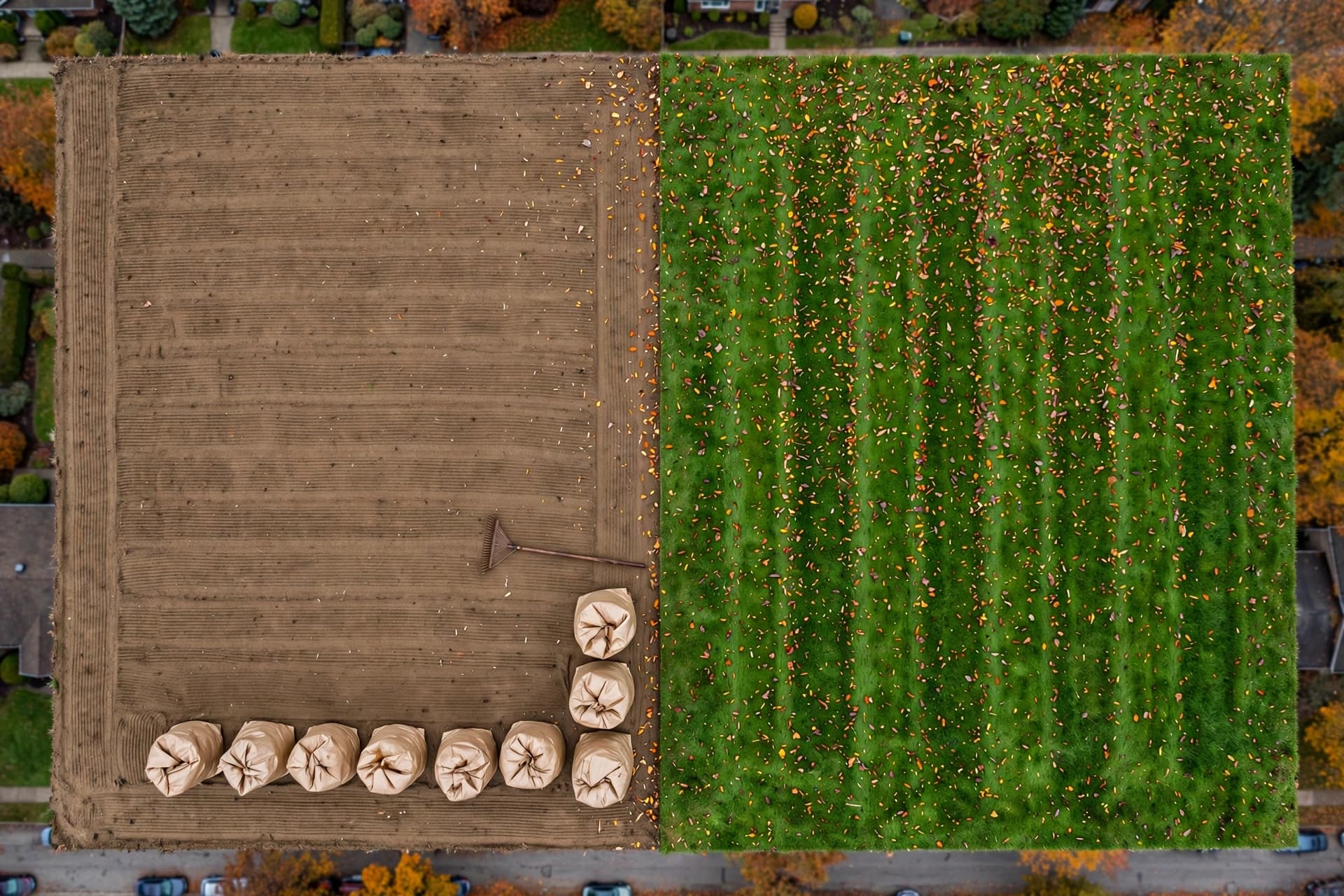
The trick is, this shortcut doesn't work unless it's done correctly. The rest of this guide explains the details, and the things that make it a lawn problem.
Mowing Over Leaves Instead of Raking: Why It Works
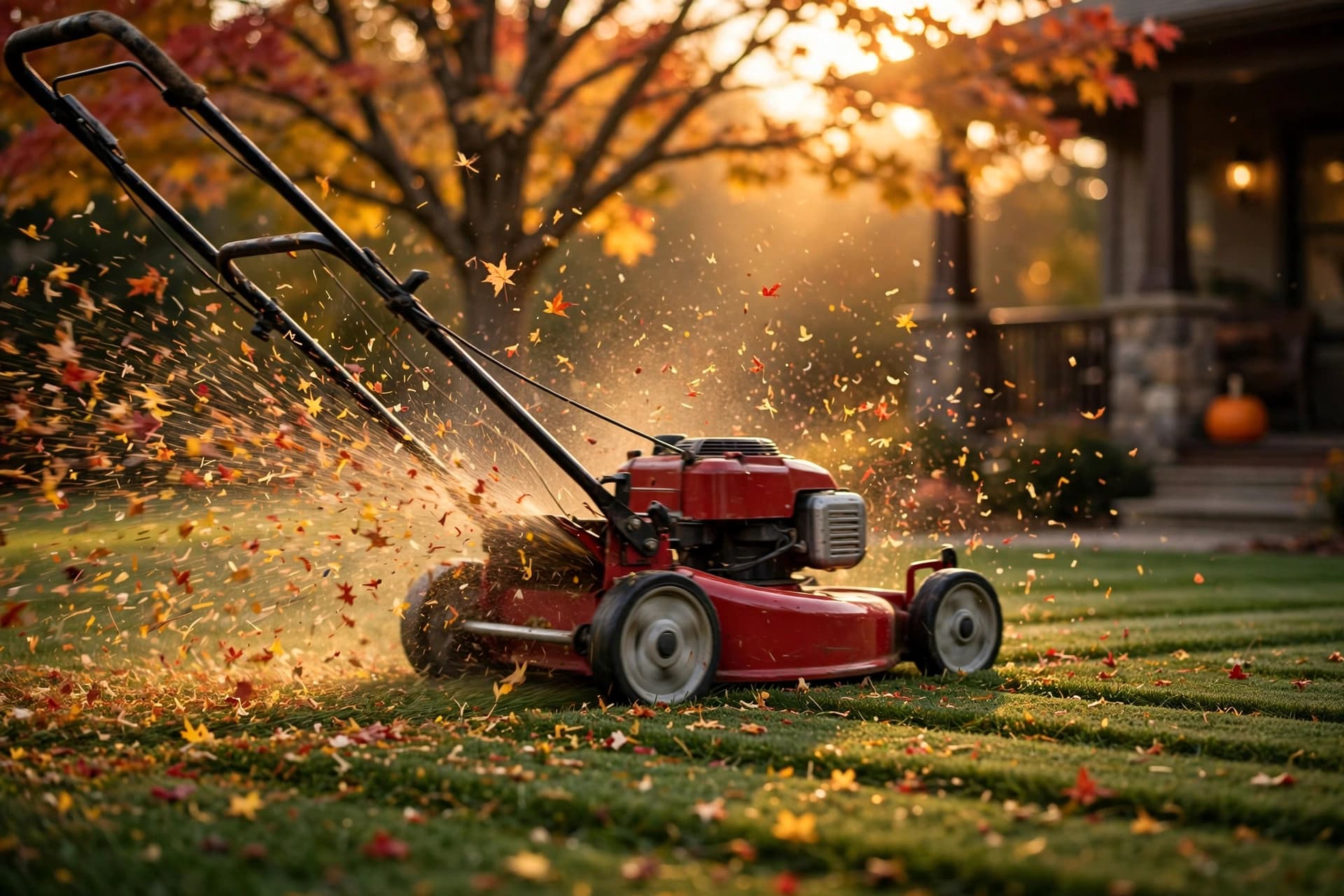
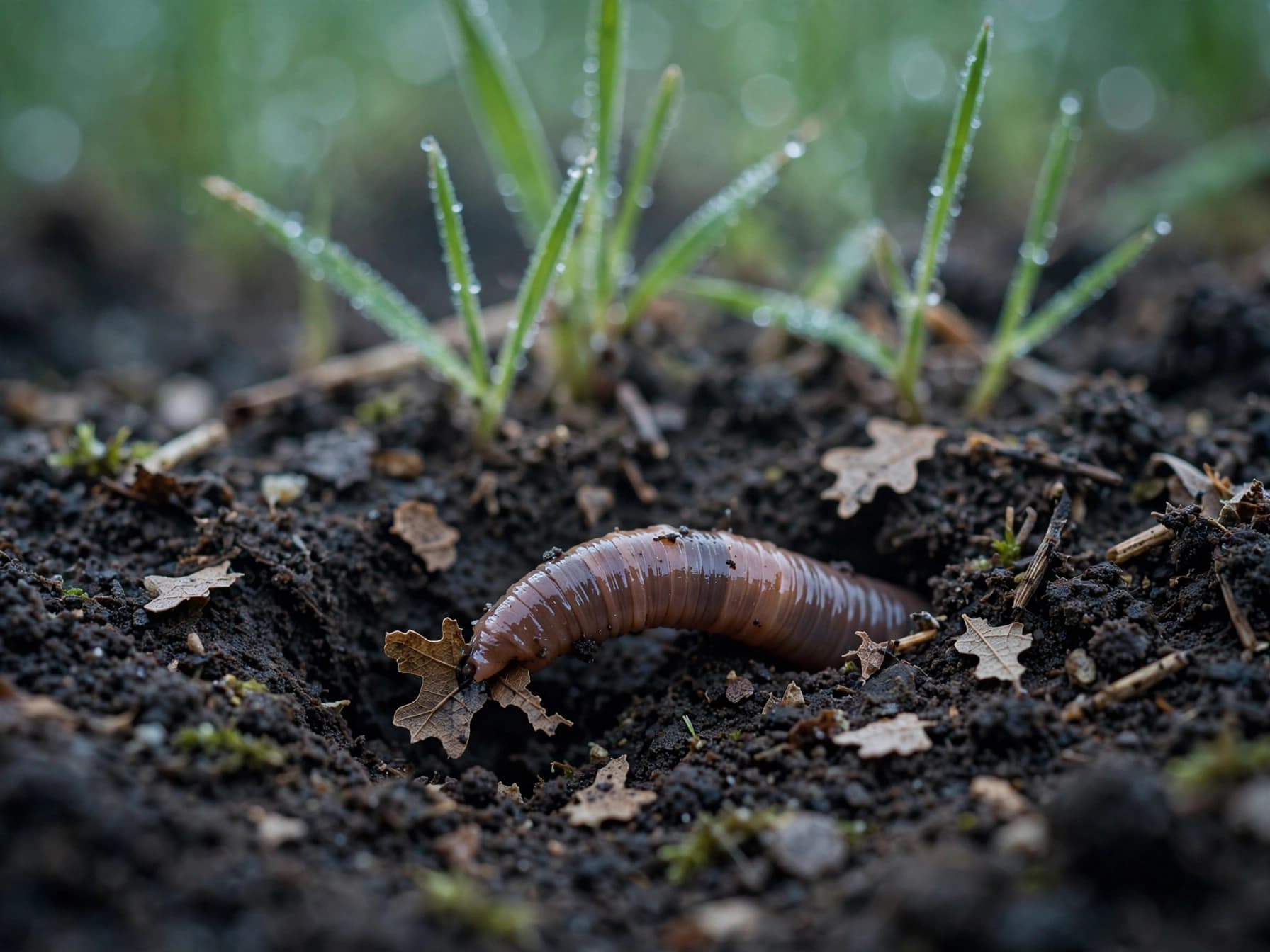
Visualize your mower as a shredder, but on wheels. As the blade rotates, it breaks every leaf into small pieces and the small pieces fall between the grass blades to the surface of the soil. Earthworms, fungi and bacteria take over once there.
In early spring, most of the pieces are disintegrated to dark organic material. This material helps to loosen compacted soil, retain water and provide microbes for healthy turf. The same process takes place on a forest floor but on a smaller scale.
The size is the key. The leaves become matted and shade each other out. Small pieces (less than a dime) fall through the grass and break down rapidly. This is why a sharp blade is very important.
It can be accomplished with any mower, though a mulching one is best. It has curved blades and a closed deck which circulate leaf bits for several cuts before dropping them. Standard mower that side-discharges will do, but may require a second mowing or a mulching kit. Leaves are easier to mow with battery models, but thicker mows will drain the battery more quickly, so plan accordingly.
Are Mulched Leaves Good for Grass? What Extension Research Shows
Yes, and there's more to it than a hunched back in the back yard. Michigan State University turfgrass researchers conducted multi-year trials on lawns fertilized in the fall with chopped leaves. Turf quality was good and leaf treated plots had less dandelion cover than comparison areas (Source: Michigan State University Extension turfgrass research). A thin leaf cover also can inhibit some light that weed seedlings require for spring germination.
The benefits your grass gets from it:
- Over time, addition of organic matter: improves soil structure, water-holding capacity.
- Slow-release nutrients: small amounts of nitrogen, phosphorus, potassium and micro nutrients.
- Earthworm activity: Leaf bits are pulled down by the earthworms and are aerated as they are pulled.
- Fewer weeds: less bare ground for weeds to colonize.
- Reduced expenses: Bags are not needed and perhaps a reduction in fertilizer spreading.
Don't have unrealistic expectations. Leaf litter provides nutrients but not a replacement to a good fall fertilizer regime on an unbalanced lawn. Do not think of it as something you won't need, but as a bonus. Local extension service offices will be able to tell you what your grass needs based on a soil test.
Do Mulched Leaves Smother Grass? The See-the-Grass Rule
They may, however when the layer is too thick. The easiest one is to examine your lawn immediately after you cut the grass. If green blades can be seen through the parts of leaves, it is okay. If the lawn appears as a solid brown lawn, walk over it again.
The thickest it is the better as grass is still alive and storing energy for winter. A thick layer will prevent sunlight from reaching the plant crowns, retain moisture on the underside of the crowns, and may cause snow mold in cooler northern areas (Source: University of Minnesota Extension turf guidance).
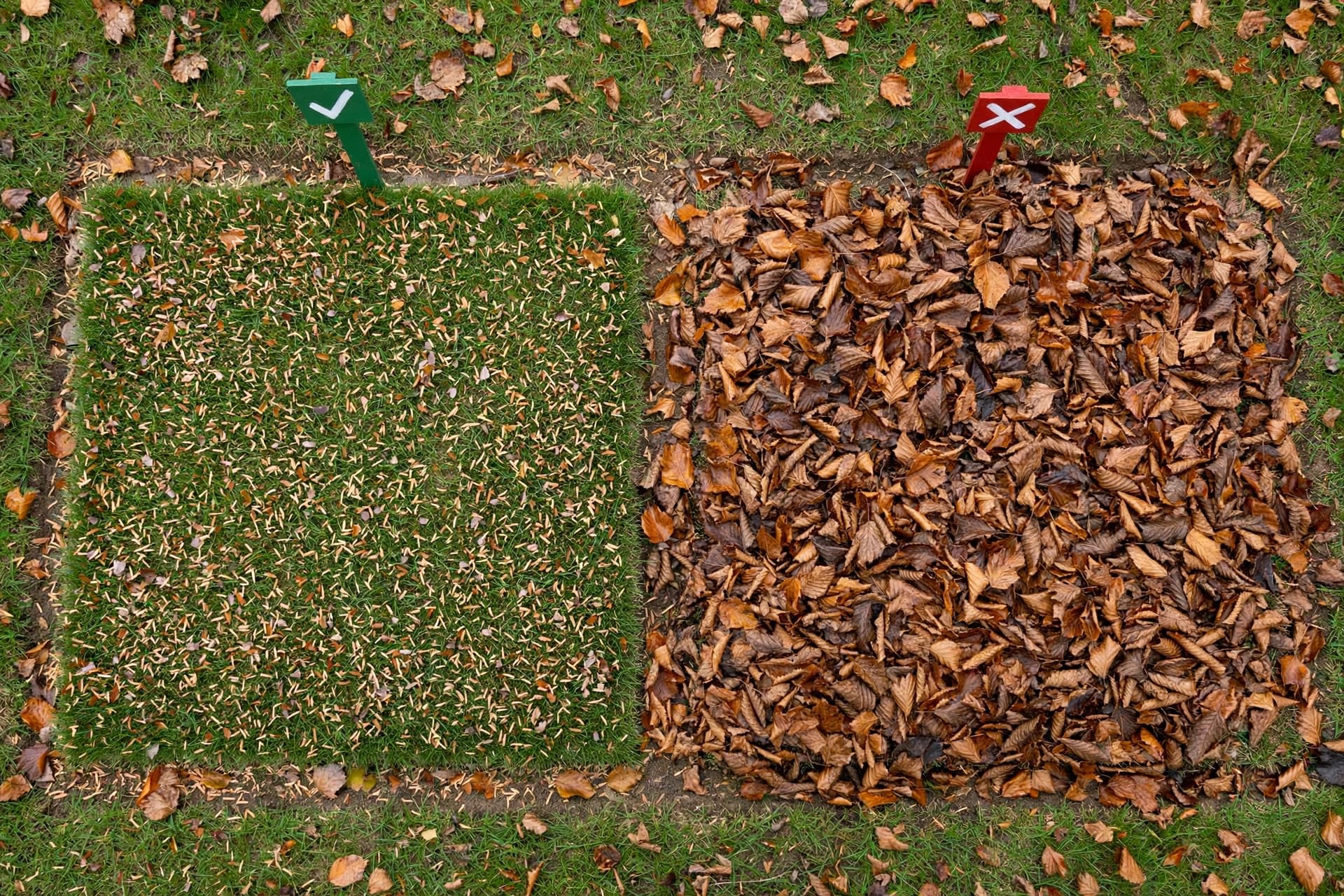
Three habits are responsible for maintaining the thin layer:
- Mow more frequently during leaf drop season. This is normal every 3 to 7 days and larger yards with larger maples or oaks can require more frequently.
- Cut in two directions. Crisscrossing passes are able to cut finer than a single pass.
- Slow your pace. A slower walk will allow the blade to shred leaves instead of pushing them.
Do not remove a foot of leaves at a time from a tree if it is gone overnight due to a storm. Mow it down in stages, and collect the additional from the final mowing in bags for use elsewhere (see below).
Can You Mulch Mow Wet Leaves? What to Do After Rain
Yes, but it isn't usually a wise move. Wet leaves stick together, block the deck, and form masses which smother grass when they dry. Rutting can also occur if the soil is soft and saturated and the weight of the mower is applied to it.
It's better to wait. Afternoon is best when there is dew that has been burned off and it is dry and breezy. Just a few hours of sun can have a significant impact on leaves chopping clean
For people who can't wait, here are some ways of minimising the mess:
- The deck should be up to the highest position for the first pass, and then down again for the second pass.
- Mow slowly and frequently, clearing underside of deck.
- Spread thick mats using a battery powered leaf blower to spread them into a thinner layer, to help them to dry faster.
- If the soil is soft and crumbly, do not mow it.
Safety: Disconnect the spark plug wire (or remove the battery) and turn off the mower before reaching under the deck to clear a clog.
How to Chop Leaves Into Your Lawn the Right Way
With this routine, the entire job can be done in your normal mowing schedule.
Step-by-Step: Your Fall Leaf-Chopping Routine
- Sharpen the blade. Blades that are dull, bruise leaves and cut tips of grass. Sharpen prior to leaf season or replace with a mulching blade. Need supplies? Visit our garden tools and garden equipment information pages.
- Make the deck 3 inches or above. Most cool-season grasses will thrive at this mowing height, refer to your local extension office for your grass type (Source: University of Minnesota Extension, turf guidance).
- Close the discharge. Clear out the bagger and if you have one use a mulching plug or kit on your mower.
- Mow when leaves have dried. It is best to do this during late morning to mid-afternoon.
- Overlap your passes. Make sure to overlap each pass by a few inches; if the pieces are still large, cross the area again in the other direction.
- Check your work. Grass should be seen and pieces should be no more than a dime in size. Otherwise, repeat the process. Continue every week or so until trees become bare.
Use more leaves! Collect any remaining trash from the previous pass and mulch lightly in the areas of shrubs and perennials or over bulbs planted in the fall. They may be thrown in the compost pile as "browns" as well. Read about balancing green material with our soil and compost guides.
When to Rake or Bag Instead
Chopping in place isn't right for every situation. Rake or bag when:
- The thickness of the layer is too great. If the grass does not appear through repeated passes, cut off excess grass.
- The lawn is new. Seedlings and fresh sod require light and are not tolerant of a leaf blanket.
- Snow mold is a recurring disease. Where northern yards do get it, they should ensure that leaf cover remains light.
- Trees are afflicted with a serious disease. Contact your local extension office and discuss with them whether the removal or hot composting option is the best decision.
- Local rules apply. In some towns you can have yard waste collection or there may be yard waste ordinances, so be sure to find out before you make a decision.

No need to clear all. Overwintering insects (such as native bees and butterflies) hide in leaf litter. (Source: Xerces Society) Don't compact the soil in garden borders, particularly when creating a pollinator garden.
Reference:
- U.S. Environmental Protection Agency (EPA): materials and waste data on yard trimmings in municipal solid waste, and landfill methane emissions guidance.
- Michigan State University Extension: turfgrass research on chopped leaves left on lawns, including turf quality and weed pressure (Department of Plant, Soil and Microbial Sciences).
- University of Minnesota Extension: lawn care guidance on snow mold and recommended mowing height for cool-season turf.University extension publications (general): research on nutrient content of tree leaves and their return to soil (see USDA Agricultural Research Service).
- Xerces Society for Invertebrate Conservation: "Leave the Leaves" guidance on leaf litter as overwintering habitat for pollinators and other insects.
Conclusion
Mowing leaves in the yard is the one yard task that saves time, saves the money, and saves the lawn. Ensure mower is sharp, deck is raised, and passes are frequent, and delay cutting the leaves when possible until they are dry. Then your grass will thank you in the spring. Looking for more to do? Follow our fall lawn care tips to get ready for overseeding and fertilizing before fall frost.
Frequently Asked Questions
Is mulching leaves into lawn actually better than raking and bagging?
Do I need a special mulching mower?
How many leaves are too many to leave on the lawn?
Do mulched leaves smother grass if I only mow once a week?
Do shredded leaves cause thatch?
Should you rake or mulch fall leaves from oak or walnut trees?
About Philemon John
Philemon John is the Lead Author of Broad Gardening and has more than 10 years of experience growing and caring for plants in the backyard. He is particularly passionate about vegetable gardening, soil building and pest management and offers real-life advice and tips to support home gardeners.