When to Stop Mowing Lawn in Fall: Your Last-Mow Guide

By Philemon John
Lead Author & Cultivator • Peer Reviewed & Soil Tested
It is early October, the maples are changing and your lawn still needs a haircut every weekend. Take the mower too early and long, weary grass may cover up the first snow. Scalp it to short, or continue to scale long after it has ceased to grow, and you put the plant under stress. This is how to schedule your last mowing, choose the appropriate cutting height, and wake up to a green lawn the following spring.
Quick Answer: Cut as long as your lawn is growing. The last mowing of most cool-season lawns occurs in late October to mid-November, when the lawn growth has been reduced to almost nothing by a series of hard frosts and the soil temperatures have reached 40-45F. Do the final pass 2-2.5 inches to ensure that blades remain short enough to prevent matting but long enough to cover the crown. (Source: university extension turf guides)
When Does Grass Stop Growing in Fall?
Grass is growing, not by the calendar. Kentucky bluegrass, tall fescue, and perennial ryegrass, are cool-season grasses that thrive under an air temperature ranging between 60-75 degrees Fahrenheit. During days that become shorter and nights drop to as low as freezing, the top growth is slowed to a crawl, and the soil temperatures plunge to 40-45oF (Source: university turfgrass programs).
Growth doesn't shut off overnight, though. A lawn will continue to push out new blades several weeks after a light frost, but at a reduced rate. That is why such a date as Halloween can only be used as an approximate.
Instead, look at the following signs:
- You are mowing once in 10-14 days rather than once in a week.
- The grass is less than an inch between mowing.
- The night time temperatures often drop to 20s and 30s, and even daytime temperature rarely goes above 50C.
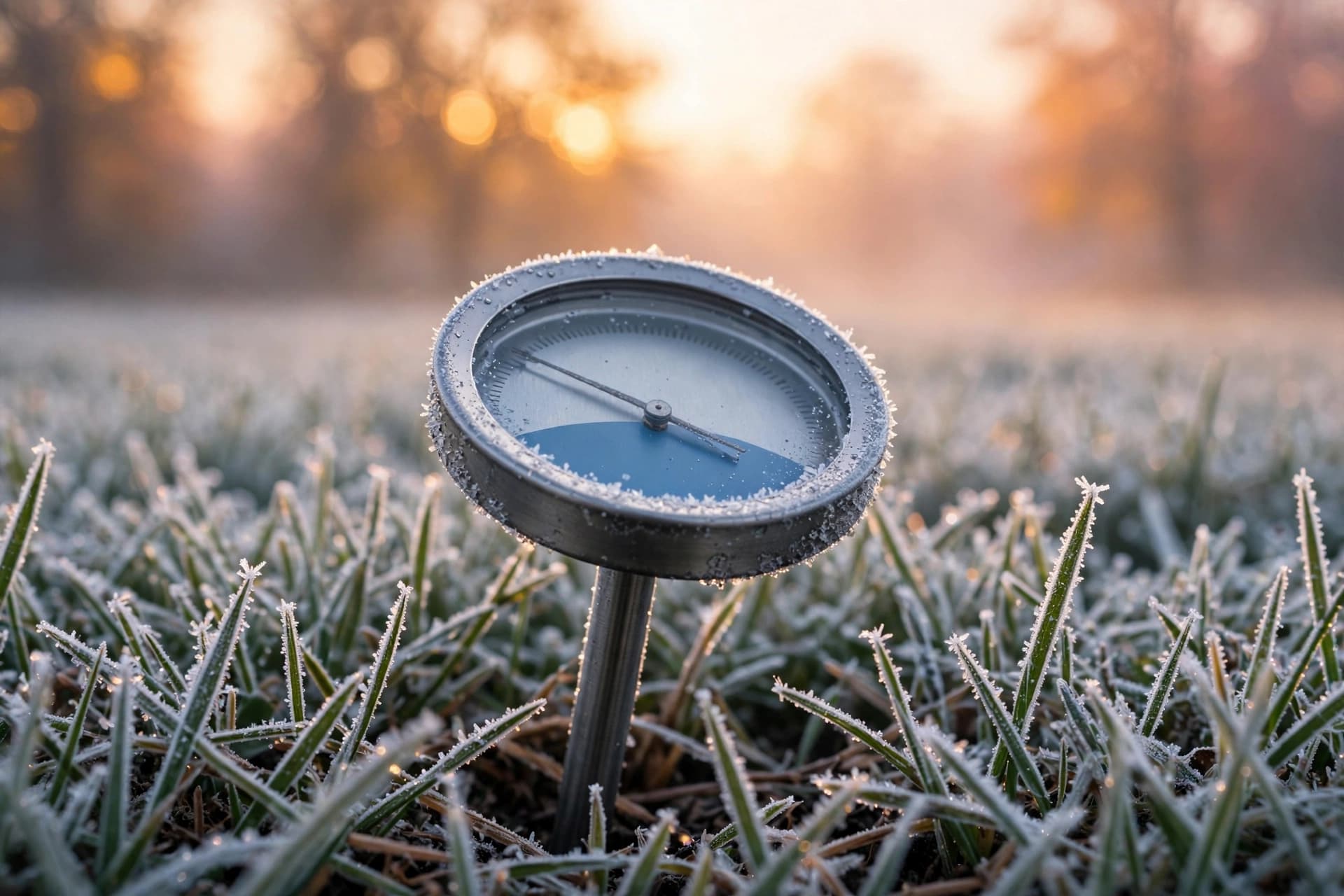
- Soil thermometer with 2-4 inches deep 40-45 degrees F.
Once the majority of those signs match, your ultimate cut is at hand. This table provides you with a rough calendar by region( Source: state cooperative Extension guidance ).
| Region | Typical final cut | What drives the timing |
|---|---|---|
| Upper Midwest, northern New England, Mountain West | Mid-October to early November | Early hard freezes and lasting snow cover |
| Great Lakes and Northeast | Late October to mid-November | Falling soil temperatures and the first heavy snow |
| Mid-Atlantic, Ohio Valley, central Plains | Mid-November to early December | A slow, gradual cool-down |
| Pacific Northwest (coastal) | Late November, then only as needed | Mild, damp winters keep growth going |
| South (warm-season lawns) | After the lawn goes dormant, usually November | Frost turns the grass tan |
Conditions vary locally, and a county-specific range can be obtained by consulting your local cooperative extension office.
Should You Mow Before First Frost?
You do not have to run after the first frost. A light frost is not a sign to lay up the mower, but to tell you that the season is approaching its end. The actual finish line is a hard freeze, which is defined by the National Weather Service as approximately 28F or lower in several hours (Source: National Weather Service).
To make your lawn safe a few ground rules are followed:
- Allow the frost to thaw. Ice blades are fragile and even walking or mowing on them may result in brown and broken footprints that may take weeks to disappear (Source: university extension).
- Mow on a dry and thawed lawn. The best time is towards the end of the morning or the beginning of afternoon.
- Watch the forecast. Check the National Weather Service's frost and freeze warnings to see when a hard freeze is on the way.
- Prepare in advance of early snow. In case the lawn is covered on your last cut by a sudden storm, wait until it thaws and cut it.
As you watch the weather, consider spending some time preparing the rest of your yard before the first frost. Hoses, irrigation lines, and tender plants also require similar attention as lawn.
How High should grass be in winter?
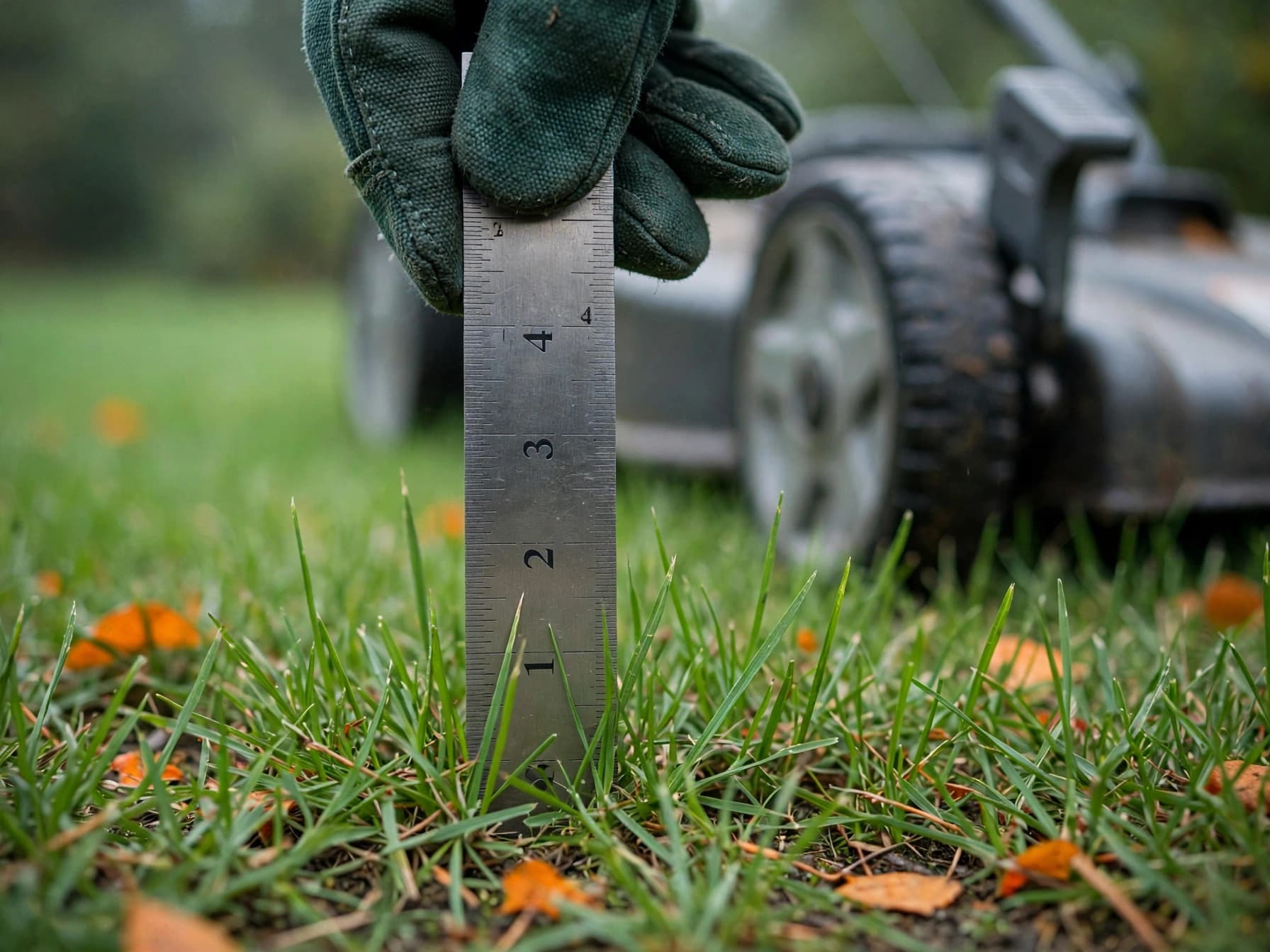
With cool-season grass, a final mowing of 2 to 2.5 inches is the optimal amount (Source: university extension turf guides). Most of the population mow 3 to 4 inches throughout the summer, thus reducing gradually over your final two or three mowings rather than reducing them at once. Do not cut off over a third of the blade height at a time (Source: university extension).
Here is a brief illustration. When the lawn is above 3.5 inches you can safely cut it down to approximately 2.5 inches in one cut.
| Cutting height | What happens over winter |
|---|---|
| 3 inches or taller | Blades flop over, mat down under snow, and stay wet, which gives fungus a cozy home |
| 2 to 2.5 inches | Blades stay upright and crowns stay protected, the best balance |
| Under 2 inches | Crowns face more cold and drying wind, and the thinner turf struggles in spring |
Two additional practices assist the last cut to work out:
- Blade- Sharpen the mower blade. Clean cut heals quicker and ragged ends beckon disease.
- Your last two cuts will be made with the deck in the same setting. It makes the lawn level and spares you the guesswork.
After the final mowing, have your mower and other power equipment winterized before it goes to the shed. There is no shortage of spring headaches brought about by old fuel and caked-on clippings.
How to Prevent Snow Mold Before the Snow Falls
Snow mould is a collection of fungi which appear in matted, circular formations after the snow melts in cold weather. The two typical ones are the gray snow mold, which typically requires weeks of snow cover on unfrozen soil, and the pink snow mold, which may develop during cool and damp weather, even without snow (Source: university plant pathology departments). They both are fond of high, shaggy, wet grass, and your fall practice is the best protection.
Handle Leaves Before the Snow Falls
Thick leaf cover retains water and shuts out the light, thus rake it off before permanent snow falls. The simplest solution is to mulch leaves into your grass using a mulching mower. Pass until the pieces have the size of a dime and you can still see grass blades through them.
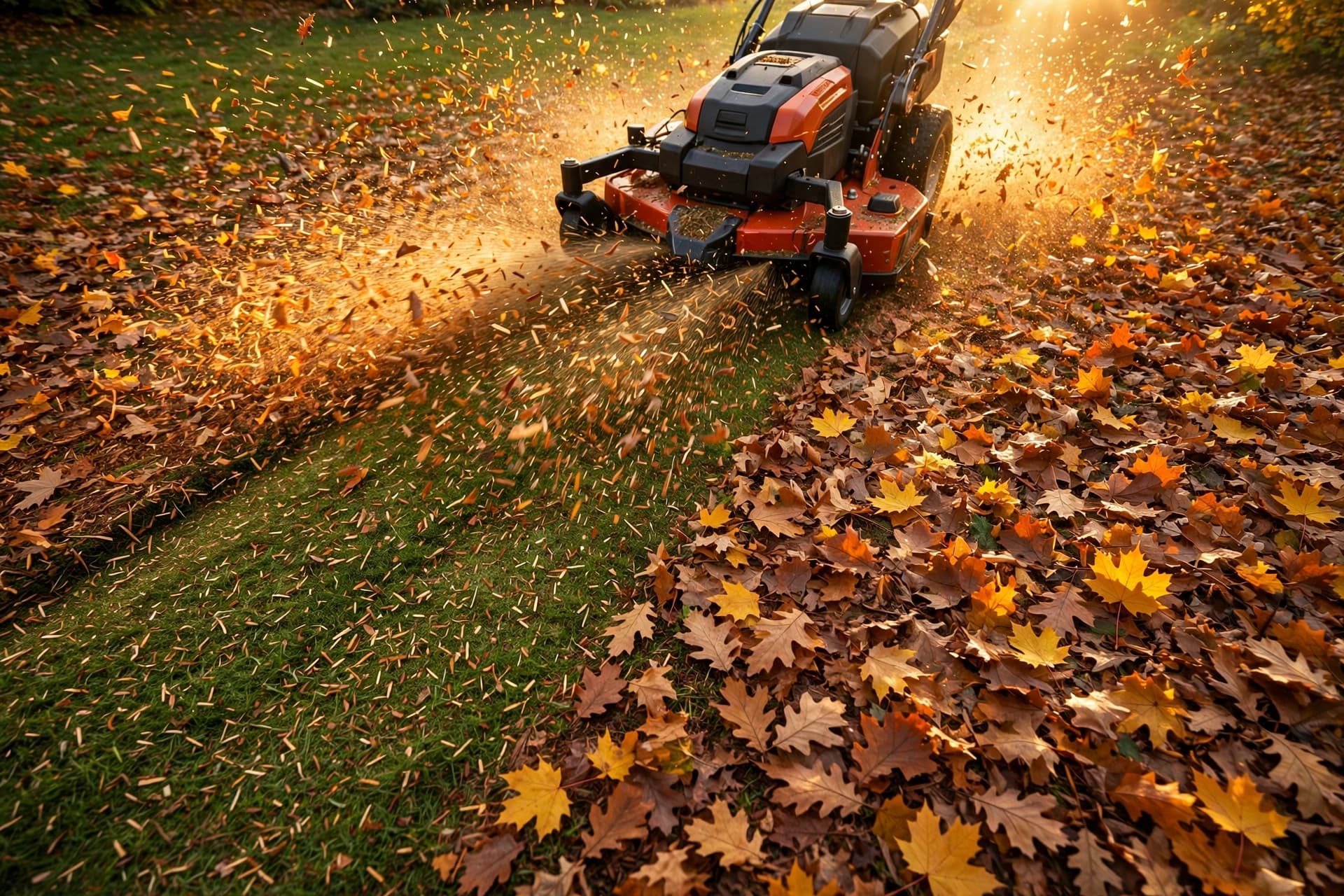
Rake the extras in case the layer is too heavy to shred in position. You can use your additional leaves in your garden beds, which can nourish the soil and provide shelter to useful insects.
Move, Till, and control Snow Piles.
- Be sparse with late nitrogen. Avoid large amounts of fast-release nitrogen in the winter. The lush, tender growth is more susceptible to disease and the choice of low release products is the safest (Source: university extension).
- Check your thatch. A layer of soil that is more than 1/2 inch thick is spongy and retains moisture that increases the risk of disease (Source: university extension). In case yours is thick, core aerate or dethatch but when the grass is still growing.
- Open up airflow. Cut off low bushes and thick shrubs to allow wet shady areas to dry quicker.
- Spread out snow piles. And do not put all your shoveled snow in one end of the lawn. Deep piles are slow melting and leave the turf cold and wet weeks, making them a classic hot spot.
- Understand when a fungicide is appropriate. When the identical patches are present each spring, a fungicide with a label of snow mold would help. Put it on day before permanent snow lays over the ground, and adhere to the label (Source: university extension).
Cool-Season vs Warm-Season Lawns: Last-Cut Differences
All the above is mostly applicable to cool-season lawns in snowy areas. Warm-season lawns have a different story since they do not slow down but rather go into dormancy.
| Cool-season grass | Warm-season grass | |
|---|---|---|
| Common types | Kentucky bluegrass, tall fescue, fine fescue, perennial ryegrass | Bermudagrass, zoysia, St. Augustine, centipede |
| Typical final cut | Late October to mid-November | After frost turns the lawn tan, usually November |
| Final cut height | 2 to 2.5 inches | Your normal summer height, no scalping |
| Winter snow mold risk | Moderate to high in snowy states | Low in the South |
| Key tip | Ease down gradually and clear leaves | Let it go dormant and avoid cutting frozen blades |
The exception is southern lawns that have been over seeded using winter ryegrass. They continue to grow throughout the winter, therefore continue mowing as usual. You are not sure of whether you are in the cool-season or the warm-season belt? Find your plant hardiness zone in the USDA and match it with the types of grass that grow in your locality.
Snow Mold Spring Treatment: Recovery.
When the snow melts, you may find damage, and that is all. Gray snow mould appears as straw-colored, matted, and can have a gray-white web. Pink snow molds leave a pinkish hue on the edges. Patches may be a few inches or couple of feet in diameter.
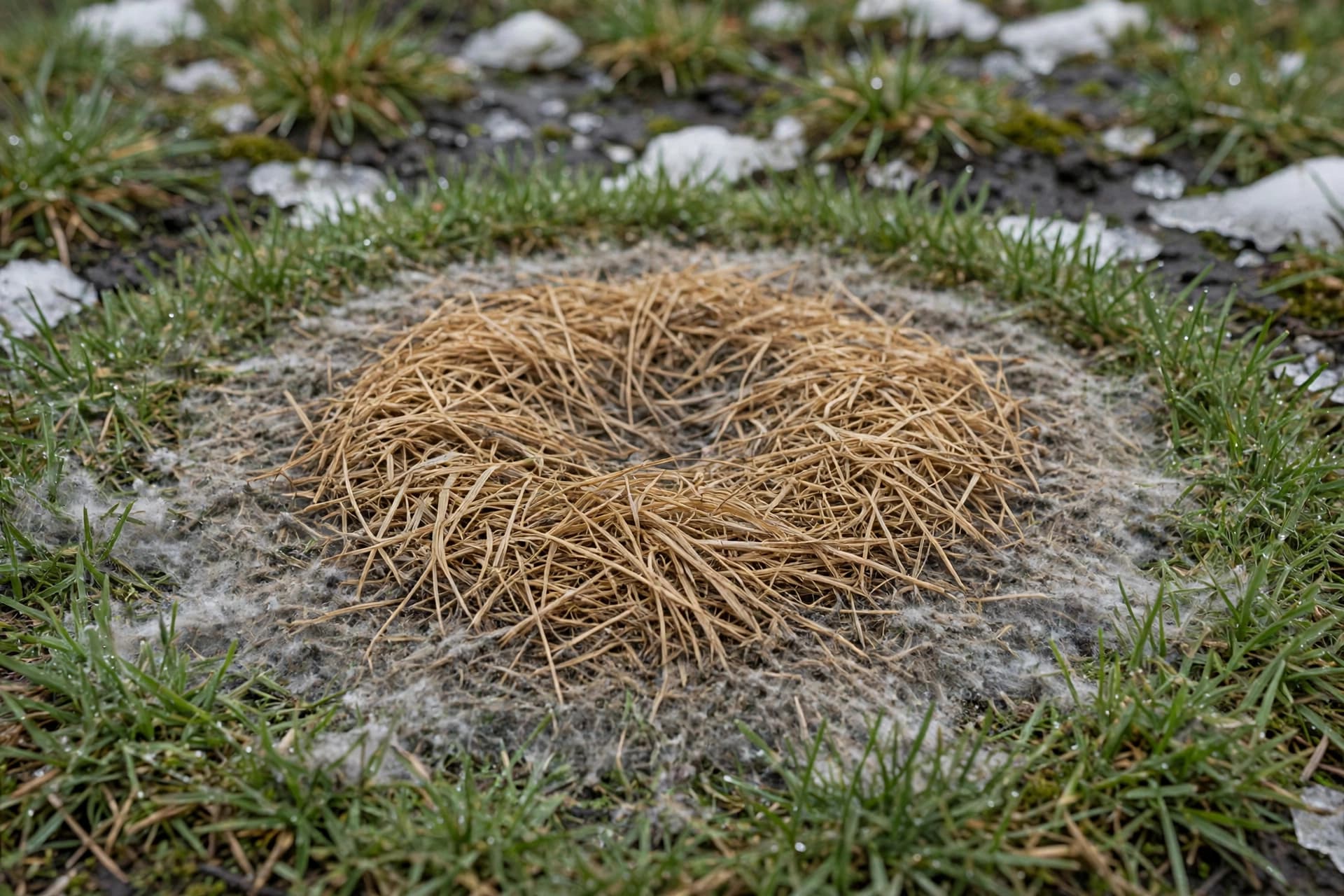
The positive news is that according to the extension plant pathologists, the majority of the gray snow moulds only causes harm to the leaf blades, hence crowns remain intact and the lawn is likely to recover itself.
To assist it, here is the way:
- Wait for firm soil. Making muddy ground raking wears out the turf.
- Rake gently. Fluff matted blades with a leaf rake or a flexible rake and allow surface to dry by air and sun.
- Hold the fertilizer. Wait till the lawn is growing actively and you have mowed it a couple of times.
- Allow it three or four weeks. Affected patches tend to turn green during warm weather, and with frequent watering.
- Reseed stubborn spots. Weaken the surface of the soil, sprinkle it with seed of the size which corresponds to your lawn, and keep it damp. When the soil temperature reaches about 50 F, cool-season seed will sprout (Source: university extension).
- Skip spring fungicide. As weather warms, the disease becomes dormant and therefore sprays seldom assist and will not rejuvenate blades that are already damaged (Source: university plant pathology departments).
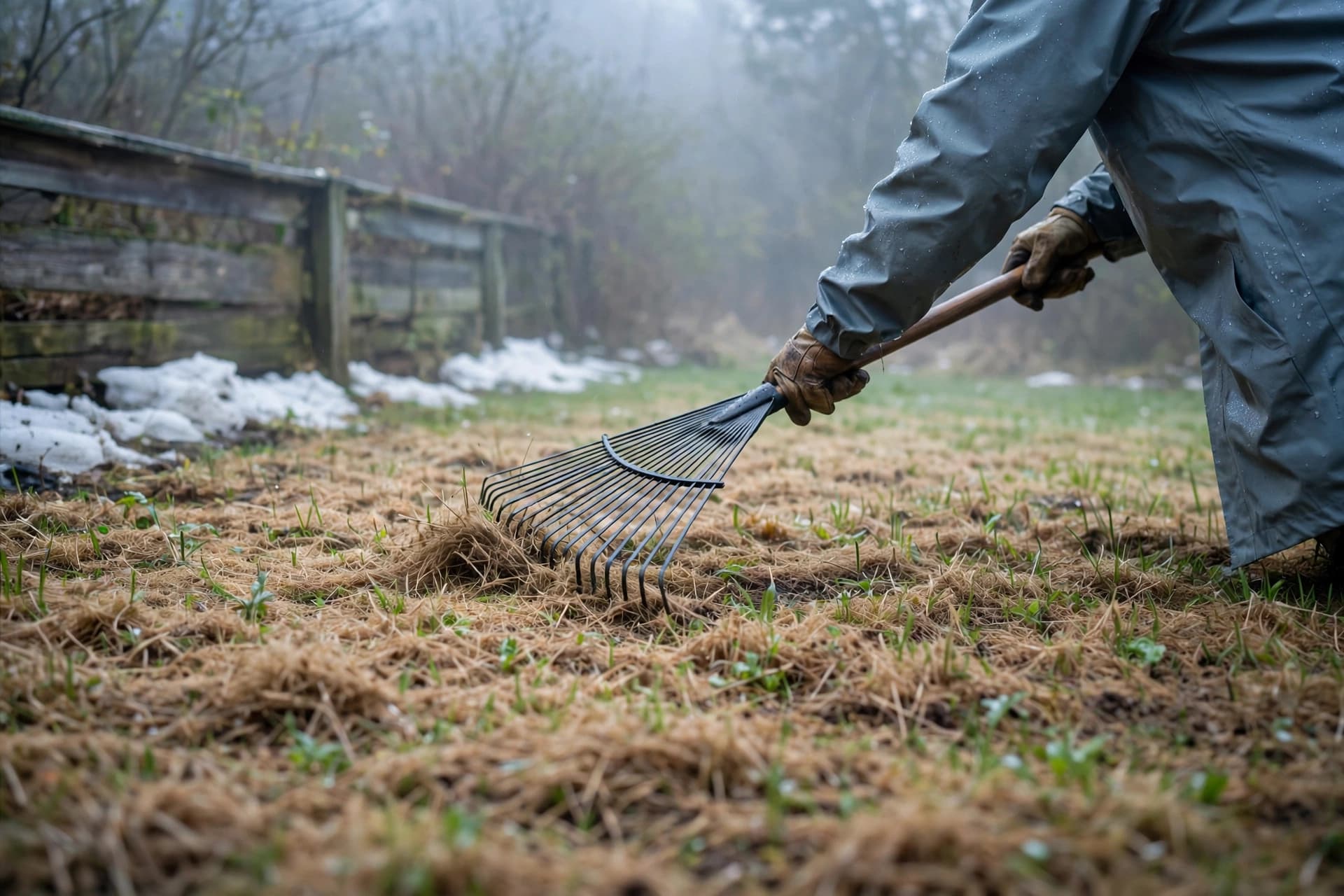
Record observations of the locations of the patches. You can see where to concentrate leaf clean-up and aeration and snow-pile placement next fall with those spots.
Your Final-Cut Takeaway
Cycle the last cut on growth, not the calendar. The final pass should be at 2 to 2.5 inches, and should clean up fallen leaves, and piles of snow should be left out, and your lawn will make it through winter clean and green. Then, check out our instructions on when to use winterizer fertilizer to have your feeding match your last mowing, and then visit additional manuals on lawn care in order to complete the winterization of your lawn.
References:
- Land-Grant University Turfgrass Programs & Cooperative Extensions (e.g., Penn State Extension, University of Minnesota Extension, Michigan State University Extension), "Cool-Season Growth Temperatures and Soil Temperature Thresholds"
- State Cooperative Extension Offices (USDA NIFA System), "Regional Final-Cut Windows and Lawn Maintenance Guides"
- National Weather Service / NOAA, "Glossary: Freeze and Hard Freeze Definitions (28°F Threshold)"
- University Cooperative Extension Turfgrass Guides, "Cool-Season Turf Management: Frozen-Blade Damage, the One-Third Rule, 2–2.5 Inch Final Height, Thatch Over ½ Inch, Late Nitrogen, and Seeding Temperatures"
- University of Minnesota Extension Plant Pathology Department, "Turf Disease Diagnostics: Gray vs. Pink Snow Mold Biology, Crown Survival, and Fungicide Timing"
- USDA Agricultural Research Service, "USDA Plant Hardiness Zone Map"
Frequently Asked Questions
When to Stop Mowing Lawn in Fall: Is There a Set Date?
What Height Should Grass Be for Winter in a Snowy Climate?
How to Prevent Snow Mold if My Yard Is Full of Leaves?
Is It Bad to Cut Grass Too Short Before Winter?
Does Snow Mold Kill Grass?
What Is the Best Snow Mold Treatment in Spring for Matted Patches?
About Philemon John
Philemon John is the Lead Author of Broad Gardening and has more than 10 years of experience growing and caring for plants in the backyard. He is particularly passionate about vegetable gardening, soil building and pest management and offers real-life advice and tips to support home gardeners.