Why Are Fertilizer Prices Rising in 2026? What Nov 15 Means

By Philemon John
Lead Author & Cultivator • Peer Reviewed & Soil Tested

You enter the garden center to buy fall lawn food and a bag of plant food to plant next year tomato bed and have a second look at the price tag. When it stung, you are not the only one. Prices have shot up this spring and have not completely calmed down, and a federal shipping exemption is set to expire November 15. This is the reason why it is, the future of it as seen by experts, and how you can continue to feed your beds without spending a lot of money.
Quick answer: Prices are soaring primarily due to interrupted shipping via the Strait of Hormuz, costly sulfur, meager phosphate and high freight expenses. An exemption under the Jones Act on the transportation of fertilizer between ports in the U.S. is scheduled to expire Nov. 15 unless it is renewed, creating uncertainty. The majority of the economists interviewed also predict that wholesale prices will rise by spring flat to slightly higher than they are today, thus gardeners are advised to stock up on inexpensive feeding opportunities.
What Is Driving Fertilizer Costs Higher This Year?
Plant food is reduced to three nutrients; nitrogen, phosphorus and potassium. The supply chains of each are unique, thus each responds differently when shipping or energy markets hiccup. They have been wobbling so this year.
A World Bank index of world fertilizer prices increased to 208.7 in April 2026, compared to 132.9 in December 2025, before dropping to 149.3 in July (Source: World Bank commodity price data). Translation: a large spring spike, and then no more than half relief.
The Strait of Hormuz and the sulfur squeeze
Nitrogen and phosphate markets alike have been shaken by disruption of the Strait of Hormuz, one of the major shipping routes in the vicinity of Iran. According to one of the StoneX fertilizer analysts, the issue of waterways is more important than any other at the moment (Source: Farm Journal The Scoop).
The culprit is sulfur. About a half of the global traded sulfur has traditionally transited the area and the prices have previously reached approximately 1,180 U.S. tons ( Source: The Fertilizer Institute). The phosphate manufacturers require sulfur-based acid in order to manufacture MAP and DAP, thus some plants have stalled or slowed down. Analysts caution world phosphate production might decline by up to 33 million U.S. tons in the upcoming year unless prices fall (Source: industry analysts, as reported by Farm Journal).
The industry leaders already increase phosphate by approximately 9-percent more than immediately before the exemption on shipping commenced (Source: Farm Journal The Scoop).
Natural gas, trade rules and global demand
Nitrogen begins with natural gas and therefore the prices of energy directly enter the price of urea and the price of ammonia. There is pressure on the importation of certain products of phosphates in the form of duties (Source: Farmers Business Network market outlook).
China, the producer of one-third of the world nitrogen, may offer relief, and is also seen to be weakening its urea export restrictions (Source: The Fertilizer Institute). The new U.S. plants will assist later on, however, a single ammonia plant could cost between 4-5 billion of dollars and take years to construct. Even the sale of U.S. made product is subject to world prices (Source: The Fertilizer Institute).
Jones Act Waiver Fertilizer Rules: What Changes on Nov 15?
The Jones Act is a maritime regulation of 1920 which stipulates that cargo transport between two U.S. ports be carried on ships that are built in the U.S., owned in the U.S., and primarily manned by U.S. citizens (Source: U.S. Customs and Border Protection). They are much more expensive to construct and to operate, and their fleet is small. It has no dry bulk carriers, according to a Cato Institute researcher, the best type of vessel to carry phosphate rock (Source: Cato Institute, as reported by The Scoop).
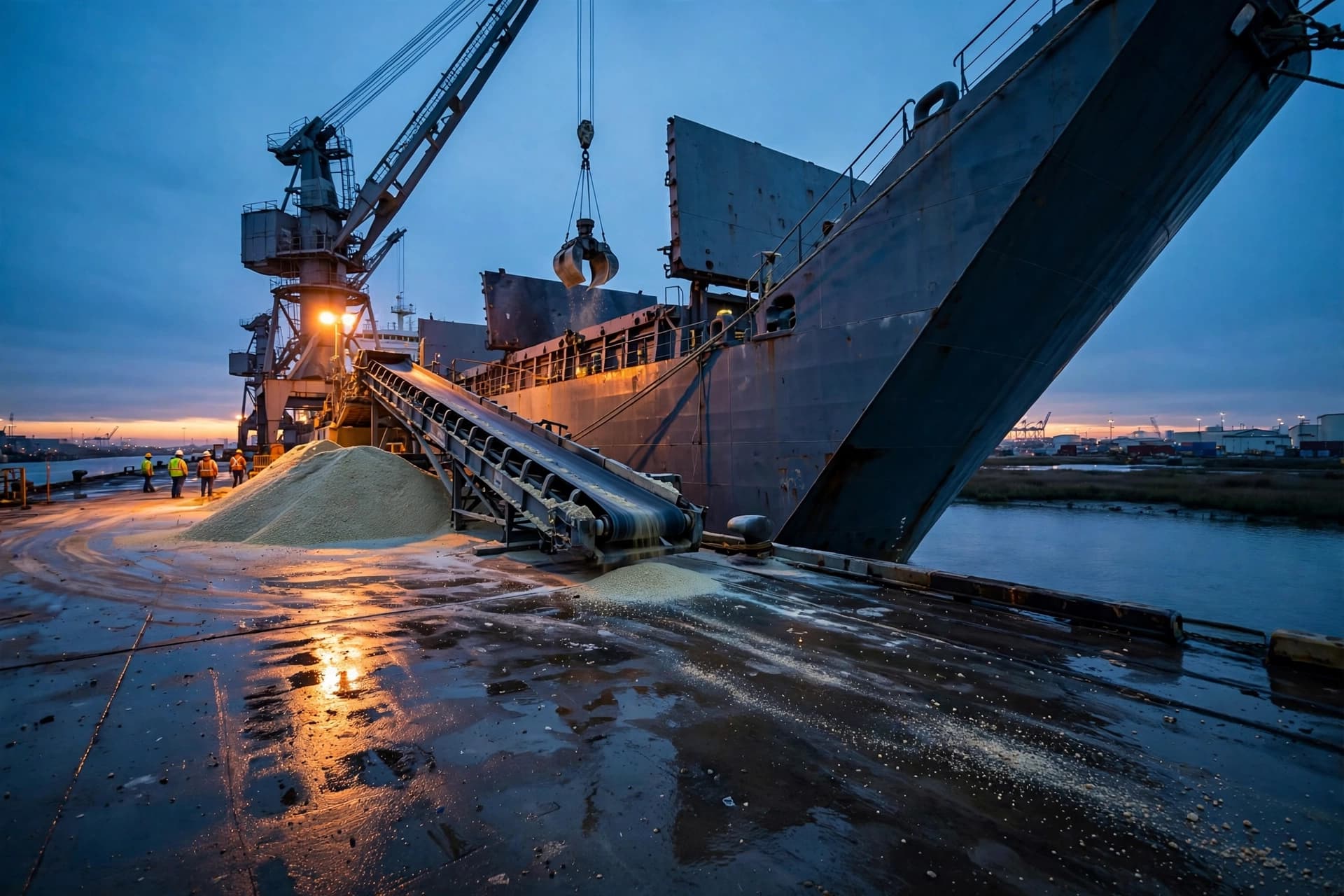
On March 17, 2026, the Department of Homeland Security issued an emergency exemption letting foreign-flagged ships carry fertilizer, its raw ingredients and energy products between U.S. ports (Source: U.S. Department of Homeland Security). According to Cato, it is the longest and the widest such suspension since at least 1950 (Source: Cato Institute Jones Act Waiver Tracker). After two 90-day extensions, it's now set to end Nov. 15.
The small print is as follows:
- The loading of covered cargo should be carried out prior to 11:59 p.m. Eastern on Nov. 15 (Source: CBP guidance).
- The most recent extension is more stringent, and the voyages are considered on a case-by-case basis (Source: CBP guidance).
- By Aug. 12, 217 trips had been made on it, with approximately 165,000 U.S. tons of anhydrous ammonia having been shipped on it (Source: USDA Agricultural Marketing Service, as reported by RFD News).
So would a lapse strike your wallet? Experts disagree. The Cato researcher reasons that the exemption demonstrates the extent to which the law contributes to the cost of shipping. The StoneX analyst explains that it assists in product mobility but has not radically reduced the payments by buyers (Source: The Scoop). A great deal of U.S. ammonia is not shipped, but it is transported by pipeline (Source: The Fertilizer Institute).
Three directions can occur after Nov. 15, and analysts say no one has any idea of which one is coming (Source: Cato Institute, as reported by The Scoop):
- Renewed for another 90 days
- Rebooted with a reduced product range or more stringent approvals.
- Allowed to lapse
Fertilizer Price Forecast 2026: Will Fertilizer Prices Go Up After Nov 15?
Maybe, but Nov. 15 is just a part of a larger puzzle. Critics of the U.S. shipping regulations blame world events, rather than the U.S. shipping rules, as the primary price driver.
The following are the wholesale prices at the beginning of October:
| Product | Avg. asking price per ton | What’s moving it |
|---|---|---|
| Urea (46-0-0) | $1,085.60 | Natural gas, Hormuz, China’s exports |
| MAP (11-52-0) | $1,235.67 | Sulfur and ammonia costs |
| Ammonium sulfate | $770.20 | Nitrogen and sulfur markets |
| Potash (0-0-60) | $690.00 | Steady Canadian rail supply |
Asking prices by regional distributors, not garden-center prices. The prices of farm inputs are expected to increase soon, but the actual rise will be even greater because of the rising prices of inputs.<|human|>The prices of farm inputs are projected to go up in the near future, but the real increment will be more so due to the increasing prices of inputs.
Economists lean cautious. In September, 39 percent projected slightly increased wholesale prices by the spring and 33 percent projected that they would be roughly unchanged (Source: Farm Journal Ag Economists Monthly Monitor). That is about seven out of ten indicating flat or higher.
The picture could be altered by three things in the winter:
- Hormuz: A stable and open strait would help to relieve pressure, but destroyed energy infrastructure may require months or years to restore (Source: The Fertilizer Institute).
- China: An increase in the exports of Chinese urea would reduce the price of nitrogen.
- Shipping regulations: A new, or a narrowed or expired exemption may push freight prices in either direction.
The retail prices are also below wholesale market, as the stores will first sell older and more expensive products. According to existing punditry, a steady uphill trend is more probable than an abrupt peak among home gardeners. The cheap insurance is a low-cost backup plan.
Compost Instead of Fertilizer: Does It Really Work?
Mostly, yes to soil health, and partly, yes to nutrition. Compost that has been finished provides food to soil microbes, enhances drainage, retains moisture and releases nutrients slowly. However, it generally provides relatively small quantities of nitrogen, phosphorus and potassium when compared to bagged products (Source: land-grant university Cooperative Extension guidance).
And your crop is important:
- Lettuce, carrots, beans and herbs are usually grown on healthy soils that have been enriched with compost.
- Heavy feeders such as tomatoes, corn, squash and cabbage might still desire a mid-season boost.
Lay a 1- to 2-inch layer on beds every fall or spring and gently incorporate into the top few inches. Homemade piles require a period of between a few months to a year to complete. It will be ready when it grows dark and crumbly and smells earthy.
It is a perfect fall to plant it. Freeze-thaw cycles and soil life processes the compost into the ground during winter, priming the beds with spring planting. No pile yet? Begin one with dry leaves and with a combination of kitchen scraps or clippings.
The simplest free start is shredded leaves. Left to rot, they are transformed into leaf mold, a conditioning substance in soils which increases water retention. Our instruction on leaving leaves in garden-beds indicates how. Combine with a soil test to find out what is missing.
Free Fertilizer Alternatives for Gardens That Actually Help
A lot of ground can be covered with free materials, particularly when you put them together. The most cost-effective alternatives are as follows:
| Option | Cost | What it adds | Watch out for |
|---|---|---|---|
| Shredded leaves / leaf mold | Free | Organic matter, moisture retention | Low in nitrogen |
| Untreated grass clippings | Free | Nitrogen | Use thin layers; skip lawns treated with herbicide |
| Kitchen scraps and coffee grounds | Free | Modest nutrients, organic matter | Compost first; don’t pile on grounds |
| Cover crops (clover, vetch, rye) | Low (seed) | Nitrogen from legumes, soil protection | Needs a fall planting window |
| Aged manure | Free to low | Nitrogen, phosphorus, potassium | Never use fresh on edibles |
| Wood ash | Free | Potassium, raises soil pH | Use only with a soil test; avoid on acid-loving plants |
A few safety notes. Uncooked manure must be applied to edible beds at least 90 days before harvest or 120 days when touching soil (Source: USDA National Organic Program standards). The safer choice is composted or aged manure.
A special shout out should be given to cover crops. Legumes such as crimson clover extract nitrogen in the atmosphere and deposit it in the ground when decomposing. To know what to plant and when, our fall cover crop guide is crucial.
Stacking is the actual power play. It takes a cover crop of shredded leaves, spring sowing of a clover cover crop, and finished compost to cover nitrogen, organic matter and moisture, and you do not open your wallet.
On the other end of the budget spectrum, watch out of bagged blends that are extremely cheap, consisting of municipal biosolids. This is the reason why sewage sludge is not a desired fertilizer used by many gardeners.
How to Fertilize Garden Cheaply: A 4-Step Fall Plan
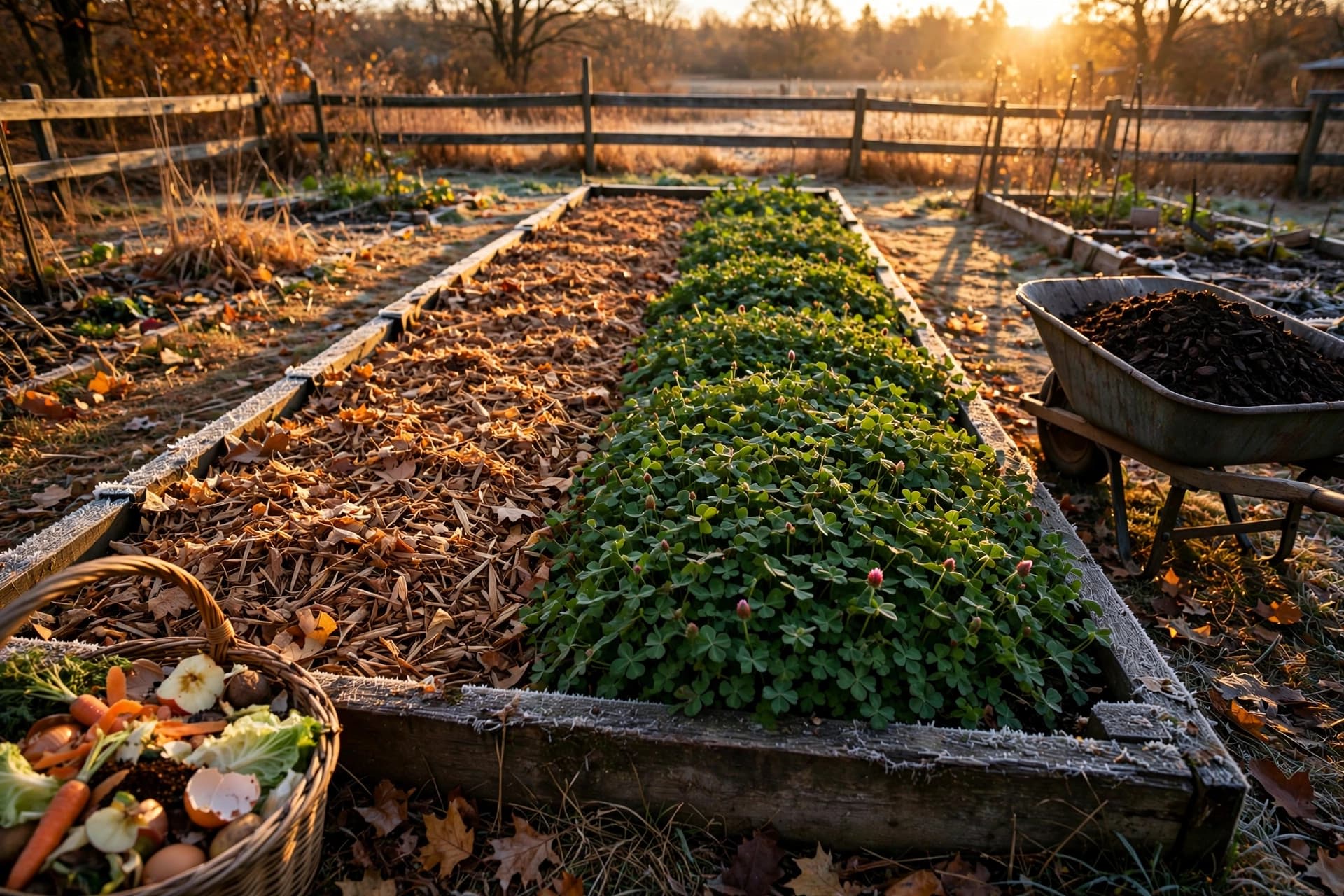
The ideal season to beat price fluctuations is fall.
These four steps will help you:
- Try before you purchase. You can have a soil test done through your local Cooperative Extension office to know what your beds really want. Already in many well-established garden soils, the nutrient with the most difficult market currently, phosphorus, is already high, so you can possibly avoid it altogether (Source: university Extension soil testing labs).
- Gather free materials. Rake leaves, save kitchen scraps and collect untreated clippings. Mowering leaves flakes them into flakes, and mulching them into your lawn, feeds your turf, too, free.
- Plant cover crop or apply mulch. Sow cover seed a few weeks prior to your first hard frost to allow it to grow. On bare beds, sprinkle with shredded leaves and compost to cover soil during winter.
- Shop by nutrient, only buy the gaps. Divide the cost of nutrient per pound, not per bag. The content of a 50-pound bag of 10-10-10 is approximately 5 pounds of nitrogen and 46-0-0 urea is approximately 23 pounds. Keep concentrated nitrogen dry, because it may burn plants, and keep up leftovers dry. In case you still intend to feed your lawn at the end of the season, make sure you find out when to apply winterizer, in order not to lose money.
Final Thoughts
Fertilizer prices had shot up this spring, and have not entirely dropped, but still depend on what is going on far away, in the Strait of Hormuz to a Nov. 15 shipping deadline. You cannot make those headlines, you can make your soil. Test, lean on free organic matter and only buy the gaps. Ready for more? Read our soil, compost and fertilizer manuals next to construct a low-cost feeding plan prior to winter.
References:
- U.S. Department of Homeland Security and U.S. Customs and Border Protection, "DHS Extends Jones Act Waiver Again and Adds Substantial Procedural Requirements" (March 17, 2026 issuance and August 2026 extension guidance, including the Nov. 15 loading deadline, case-by-case voyage review, and CBP Jones Act vessel requirements)
- Cato Institute, "Jones Act Waiver Tracker" and related analysis on fertilizer shipping
- World Bank, "Commodity Markets: World Bank Commodity Price Data (The Pink Sheet)" (Fertilizers Price Index, monthly)
- Farm Journal's The Scoop, "Jones Act Waiver Expires Nov. 15: What It Means for Fertilizer" (Oct. 7, 2026)
- Farm Journal's The Scoop / AgWeb, "Farmers Face a Fertilizer Market Full of Wild Cards" (Oct. 5, 2026) (covering The Fertilizer Institute commentary on sulfur, China, Hormuz, and new U.S. plants, plus the September 2026 Ag Economists Monthly Monitor)
- RFD TV / All Ag News, "Jones Act Waiver Keeps Fertilizer Shipping Options Open" (citing USDA Agricultural Marketing Service voyage and ammonia volume data)
- USDA Agricultural Marketing Service, "Pacific Northwest Production Cost Report (Bi-Weekly)" (Oct. 5, 2026)
- The Fertilizer Institute, "Policy & Market Insights: Industry Statements on Fertilizer Supply Chains" (sulfur, phosphate output, and ammonia pipelines)
- Farmers Business Network (FBN), "Fertilizer Market Outlook 2026" (import duties and phosphate costs)
- USDA National Organic Program, "7 CFR § 205.203 - Soil fertility and crop nutrient management practice standard" (raw manure application intervals)
- Land-Grant University Cooperative Extension Services (e.g., USDA NIFA Extension Directory): guidance on compost nutrient content, application rates, and soil testing
Frequently Asked Questions
Why are fertilizer prices rising in 2026?
Will fertilizer prices go up after November 15?
Can I use compost instead of fertilizer in my vegetable garden?
What are the best free fertilizer alternatives for gardens?
Does the Jones Act waiver fertilizer exemption affect garden center prices?
Should I buy garden fertilizer now or wait until spring?
About Philemon John
Philemon John is the Lead Author of Broad Gardening and has more than 10 years of experience growing and caring for plants in the backyard. He is particularly passionate about vegetable gardening, soil building and pest management and offers real-life advice and tips to support home gardeners.