How to Avoid Sewage Sludge in Fertilizer (Label Guide)

By Philemon John
Lead Author & Cultivator • Peer Reviewed & Soil Tested
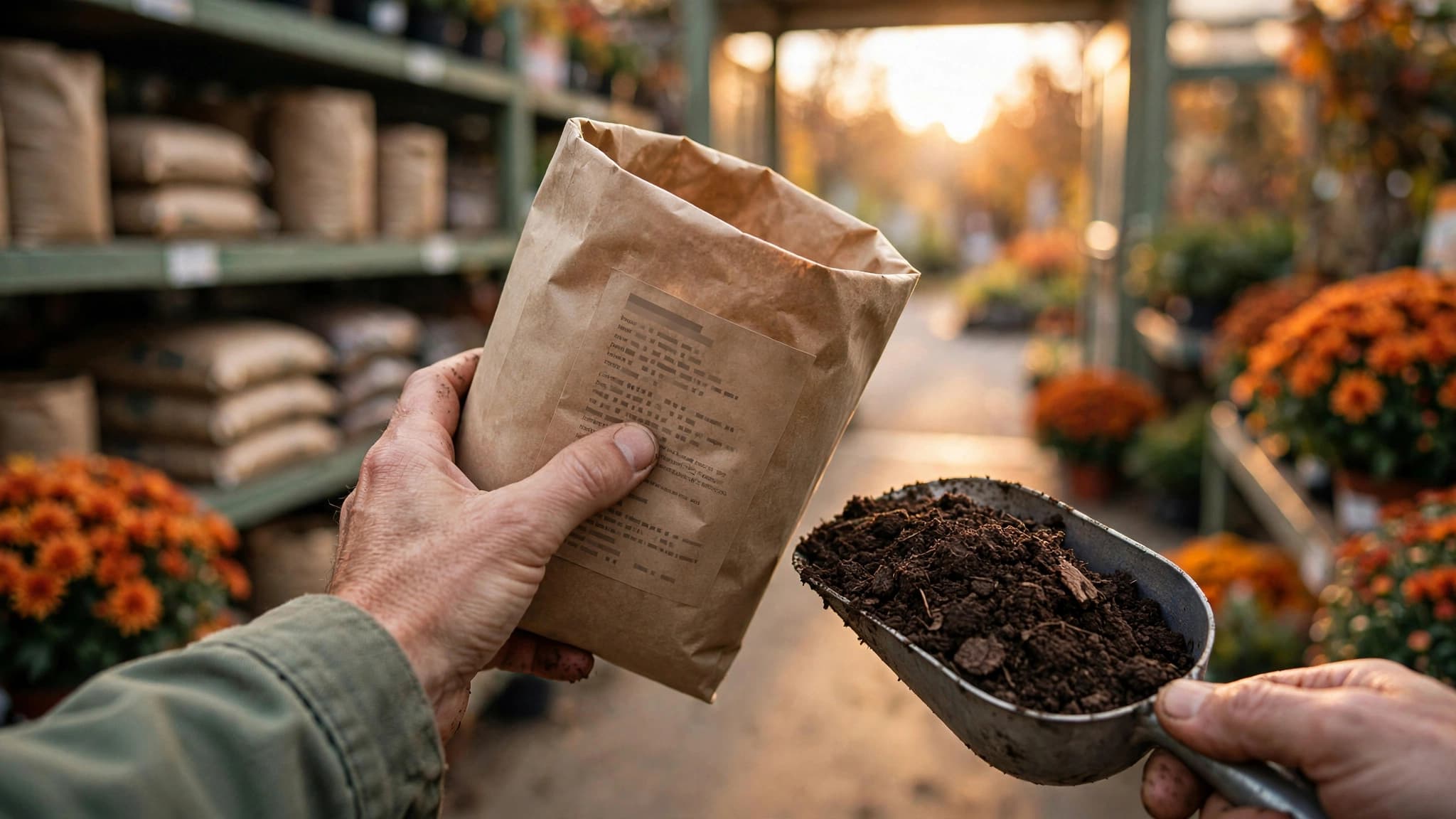
It's early October. You are at the garden center and have a cart of fall mums and are looking at a $24 bag of natural lawn food and a pile of compost that is on sale. What the front of the bag will not tell you is that some of these products are originally treated sewage solids. This guide will reveal where the clues are located on the label, and what you should purchase instead.
Quick Answer: Look at the ingredient or derived list to see the words biosolids, sewage sludge, wastewater residuals or municipal compost, and call the manufacturer if the source is not specified. The quickest shortcut is to purchase those with the mark of OMRI Listed, as the USDA organic standards forbid the use of sewage sludge. None of the labels assure the absence of forever chemicals, but avoiding products based on sludge eliminates the largest known source.
What Are Biosolids, and Why Are They in Garden Products?
Whenever you use the toilet or wash a load of laundry, the wastewater goes to a treatment facility. The liquid and the solids are separated within the plant. The leftover solids are called sewage sludge.
When the sludge is treated to the federal standards of germs and pollutants, it is then called biosolids. (Source: U.S. EPA, 40 CFR Part 503) Class A biosolids are treated until no disease causing germs are detected and they should also remain below limits on nine metals. (Source: Cornell CALS)
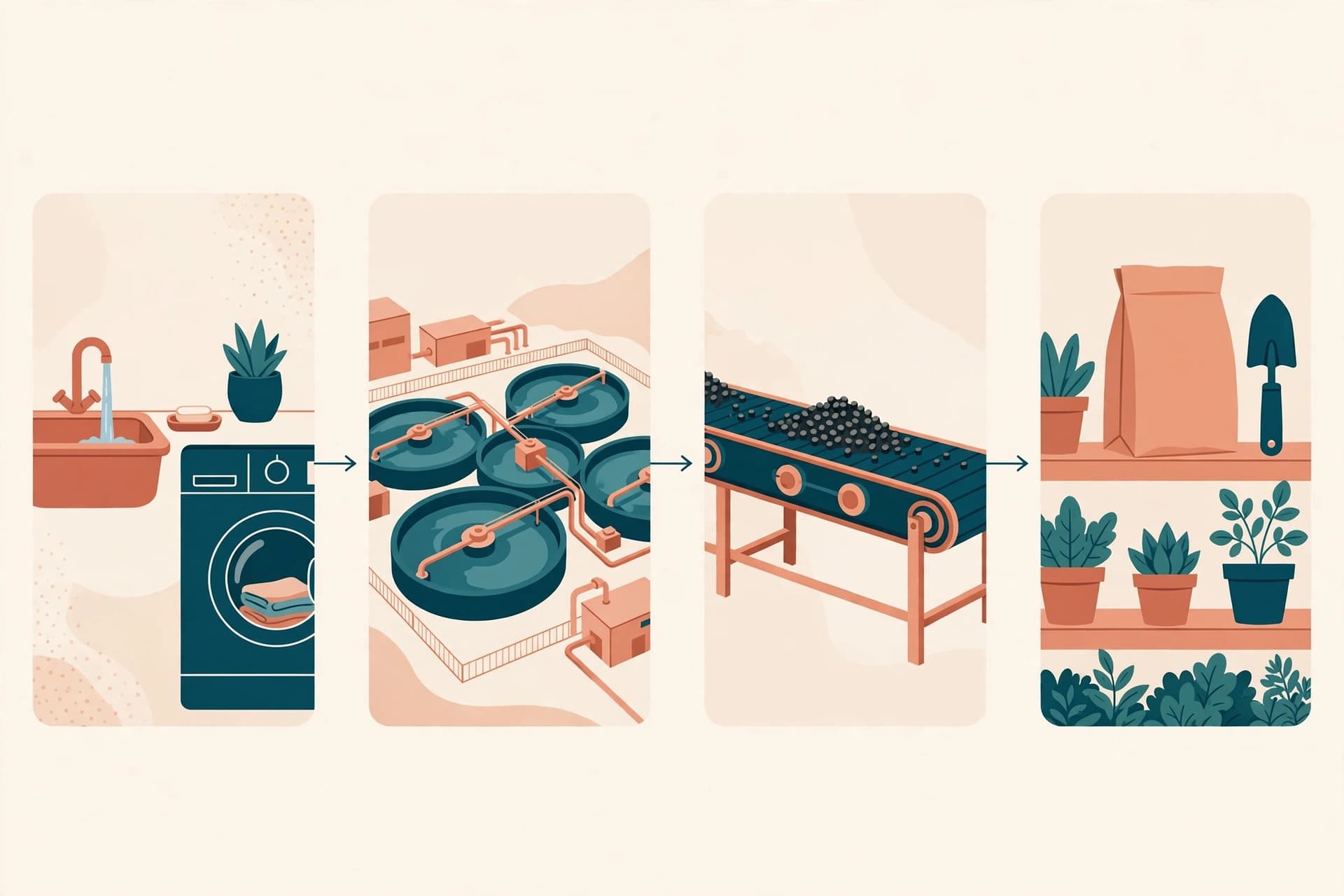
Approximately half of the sludge generated in U.S. is deposited on land. (Source: U.S. EPA) Some of it is dried into pellets for lawns. Part is mixed with bagged soil or made into compost.
This is where the shoppers fall into a trap. Compost, fertilizer, soil amendment, garden soil or raised-bed mix may be marketed as products created with Class A material. They are found at both big-box stores and local nurseries. Biosolids can be a component in a mixture, and thus a bag may contain some but not all sludge.
The most familiar product made out of treated wastewater solids is Milorganite, a popular lawn and garden fertilizer. (Source: Cornell CALS)
New to soil building? Begin with our soil, compost, and fertilizer guides and be back with the label checks below.
PFAS in Fertilizer: Why "Forever Chemicals" Worry Gardeners
PFAS are synthetic substances that are applied in non-sticking cooking ware, waterproof clothes, food wrappers, and firefighting foams. Drains and factory washing drain into wastewater and they were not designed to be treated in treatment plants. The consequence is that they can be left in the solids remaining. (Source: U.S. EPA)
These chemicals are hardly degraded, hence the name forever chemicals. When they are in soil, they can be years. They are taken up through roots by plants and some of shorter chain length are more readily transported to leaves and stems. (Reference: peer reviewed soil and compost studies)
PFAS aren't the only concern. Heavy metals, medication residues, and microplastics can also be found in treated solids. The Federal rules limit nine metals only, yet there is no national limit to these chemicals. (Source: U.S. EPA)
And now the truthful part: scientists are not in agreement regarding the extent of risk posed by normal human use. The most pernicious of the malpractices recorded pertain to farms where there is heavy and repeated application such as the Maine fields which led to the crack down in the state. (Source: Maine DEP) That uncertainty cuts both ways. It isn't proof of harm, and it isn't proof of safety.
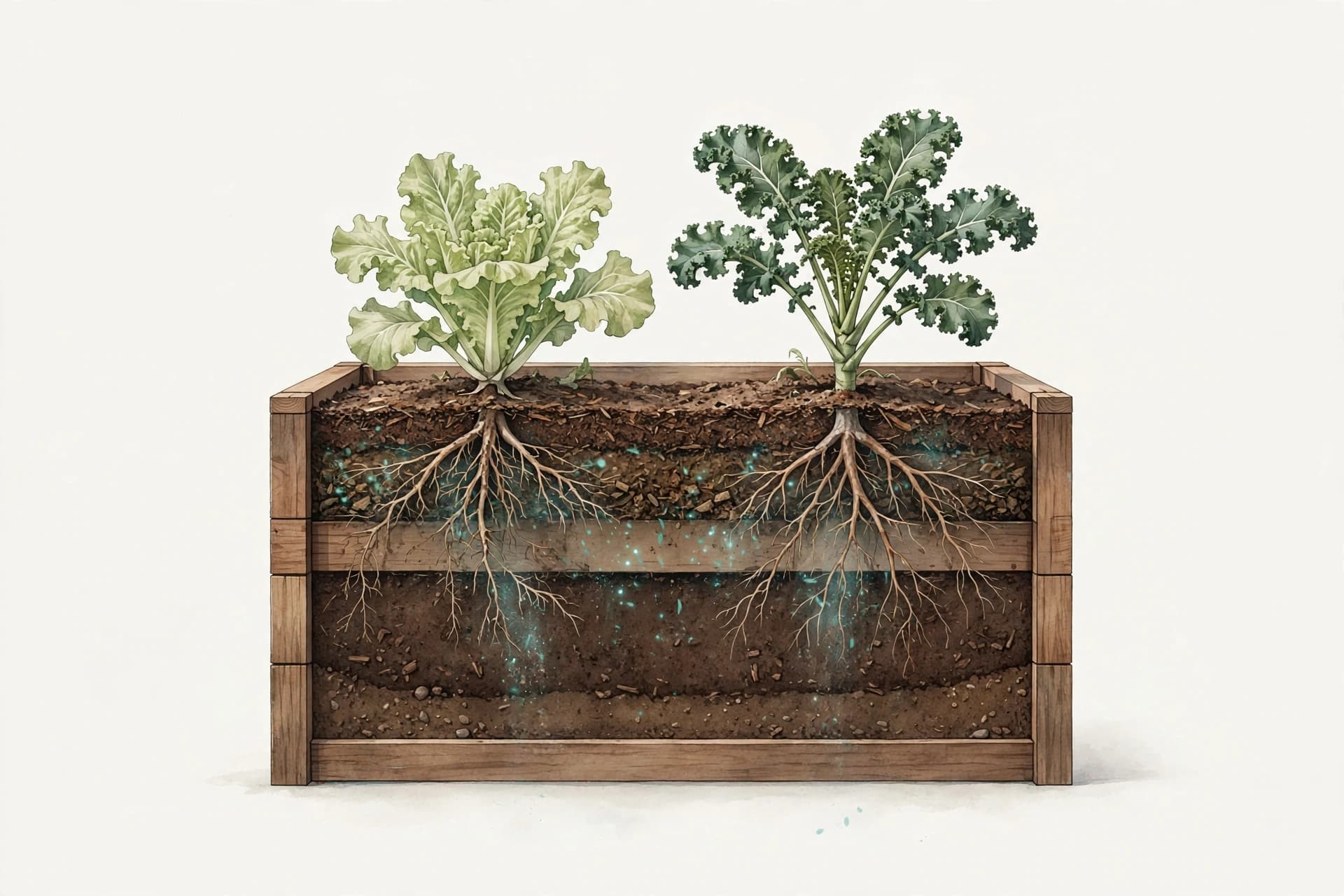
Why not use these products? Since you can avoid the entire argument at minimal or no additional expense. Certain university extension guides recommend the consideration of sludge-based products as high-risk. (Source: UConn Extension)
Is Sewage Sludge in Compost Legal? Where U.S. Rules Stand in 2026
Yes, in the greater part of the country. The Part 503 rule by EPA permits the use of biosolids in land that does not exceed the limit of germs and nine metals. (Source: U.S. EPA)
The regulations of forever chemicals are pending. In January 2025, EPA published a draft of a risk assessment of two PFAS, PFOA and PFOS, in sewage sludge. It indicated potential health hazards to individuals residing on or around areas where sludge is deposited. (Source: U.S. EPA)
New voluntary draft guidance issued by the agency was in mid 2026. It states that the previous evaluation was flawed and premised on worst-case scenarios. Opponents claim that the new method underestimates the danger. (Source: U.S. EPA; C&EN) At the time of writing, the period of comment is open till October 5, 2026, and nothing is final. (Source: U.S. EPA docket EPA-HQ-OW-2026-2509)
Certain states are gaining momentum. In 2022, Maine was the first state to prohibit land use of sludge and selling of compost made with sludge. The states which established thresholds on land application of PFAS include Colorado, Michigan, Minnesota and New York (Source: Maine Legislature, LD 1911). (Source: state environmental agencies, through MOST Policy Initiative)
Labeling is spotty, as well. There are states that have to mention the sludge-containing product and others do not, and ambiguous terms can conceal the origin. (Source: Cornell CALS; state fertilizer controllers) Federal law permits sludge to be used as treated in garden products by sellers, and it is up to you to do the checking.
How to Read Fertilizer Labels: 5 Checks Before You Buy
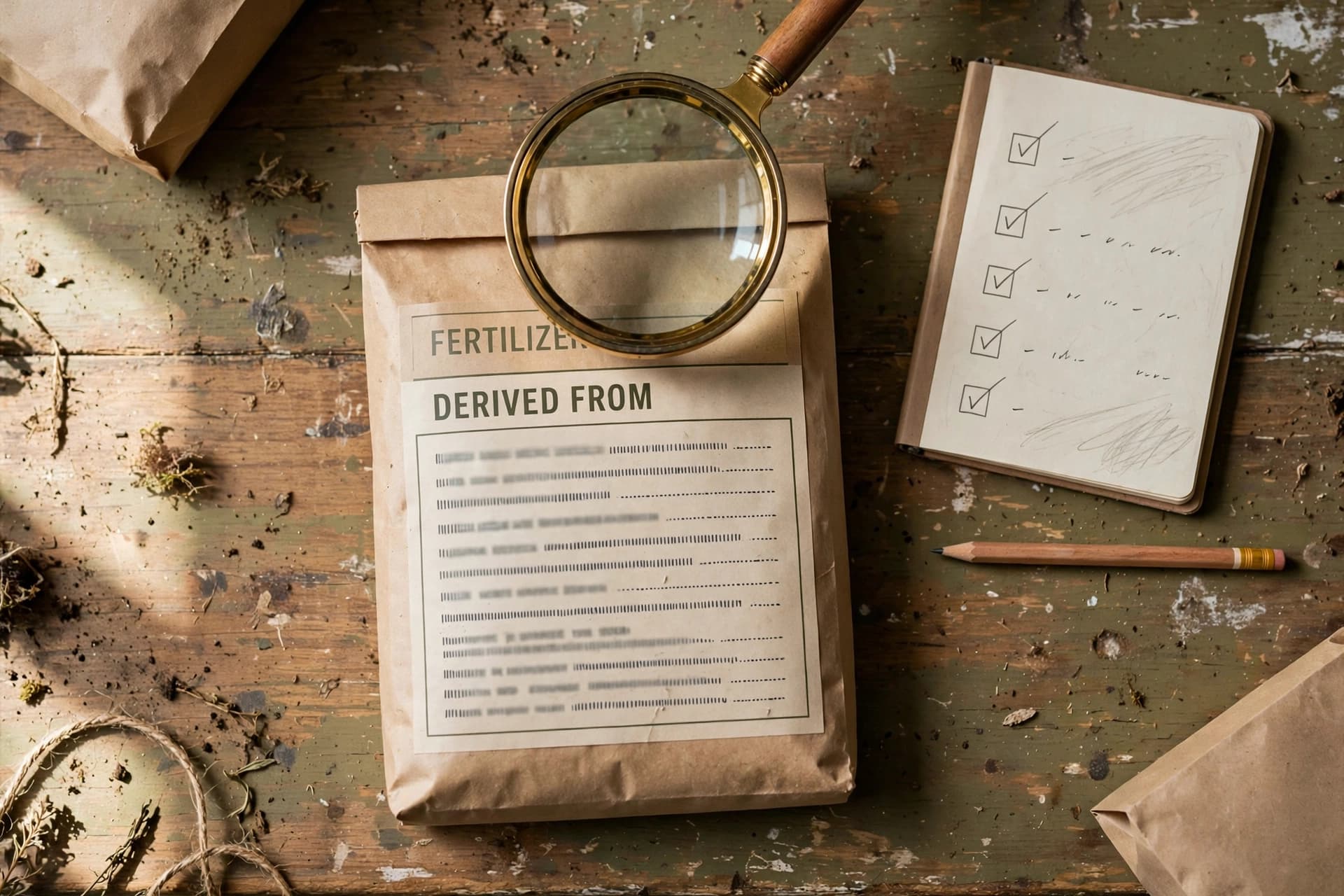
These five checks have an average time of one minute per bag:
1. Find the "Derived From" or Ingredients List
The nutrient sources are listed on a statement of derived from on the back of most fertilizer bags. Scan as biosolids, sewage sludge, wastewater sludge, municipal residuals, EQ biosolids or Class A. In case you find any of them, assume that the product is sludge-based. (Source: UConn Extension)
2. Question Vague Words
Any unspecified waste product that is called compost, or recycled organic matter, or soil conditioner or processed organic material may consist of leaf mulch or treated sludge. In case it does not say it on the bag, then you should ask.
3. Find Organic Seals.
USDA organic standards do not allow sewage sludge and OMRI Listed products are based on the standards. (Source: USDA National Organic Program; OMRI) Cornell's recycling experts point to OMRI-approved products as the way to be sure a product has no biosolids. (Source: Cornell CALS)
Another thing that is worth attention is the Seal of Testing Assurance of the U.S. Composting Council. It reports nutrients, salts, and stability but is not a PFAS certification. (Source: U.S. Composting Council; UConn Extension)
4. Request the Maker to do Paperwork
Contact by email or phone, and inquire of three things:
- What are the feedstocks to this product?
- Do you use any biosolids or municipal sludge?
- Are there current lab findings of heavy metals and PFAS?
Respected organizations respond to calls quickly. In case of bulk compost, request the yard to provide a technical data sheet. (Source: UConn Extension)
5. Beware of Front-of-Bag Buzzwords
Natural, earth-friendly and recycled are not controlled as an organic seal would be. Even organic nitrogen can just imply that nitrogen is derived out of carbon material. Always turn the bag inside out.
Which Fertilizers Contain Biosolids? Product Types to Watch
There is no automatic safe or automatic off-limits category of products. This table will help you find out where treated wastewater solids may be found most frequently and how to verify.
| Product type | Chance it contains biosolids | How to check |
|---|---|---|
| Heat-dried pellet lawn and garden fertilizers (Milorganite is the best-known example) | Known to be biosolids-based | Confirm the source on the maker's website |
| Bagged "compost" or "soil conditioner" with no source listed | Possible | Read the derived-from list, then call the maker |
| Garden soil and raised-bed mixes that list "compost" | Possible | Ask which compost goes into the blend |
| Municipal or bulk compost from a local yard | Varies | Request the feedstock list and test results |
| Peat- or coir-based potting mix | Unlikely | Review the component list |
| OMRI Listed fertilizers and compost | Excluded by organic rules | Look for the seal |
Reconsidering your lawn care? Use an OMRI Listed lawn fertilizer instead of the pellets that are made of treated wastewater solids.
Best Safer Organic Alternatives to Sludge-Based Products
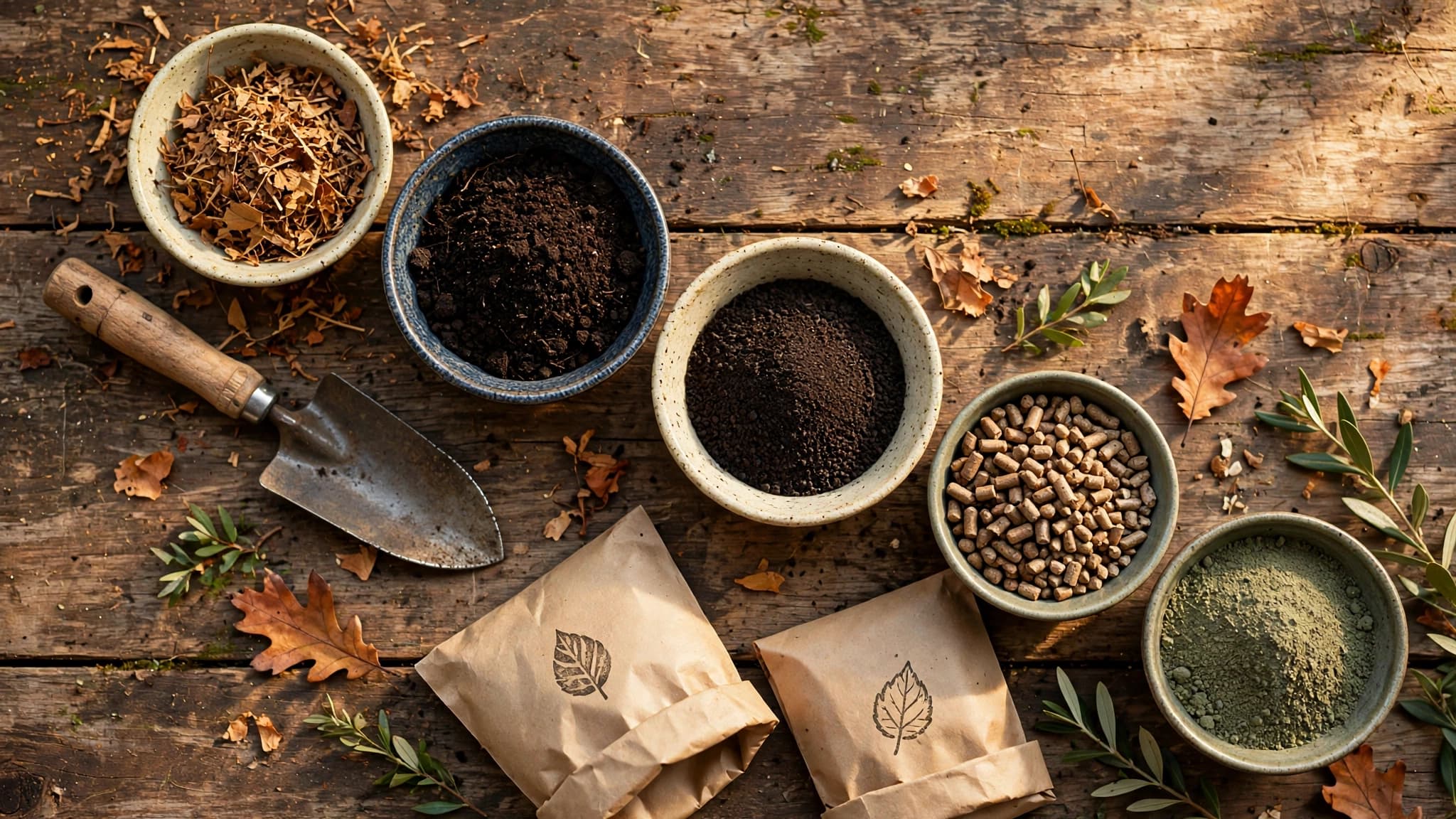
The ideal soil builders are inexpensive, readily available and devoid of sludge. These are the ideas that will be worth your money this fall.
| Option | Best for | Typical cost | Watch-outs |
|---|---|---|---|
| Shredded fall leaves or leaf mold | Mulch and soil conditioning | Free | Skip leaves from lawns treated with weed killer |
| Homemade compost | All-purpose soil building | Nearly free | Keep out glossy paper, takeout containers, and "compostable" packaging |
| Yard-trimmings compost (municipal or commercial) | Beds and top-dressing | About $30–$60 per cubic yard | Ask what the site accepts |
| Aged composted manure | Vegetable beds | Low | Persistent herbicides from treated hay or pasture |
| Worm castings | Seed starting and containers | Higher per pound | Pricey for large beds |
| OMRI Listed meals (alfalfa, feather, kelp, bone) | Targeted nutrient boosts | About $20–$40 per bag | Slower to work in cold soil |
(Source: average U.S. landscape-supply and garden-center prices; land-grant university extension information on herbicide residues)
The ideal time to begin is in the fall. Our seasonal gardening manuals demonstrate when to collect the leaves, and prepare the beds in advance of the initial hard freeze.
How to Shop for Cleaner Compost
- Choose yard-trimmings compost pick instead of blends that accept food scraps and takeout wrappers. A 2019 study by Purdue of ten compost samples found that food packaging sites had an average ten times the amount of compounds containing PFAS than the others. The movie explores the life of a pair of men, one of whom is a journalist.<|human|>The film is a story of two men, one being a journalist.
- A feedstock list and recent lab results should be ordered before a purchase.
- Find OMRI Listed on the bag.
- Shop-bought compost is stretchable, by adding your own leaf mould.
Already Used a Sludge-Based Product? Do This Next
And do not tear out your garden, and do not fret. Instead, do the following:
- Discontinue the product, and keep leftovers not with edible beds.
- Use leaf mold, finished compost or OMRI Listed fertilizers in future.
- Growing a garden in a raised bed with a known sludge-free mixture is another option as you are getting sorted.
- Get a simple soil test done by the university extension lab in your state. Simple tests cost approximately 10 to 60, heavy-metal panels are a bit more expensive, and PFAS tests need a special lab. As of April 2021, the current schedule of fees is as follows: (Source: land-grant university extension lab fee schedules)
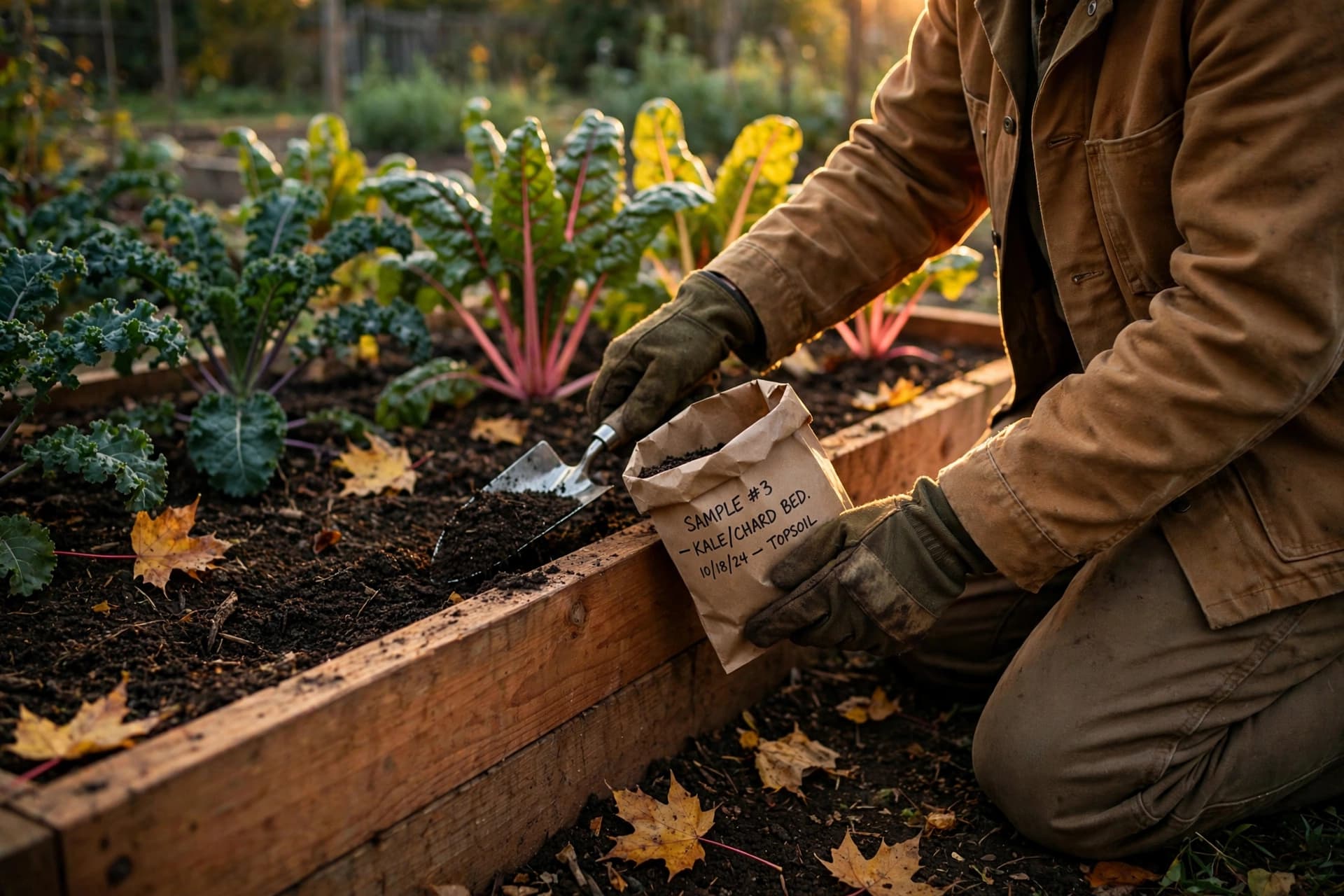
Take care of a fall vegetable garden? New compost that is put in, now, has the rest of winter to settle. Thinking of planting a pollinator garden in the spring? Begin with leaf mold and finished compost and start with healthy soil.
References:
- U.S. Environmental Protection Agency, 40 CFR Part 503: definitions of sewage sludge and biosolids, land-application limits, and share of sludge applied to land.
- U.S. EPA, "Per- and Polyfluoroalkyl Substances (PFAS) in Sewage Sludge": PFAS concentrating in sludge and current agency actions.
- U.S. EPA, Draft Sewage Sludge Risk Assessment for PFOA and PFOS: agency risk assessment and regulatory framework.
- U.S. EPA, Draft Guidance for Reducing Risk from PFOA and PFOS in Biosolids: Docket EPA-HQ-OW-2026-2509, with comments extended through October 5, 2026.
- C&EN (American Chemical Society): reporting on critics' response to EPA's draft guidance.
- Cornell CALS, New York State Center for Organics Recycling Education: "Biosolids" FAQs regarding Class A definition, product marketing, Milorganite, and OMRI advice.
- UConn Extension: "PFAS and Biosolids in Fertilizers and Soil Amendments": label terms, buyer's checklist, and the STA caveat.
- Maine Legislature, LD 1911 & Maine Department of Environmental Protection: testing of land-applied sludge sites and statutory bans.MOST Policy Initiative: "PFAS Land Application Regulations" and state PFAS thresholds.
- USDA Agricultural Marketing Service, National Organic Program: prohibition of sewage sludge in organic production.
- Organic Materials Review Institute (OMRI): product review against USDA organic standards.
- U.S. Composting Council: Seal of Testing Assurance program.
- Environmental Science & Technology Letters: Purdue University-led study of PFAS compounds in commercial composts, including facilities accepting food packaging.
- Land-grant university extension soil testing laboratories: published fee schedules for typical test prices.
- Land-grant university extension publications: research on persistent herbicide residues in hay, manure, and compost.
- Typical U.S. landscape-supply and garden-center retail pricing: for compost and organic fertilizers (see Home Depot or Lowe's).
Frequently Asked Questions
What are biosolids, and are they the same as sewage sludge?
Is there PFAS in fertilizer, and can plants absorb it?
How to avoid sewage sludge in fertilizer when the label only says "compost"?
Does an OMRI Listed label mean a product has no sludge?
Does composting remove PFAS or heavy metals from sludge?
Is it legal to sell compost or fertilizer made from sewage sludge?
About Philemon John
Philemon John is the Lead Author of Broad Gardening and has more than 10 years of experience growing and caring for plants in the backyard. He is particularly passionate about vegetable gardening, soil building and pest management and offers real-life advice and tips to support home gardeners.