Ornamental Peppers for Fall Containers: 7 Best Picks

By Philemon John
Lead Author & Cultivator • Peer Reviewed & Soil Tested
It is less than four weeks to Halloween, your porch pots are still in July and all the aisles of your garden centers are filled with just one brand of orange mums. Sound familiar? There is an even sharper and longer lasting one, glossy little peppers with black, purple, orange, and red colors, which almost look like candy corn on a stick. These are how to choose the finest, plant them in the ground, and keep them creepy till the first frost.
Quick Answer: Ornamental peppers are annuals that are sensitive to heat and whose color is retained until the first hard frost, making them one of the best Halloween pot plants to purchase. Provide them with all the sun, a drainage hole pot, and soil that is uniformly moist, and transfer the pot to the inside when frost threatens. The fruit is, however, technically edible, but it is typically unbearably hot to eat.
Why Use Ornamental Peppers in Halloween Pots?
A majority of fall colour has an expiry date. Mums are blooming and wilting, pumpkins are plumping, and the marigolds are pouting following the first frosty night. Ornamental peppers never end.
These miniature plants are near relatives of the chili peppers in a vegetable garden, but bred more to look good than to taste good. Their tiny, erect fruit matures in a complete colour range, and thus a single plant may presently exhibit black, purple, yellow, orange, and red. An inbuilt color change is precisely what a Halloween scene requires. Nonetheless, they possess certain drawbacks.
Even they are good with lingering October warmth. The fruit has a short maturity, and it does not drop, and the plants can withstand heat with minimal pests. (Source: Oklahoma Proven plant profile)
They can be taken to shelter during a cold snap, when they live in pots, and something a bed of annuals can not do.
Three additional reasons to purchase a few:
- Low work: They require less than sun and constant moisture.
- Pollinator friendly: Once they flower, you can see the pollinators come by and your porch is now a mini pollinator garden.
- Deer resistant: NC State Extension reports that they rarely get harmed by deer.
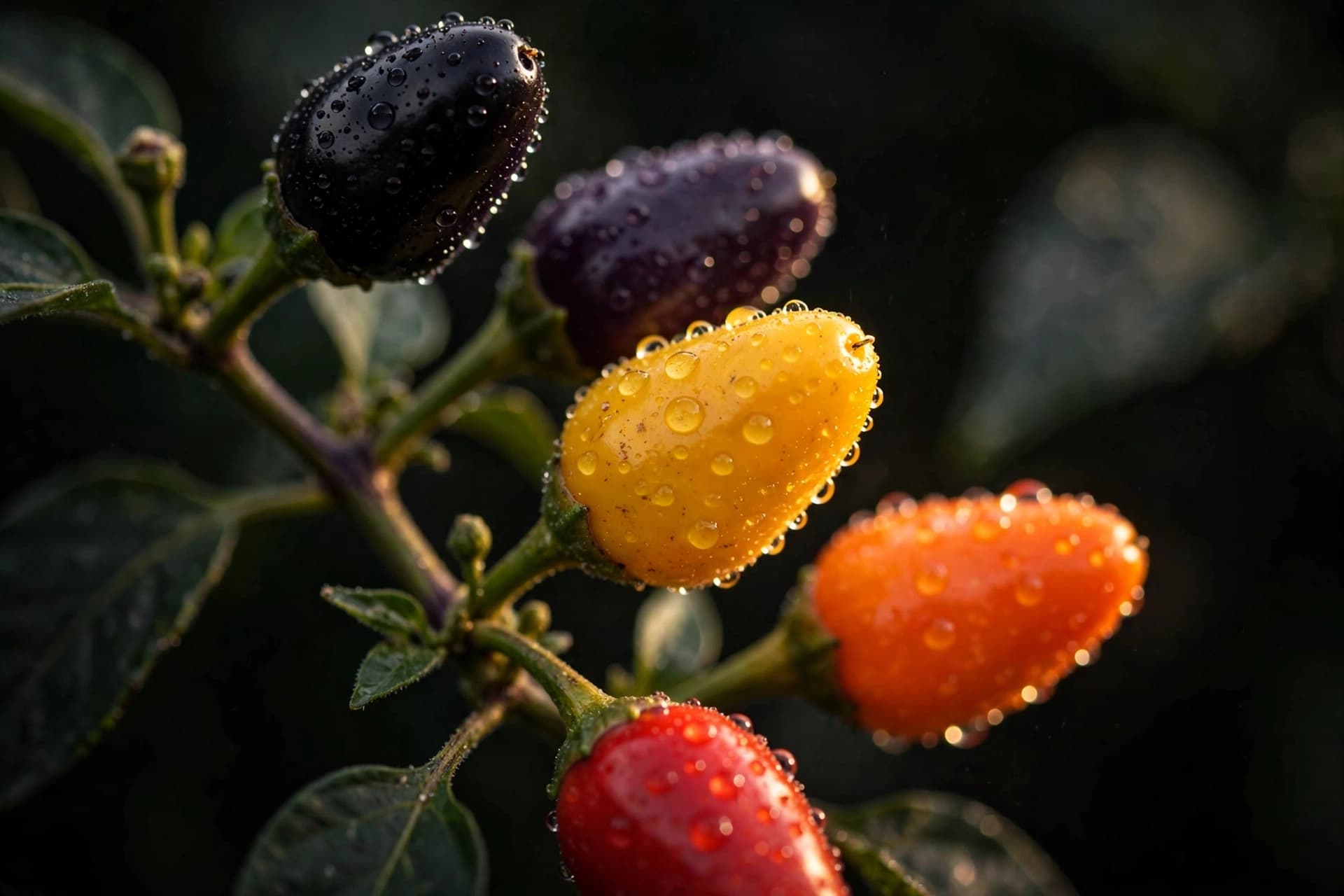
Black Pearl Pepper Plant and 6 More Best Varieties for Halloween
Why 'Black Pearl' Is the Halloween Classic
Should you purchase just one, then make it Black Pearl. It was bred by scientists with the USDA Agricultural Research Service in Maryland and it has received All-America Selections in 2006. (Source: USDA Agricultural Research Service)
The leaves are medium-glossy and almost black, the round fruits turn black and then red. The majority of decorative peppers grow between 10 to 20 inches (Source: UF/IFAS Extension), though this one frequently grows between 18 to 24 inches throughout the entire season (Source: archived Mississippi State University Extension column).
Be realistic on taste. According to USDA, it is a culinary ornamental that has a spicy bite and therefore treat the fruit as a decoration in the first place.
Six More Varieties Worth Planting
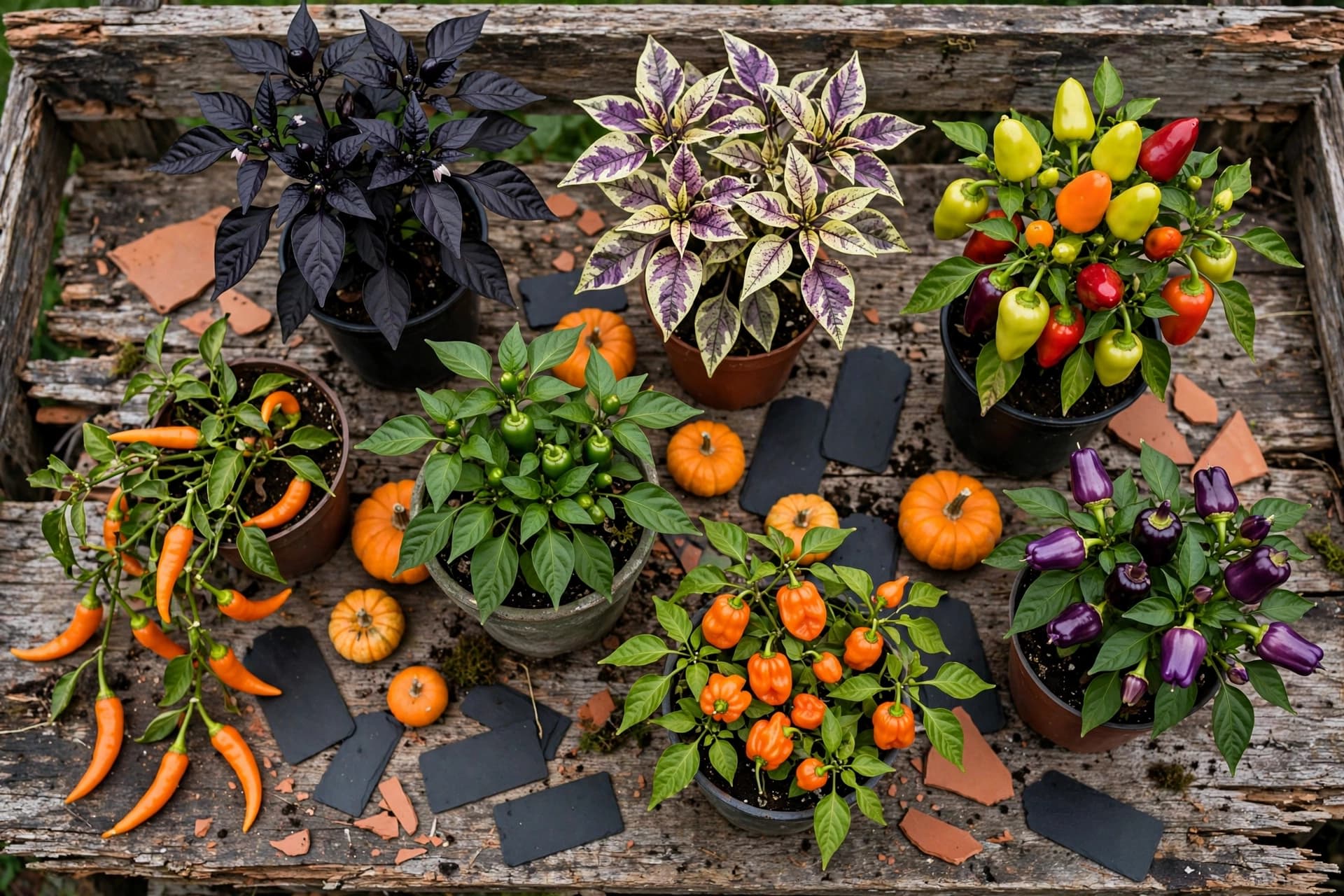
All of these fit into a pot and come with their own Halloween character.
| Variety | Header 2What It Looks Like | Best Role in a Pot |
|---|---|---|
| 'Black Pearl' | Near-black leaves; fruit ripens from black to red | Tall center "thriller" |
| 'Chilly Chili' | Chartreuse, orange, and red fruit at the same time | Candy-corn "filler" |
| 'Medusa' | Small, tidy plant with upright, multicolor fruit | Front-of-pot "filler" |
| 'Purple Flash' | Purple-toned, variegated leaves with dark fruit | Moody "filler" |
| 'Calico' | Variegated leaves with fruit that shifts colors | Mid-level "filler" |
| 'Sangria' | Bold, showy fruit clusters; also good indoors | Statement plant |
| 'Tangerine Dream' | Small orange, banana-shaped fruit on a trailing plant | "Spiller" |
The one to go to when you feel like snacking is 'Tangerine Dream'. It was displayed in an exhibit at the U.S. Botanic Garden, as part of a USDA research on edible ornamentation with a trailing habit. Hence, it is essential to select a site that aligns with the customer's requirements.<|human|>Therefore, selecting a location is crucial that can fit the needs of the customer.
How to Pick a Healthy Plant
Shopping: October Racks: Before you buy, inspect them:
- Select plants that are bushy with shiny leaves and not yellow.
- Find fruit already of the color you desire, as you have no time to begin at the seed.
- Turn over a couple of leaves and avoid any plant with sticky stuff on it, or webbing, or tiny white flies.
- Check the drainage holes; some sticking roots are all right, but a solid mat indicates the plant is root-bound.
Fall Container Garden Ideas: 4 Spooky Planting Combos
Follow the standard container formula: a tall thriller, some fillers, and a spiller that falls over the rim. Colorado State University Extension recommends retaining the spikes, grasses and trailing vines of your summer pot, changing the annuals used, and renewing the potting soil. The Colorado State University Extension ( Source: Colorado State University Extension ) includes peppers on their list of suggested autumn pots. (extension educators in Colorado and South Dakota all recommend peppers). (Source: South Dakota State University Extension)
A warning before you begin to plant. Peppers are frost sensitive; pansies and kale are light frost resistant, so locate the peppers in a place where they can be easily removed or the entire pot can be relocated when the weather is predicted to be cold. Carry the tender plants in the house at first and the robust couples will carry on the show.
The Witch's Brew
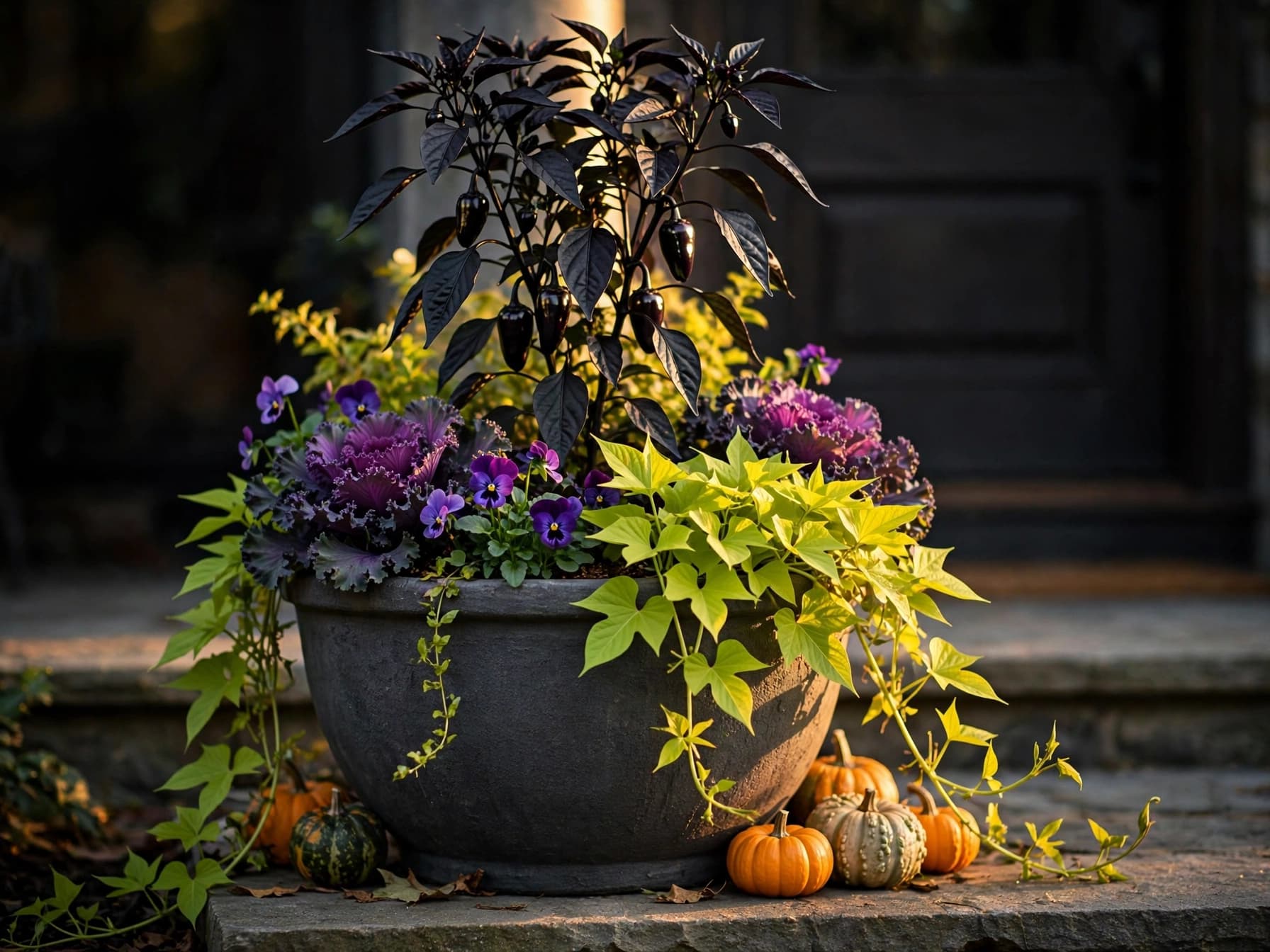
Start with the center; Black Pearl. Then encircle it with some purple decorative kale and violet pansies and allow the chartreuse sweet potato vine to spill over the rim. The leaves of the lime-green are tickling the black ones as though they were bubbling up in a cauldron. According to SDSU Extension, pansies withstand frost, and even certain hard freezes.
The Candy Corn Pot
Combine chilly chili, with chartreuse, orange and red fruit simultaneously, with yellow mums and orange pansies. Mums are available in traditional fall colours of yellow, orange and maroon, such that the colour palette is almost self-planting. Plant a few mini pumpkins on the soil surface to the final flourish.
The Moody Textures Pot
Begin with a tall, decorative grass, like switchgrass. At the base add plant, calico or purple flash and complete the edge with trailing sedum. The patterned leaves provide a texture and the subdued color scheme is a good match with a gray stone porch or a dark front door.
The Pumpkin Patch Crate
Replace the pot with a wooden crate, pail or old wagon all of which SDSU Extension suggests can be used to refresh weary planters. Punch drain holes or plant nursery pots. Put the plant Tangerine Dream on the front side so that its orange fruit will hang anywhere on the side and then fill empty spaces with mini pumpkins and gourds, all the things which Colorado state extension suggests to construct the autumn theme.
Three Design Rules Which render any pot planned.
- Contrast the leaves. Combine dark foliage with chartreuse or silver, to make each plant prominent.
- Repeat one color. Match the color of the fruit in a pumpkin or a flower to make the pot look purposeful.
- Plant in every odd number. It is more natural to have three or five groups than two.
Ornamental Pepper Plant Care: How to Water, Feed, and Protect
Such plants are tolerant. They have a few basics that maintain their glossiness and fruitiness until the cold closes them.
Sun and Pot Size
Provide them with full sun and well-drained average soil, which Oklahoma Proven program enumerates as the best. Direct light on a porch or patio should be at least six hours. One plant can be planted in a 6- to 8-inch pot, and a mixed planter must be 12 inches or bigger. Whichever one you use make sure they have drainage holes.
How to Pot Them Up in Five Steps
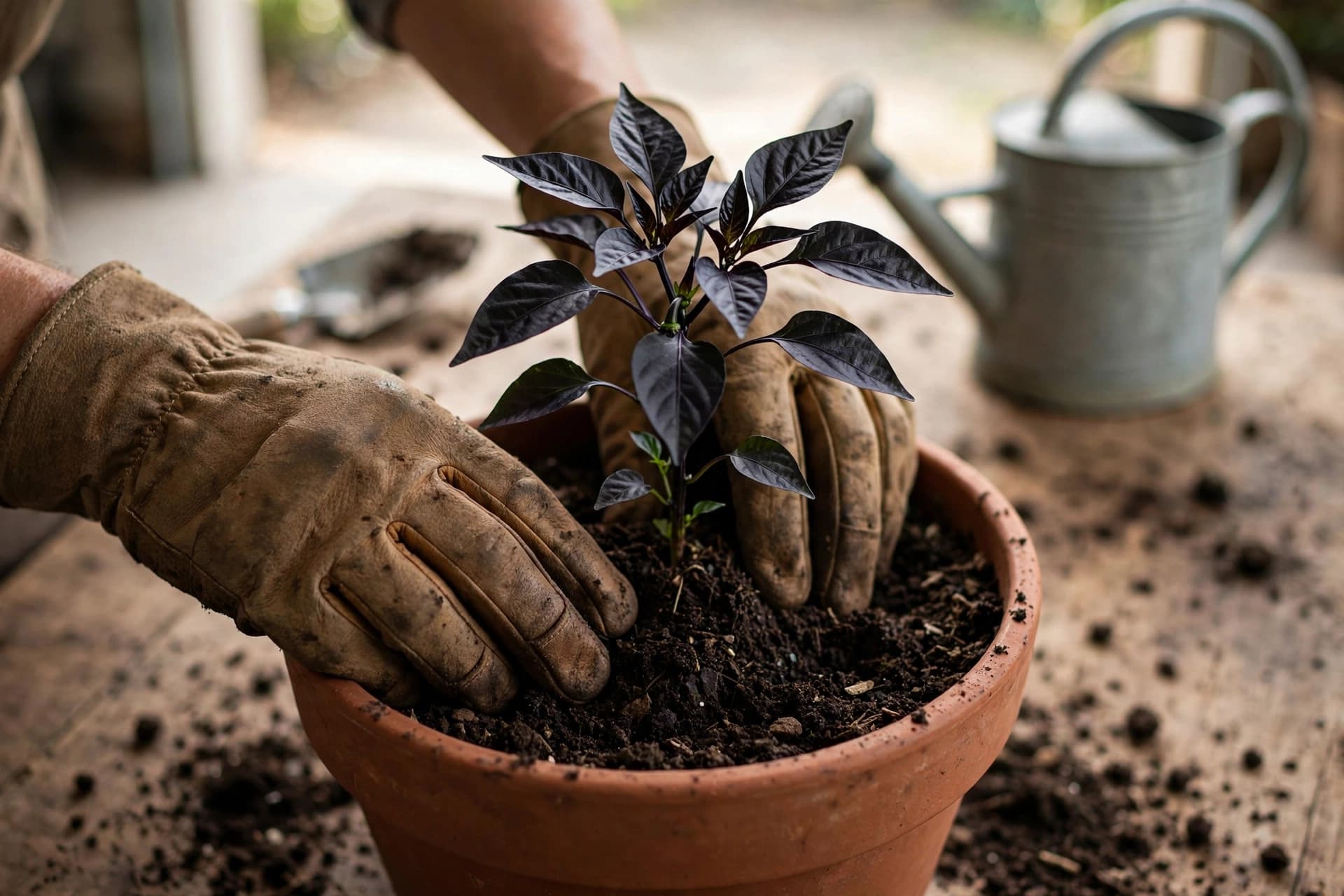
- Add fresh bagged potting mix, not garden soil to the container.
- Slide out the plant and loosen the roots that may be circling.
- Plant it into the same depth that it grew in the nursery pot, not deeper like a tomato. (Source: Mississippi State University Extension)
- Pack the soil and leave it an inch beneath the rim.
- Run water till it runs out in the bottom, and then leave it in the sun.
Water and Fertilizer
Maintain the soil at natural moisture level but not too wet. These plants can withstand the heat and some dryness but they prefer regular water. When you feel you have a dry soil, then put one finger an inch into the soil and then water. Fall is colder, and watering is not necessary as often, and the damp soil encourages root rot and fungus gnats, as soon as the pot is brought indoors.
To feed, the Oklahoma State Extension suggests a general-purpose fertilizer during the first appearance of the fruits, and once more after about six weeks with the use of liquid or slow-release products in containers. Plants purchased in October are usually well fed at the nursery, hence do not add additional.
Cold Snaps and Pests.
There are seldom any issues with pests. According to NC State Extension, aphids and whiteflies are on the list of insects to observe, thus, inspect the leaves underside when watering. Fall heavy pruning is a waste of time, as you would be cutting off color.
Cold is the real threat. These are frost-tender plants, and plants tend to grow retarded far before the frost hits so monitor the weather and be prepared to bring in pots on any frosty evening.
Care at a Glance
| Need | What to Do |
|---|---|
| Light | Full sun, at least 6 hours |
| Soil | Fresh potting mix in a pot with drainage holes |
| Water | Keep evenly moist; let the top inch dry |
| Food | At first fruit and again six weeks later |
| Cold | Move pots to shelter on frost nights |
Are Ornamental Peppers Edible? What to Know Before You Taste
Yes, normally, but you are not likely to like it. Oklahoma State Extension says the fruit is safe to eat but typically very hot and not very palatable. UF/IFAS Extension concurs that they are way too hot to most individuals and NC State Extension further states that some kinds are even spicier than the regular chili peppers.
The only exception is a gastronomic decoration such as Tangerine Dream that is sweet. Always observe the following safety rules before trying anything:
- Read the tag. Consume plants with the tag culinary or edible.
- Ask about sprays. Nursery plants are allowed to receive products that are not approved of food crops.
- Protect your skin. Wear gloves when touching hot fruit and wash your hands then touch your eyes.
- Consider pets and children. An entry in ASPCA database called Ornamental Pepper is in fact a description of Jerusalem cherry, a poisonous-looking counterpart. (Source: ASPCA) The actual chili-type plants are dissimilar, though the hot fruit may still irritate an oral or a stomach, so maintain pots within reach.
How Long Do Ornamental Peppers Last in a Pot?
Consider them as annuals of a single season. The fruit is early and is on all summer, and the show continues until frost destroys the plant. Now it depends on your climate what comes next:
- Cold-winter: Color till the first frost, then take pots in or turn them into compost.
- Mild-winter: According to UF/IFAS Extension, in warmer climates, the plants act as perennials. Enter your location in the USDA Plant Hardiness Zone Map to find your zone.
- Indoors: Oklahoma State Extension indicates that potted plants may be brought inside to enjoy the winter holidays provided that they receive a lot of light.
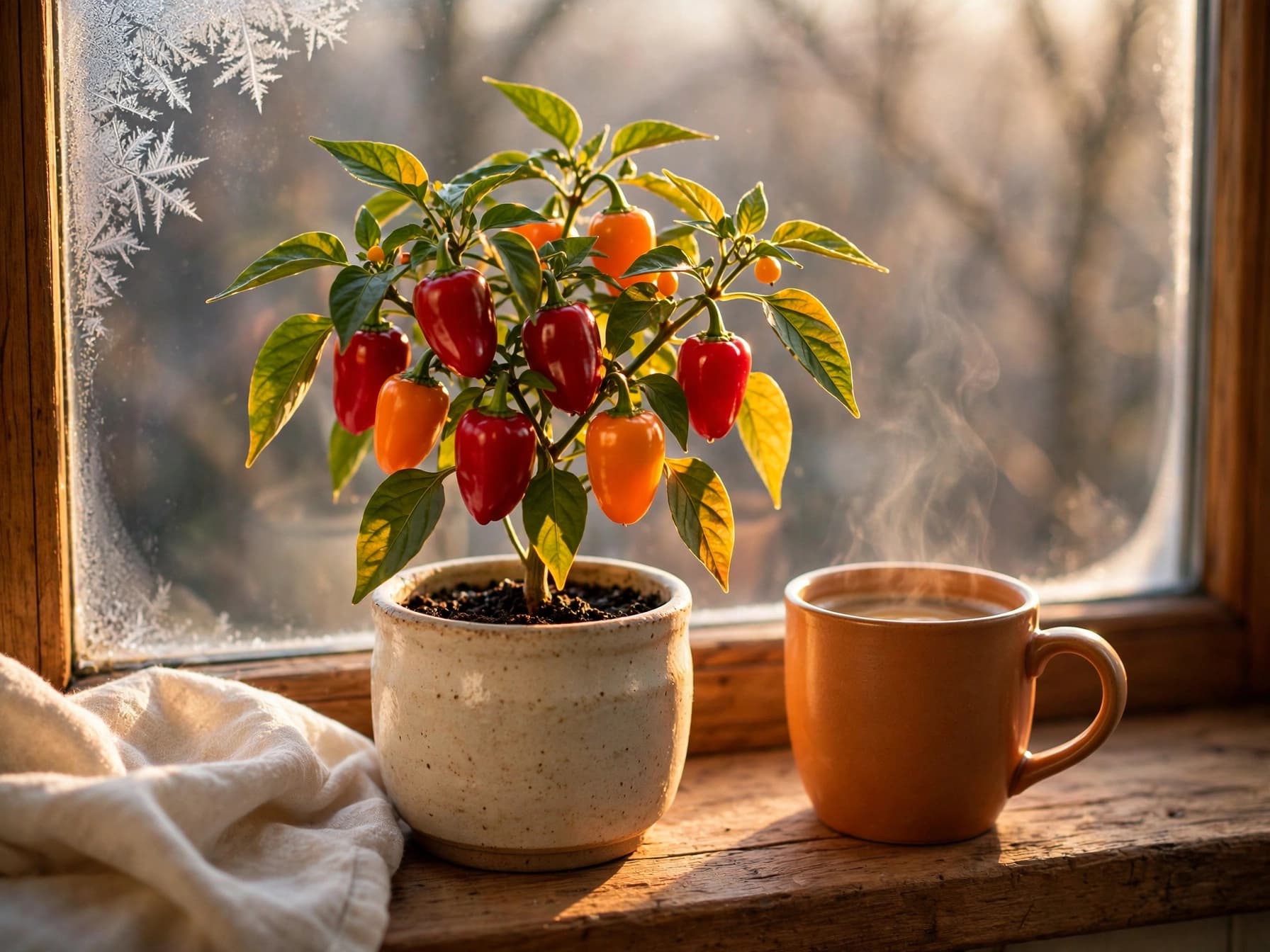
Fancy taking a chance? Light, temperature and pruning are discussed in our guide on how to overwinter your pepper plants. Do a practice run of how to prepare before the first frost and that nothing is left out of doors.
Establish achievable expectations within. Fruit gradually fades and leaves tend to fall after the relocation, hence consider it a bonus season and not a promise.
Three Fallacies which shorten their season.
- Overwatering. Wet roots are a typical reason of brown leaves and fallen fruit.
- Waiting too long. A single frosty night is enough to put an end to the season, thus relocate pots before it forecasts freeze.
Skipping light indoors. Plants would get leggy and lose their fruit in a dark room; a sunny window or a grow light are used.
Ready to Pot Up Some Halloween Color?
Plant some shiny, changing-color peppers this weekend, and you can have a deliberate porch until Halloween. A single pot will make a drab porch look like a Halloween scene. Begin with a dark-leaved star such as the 'Black Pearl' and then add frost-hardy partners and have a sheltered location prepared when the first cold night arrives. Need additional ingredients? Next, read our seasonal gardening guides to find more ideas on planting in autumn and tips on how to prepare your garden in case of frost.
References:
- USDA Agricultural Research Service, "Black Pearl: Beauty with a Bite" (April 26, 2006)
- Oklahoma State University Extension, "Ornamental peppers are great for adding color, but not flavor" (Sept. 8, 2024)
- Oklahoma State University Extension, Oklahoma Proven plant profile: "Ornamental Pepper (Capsicum annuum)"
- UF/IFAS Extension, "Capsicum annuum Ornamental Pepper" (revised March 2023)
- NC State Extension Plant Toolbox, "Capsicum annuum (sweet pepper)"
- Mississippi State University Extension, "Ornamental peppers enliven fall landscapes" (2005, archived)
- University of Wisconsin–Madison Extension Horticulture, "A Pepper for Every Pot"
- Colorado State University Extension (Arapahoe County), "Fall Containers: Fun, Fresh and Fabulous" (Sept. 5, 2020)
- South Dakota State University Extension, "Bring new life to worn-out summer containers: Ideas for fall love"
- ASPCA, Toxic and Non-Toxic Plants, "Ornamental Pepper entry (Solanum pseudocapsicum)"
- USDA Agricultural Research Service, "USDA Plant Hardiness Zone Map"
Frequently Asked Questions
What are the best ornamental peppers for fall containers in cold climates?
Is a Black Pearl pepper plant safe around dogs and cats?
Does ornamental pepper plant care change when nights turn cold?
How long do ornamental peppers last once frost arrives?
Would I be able to plant peppers in the same pot with mums and pansies?
Why are the leaves on my pepper dropping or turning yellow in October?
About Philemon John
Philemon John is the Lead Author of Broad Gardening and has more than 10 years of experience growing and caring for plants in the backyard. He is particularly passionate about vegetable gardening, soil building and pest management and offers real-life advice and tips to support home gardeners.