Spotted Lanternfly Egg Masses: Find and Destroy Them

By Philemon John
Lead Author & Cultivator • Peer Reviewed & Soil Tested
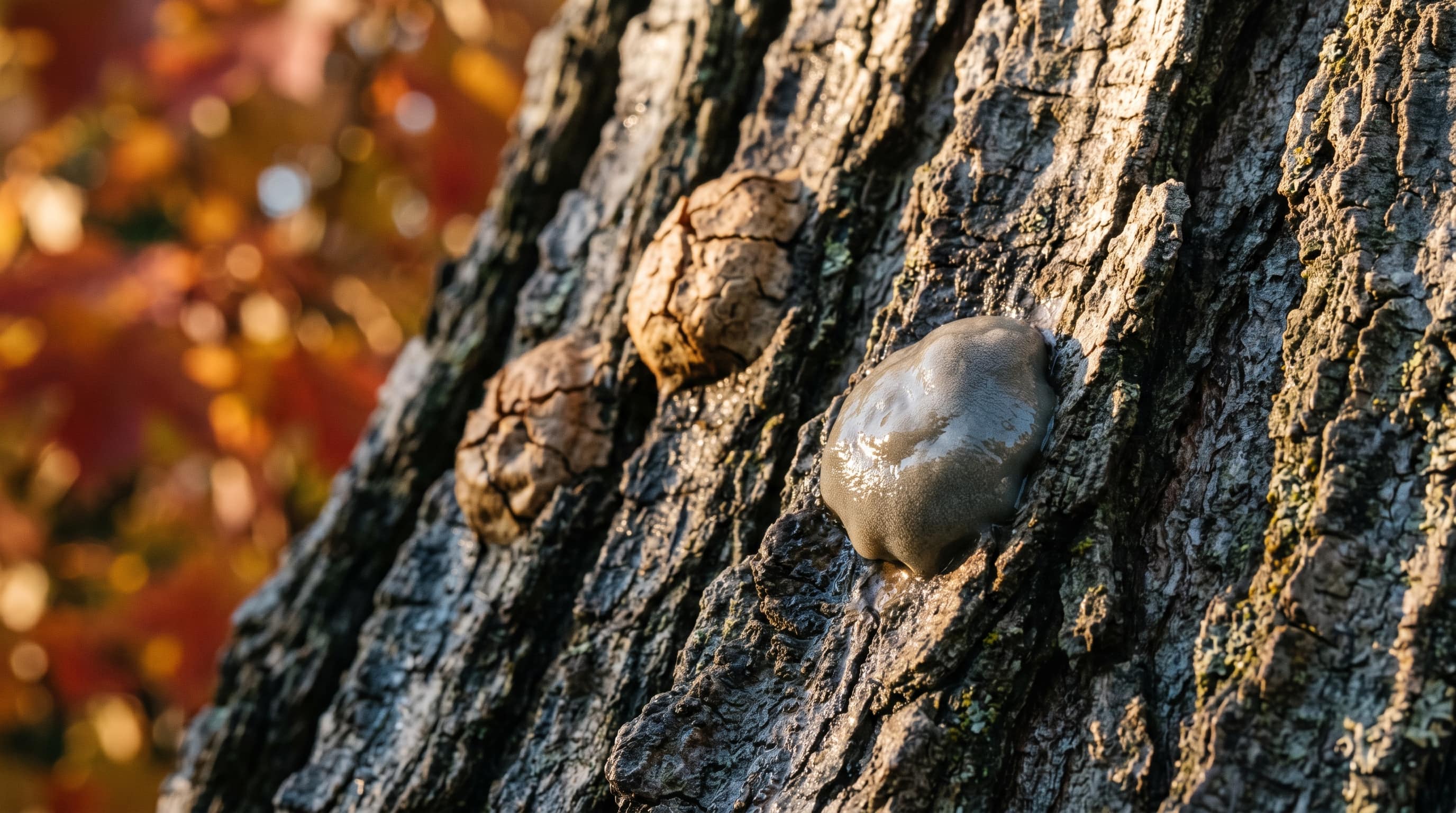
It is a clear saturday in October. You are sweeping leaves, hauling the grill cover off out of the shed, and piling patio chairs in a pile to get in the winter when you see a gray mud-like smear on your maple trunk. In much of the eastern U.S, such a smear may contain 30 to 50 invaders, which are not hatched until spring (Source: USDA APHIS). This is how you can identify those clusters, and locate all the hiding places of your yard, and get rid of them before the first hard frost.
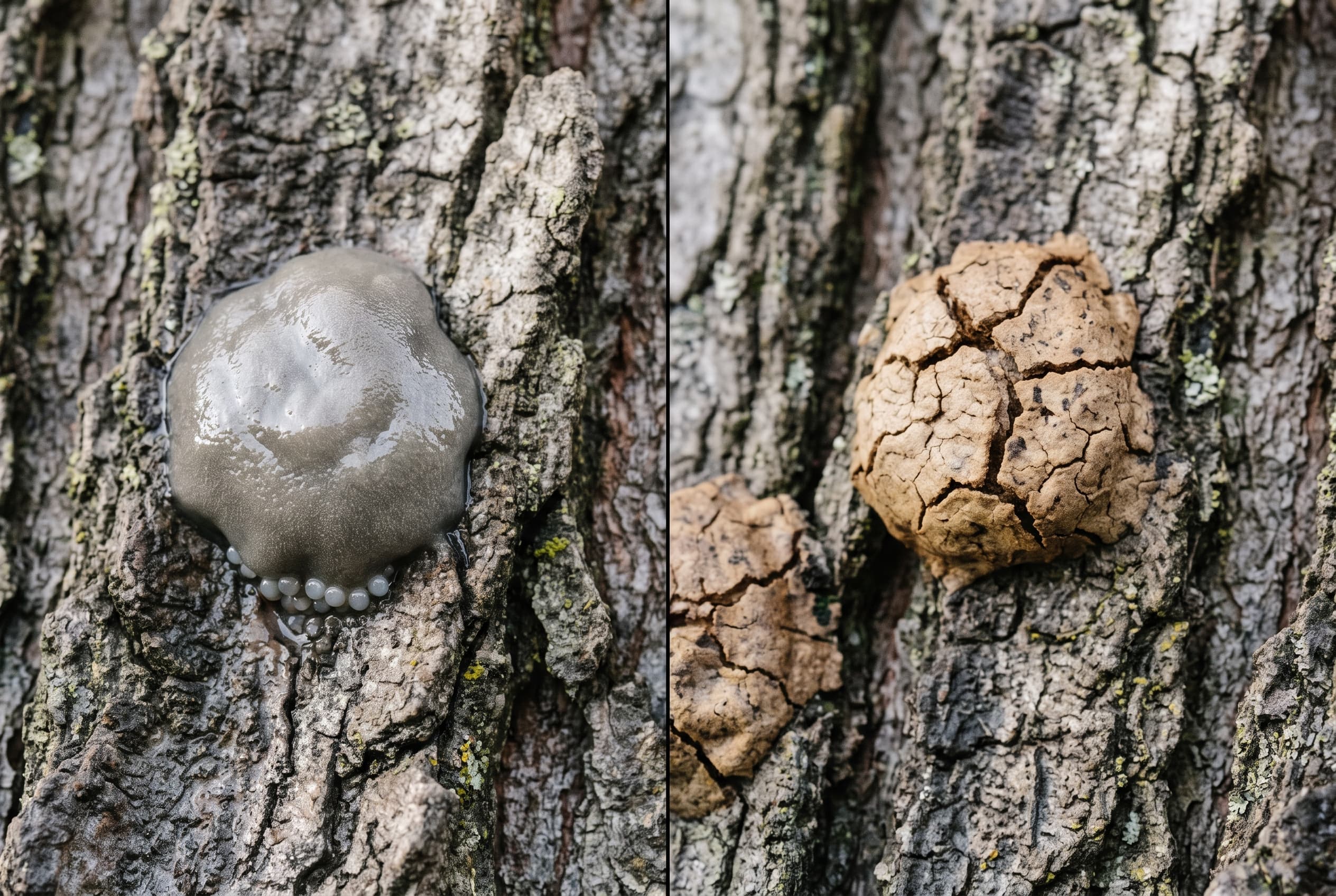
Quick Answer: The egg nests of the insect resemble smears of wet gray putty which dry up as cracked, tan-brown spots measuring about 1 inch in length, and which attach themselves to tree bark, stone, outdoor equipment and vehicles. Put each in a rubbing-alcohol or hand-sanitizer bag to seal between this and spring and put the two-bag waste in the garbage. Report is not within the known quarantine area of your state yet you destroy them. (Source: USDA APHIS and Penn State Extension)
What Do Spotted Lanternfly Egg Masses Look Like?
Imagine a plaster of mud which dried on your tree trunk. Newly laid clusters resemble wet gray putty and with time they become dulled into cracked and brownish areas (Source: USDA APHIS).
The clusters are approximately 1 inch long and contain 30 to 50 eggs, with an average of 35 placed by Penn State ( Source: USDA APHIS; Penn State Extension). The mud-like coating is a protective layer. At times new clusters have small eggs protruding below the surface (Source: Penn State Extension video).
Check quick ID checklist:
- Color: fresh shiny gray, old dull tan-brown.
- Consistency: soft and sticky initially, divided like hard mud afterwards.
- Size: about 1 inch long, lying flat on the surface
- Season: can be seen in the fall through spring.
Lookalikes to Rule Out
Not all the gray blobs are pests. The egg masses of spongy moths are fuzzy and tan, and resemble more a piece of felt than a smear of mud. So can dried mud, birds dropping and lichen. Check the lookalikes guide of the USDA before scraping.
Where Do Spotted Lanternflies Lay Eggs?
Females aren't picky. They nest almost on any hard, flat place in the neighbourhood of where they fed in the fall, and that has plenty of places you would not dream of searching.
On Trees and Natural Surfaces.
- Maples and willows: Red maple, silver maple, and willows are favorite fall feeding trees, and thus begin there. (Source: Penn State Extension)
- Tree-of-heaven: The pest prefers tree-of-heaven as its host, and every one of them should be examined. (Source: USDA APHIS)
- Stone and brick: Clusters are also found on rocks, and bricks, and stone walls. (Source: USDA APHIS)
- Other trees: Females will also feed on trees that they do not normally feed on. (Source: Penn State Extension)
On Outdoor Gear and Vehicles.
- Grills, patio furniture, bikes and kid toys.
- Piles of firewood and trailers.
- Decks and fences and rusty metal.
- Cars and trucks, particularly doors, bumpers, wheel wells, grills and roofs.
These insects hitchhike; therefore, all it takes is one cluster on your equipment that can find itself in a new county. Avoid Moving check items beforehand.
This is a dose of reality. It was discovered that researchers could reach less than 2 percent of clusters on test trees, which were as high as 10 feet into the air (Source: Penn State Extension). The majority of hides are up in the canopy, and you should concentrate on what you are comfortable accessing and leave the other ones alone.

Spotted Lanternfly Life Cycle: Why Fall and Winter Matter
The pest has a basic one-year clock, and one generation of the pest per year in Pennsylvania (Source: Penn State Extension). The following is the order of the seasons:
- Late April- June: Small nymphs are born and begin to feed.
- Spring and summer: Nymphs grow through four wingless stages. The three initial ones are black and white-spotted. The fourth is red and dotted with white, and is nearly 1/2 inch long.
- July to frost: Adults, about 1 inch long, hatch and feed till frosty weather kills them.
- September-December: The females nest on nearby surfaces with their clusters.
- Winter: Clusters are left, but no adults are.
(Source: Penn State Extension)

The point is the following: each cluster you eliminate prevents approximately 35 insects even before they are born (Source: Penn State Extension). According to Penn State teachers, winter and early spring are the most ideal seasons to locate and kill viable ones. You can begin the time you see them (Source: Penn State Extension video).
How to Destroy Spotted Lanternfly Egg Masses (Step by Step)
Good news: the most effective one is free and inexpensive. It is recommended by both Penn State Extension and USDA.
What You'll Need
- A plastic card (an old gift cards works) or a putty knife
- Two zipper-type plastic bags.
- Washing hands with rubbing alcohol or hand sanitizer.
- Disposable gloves (optional)
The cost of supplies typically amounts to less than $15 in a drugstore or hardware store in the U.S. ( Source: estimate based on typical U.S. retail prices).
The Scrape-and-Bag Method
- Add a liquid to a bag. Add enough rubbing alcohol or hand sanitizer to cover whatever it falls into.
- Hold the bag under the cluster. Hold the opening just under the mass.
- Scrape downward. Flatten the entire mass into the bag by pressing the long edge of your card flat against the surface and pushing the entire mass into the bag.
- Seal and swirl. Be sure that all eggs are in contact with the liquid, and leave them in it indefinitely.
- Bag and trash. Put the sealed bag in a second bag and dispose of it in the garbage.
(Source: Penn State Extension video; USDA APHIS)
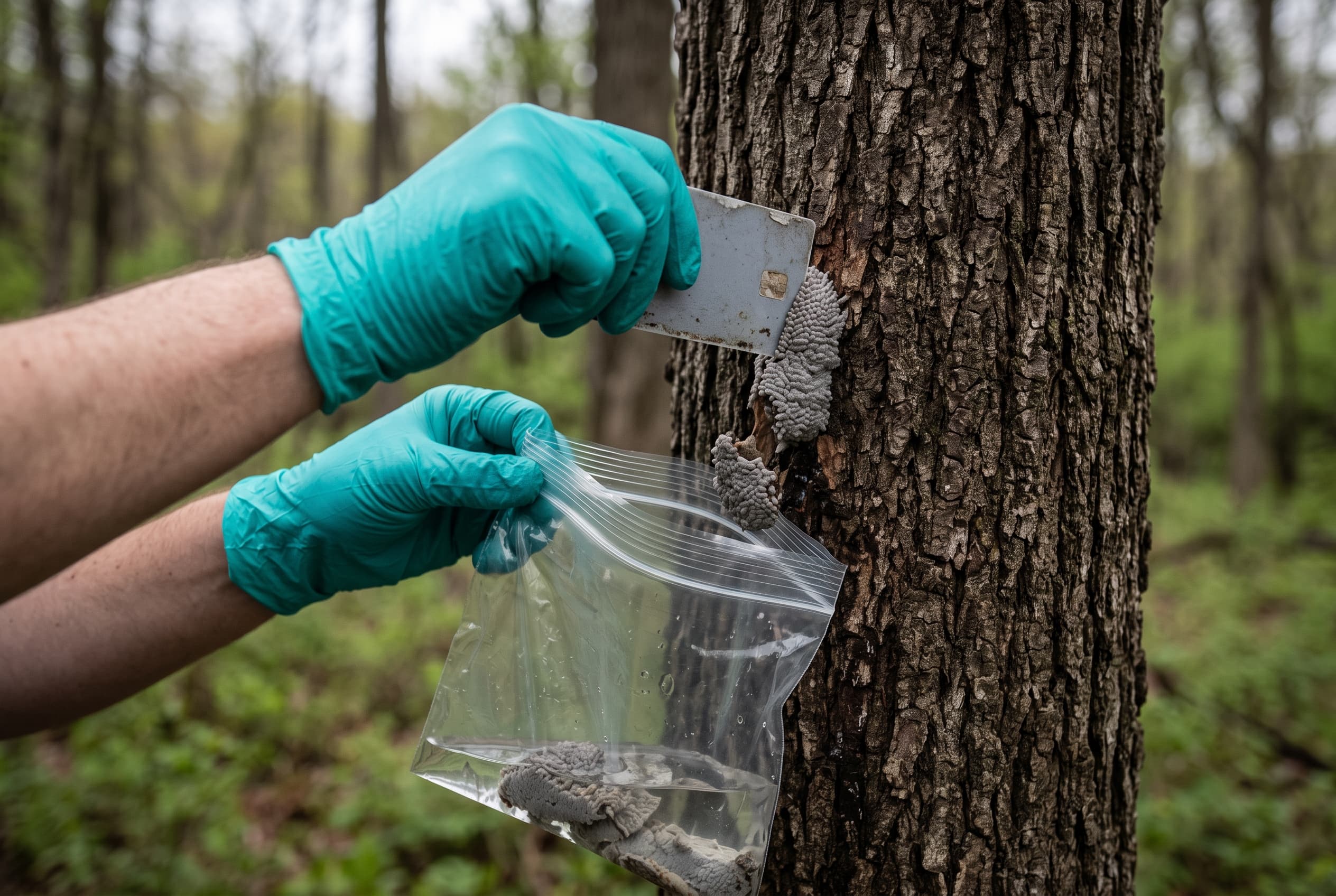
The Smash Method
No supplies? Use card or edge of a putty knife to press hard until you hear pop and liquid leaks out. The sound will tell you that the eggs have been crushed but a light scrape may keep them alive (Source: Penn State Extension video).
Compare Your Options
| Method | Best for | Est. cost (USD) | How well it works |
|---|---|---|---|
| Scrape into alcohol or sanitizer | Any cluster you can reach | Under $15 | Most reliable for reachable clusters |
| Smash with a card | Quick patrols with no supplies | $0 | Works when you press until the eggs pop |
| Horticultural oil (3% or higher) | Clusters you can't scrape | $15–$30 | Killed up to 75% of treated eggs in tests |
(Source: Penn State Extension; cost estimates are based on typical retail prices in the U.S.)
In case of clusters that you cannot reach, a registered horticultural oil is the less-toxicity alternative. Pay great attention to the product label, as oil is harmful to certain plants. Should you have a pollinator garden, hand-weeding is preferable and avoid mycorrhizal plants during flowering.
Two things to skip. Penn State cautions against the use of homemade sprays prepared using cleaning, cooking, or automotive products, as these sprays may have a detrimental effect on the environment and plants than expected. It also recommends not to use trees or ladders to access high clusters (Source: Penn State Extension).
Should I Report Spotted Lanternfly Sightings?
Yes, but it depends where you live. The USDA includes populations that were established in 19 states and the District of Columbia. Quarantine zones can grow when new infestations turn up (Source: USDA APHIS).
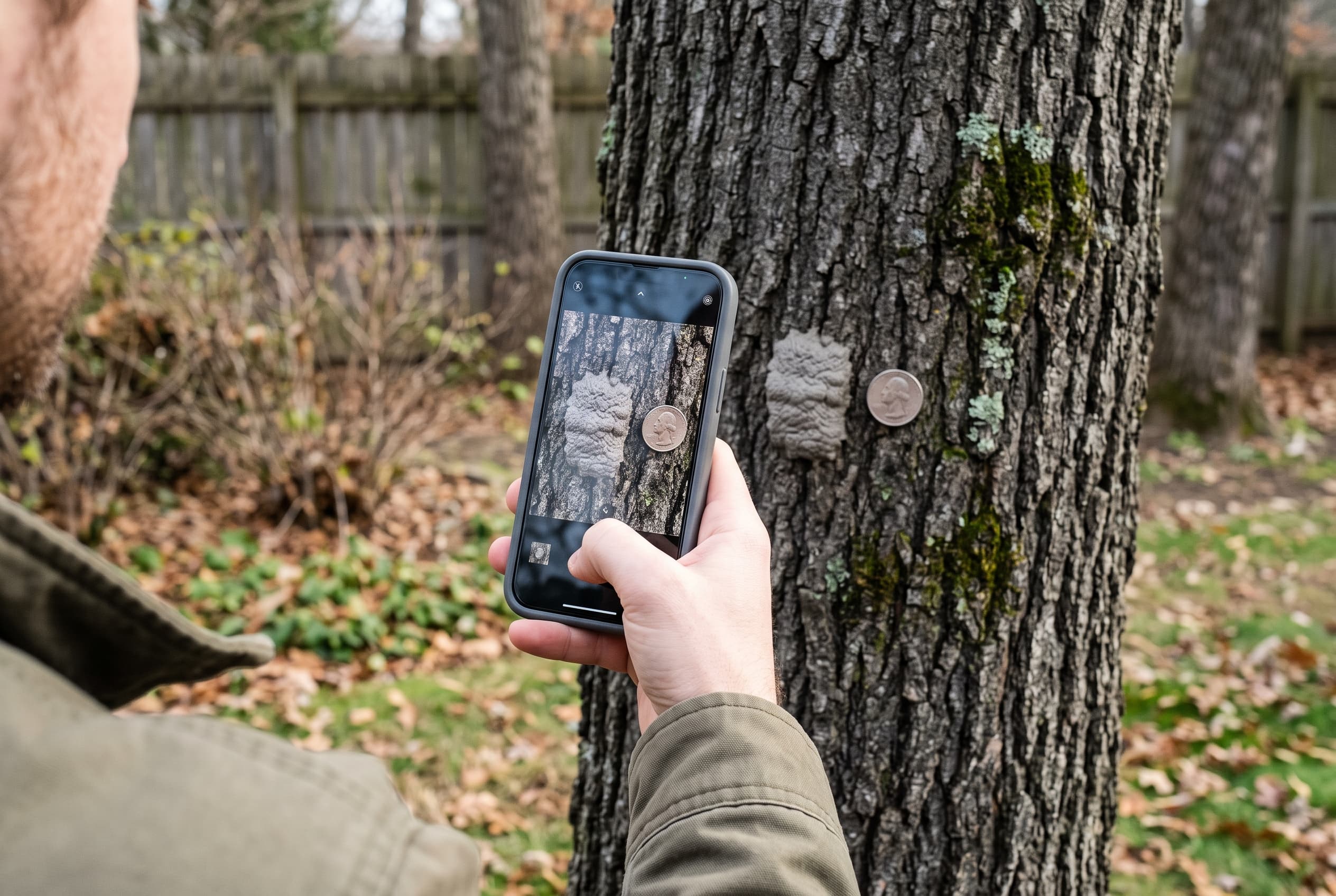
Within an established quarantine zone, USDA recommends destroying what they find. Before you destroy anything, take a snapshot and record the location of it outside one and submit it to your state agriculture department (Source: USDA APHIS).
Reporting will only take a minute:
- Take a photo of the cluster, including a coin next to it as a reference.
- Record the date, time and the specific location.
- Submit it on the reporting page of your state. The USDA page has a state lookup, which states without known population can access it through their plant regulatory official.
The residents of Pennsylvania may also make a call on the line of the Penn State Extension at 1-888-4BAD-FLY (Source: Penn State Extension). Early reports can assist authorities to detect new infestations as they are still small.
How to Do a 15-Minute Yard Sweep Before Winter
Create 15 minutes this weekend and work up the tree. Combine it with the rest of the tasks in our guide on what to do before the first frost to have it occur.
- Trees first. Scan trunks and low branches of maples, willows, and at eye level, any tree-of-heaven.
- Hard surfaces next. Stone walls, decks, bricks, rusty metal, and check fences.
- Stored gear. Check grills, patio furniture, bikes, toys and wood piles prior to covering or relocating. When you are winterizing your outdoor power equipment, look at mowers and trimmer to find gray clusters as well.
- Plants and planters. When you take your house plants in to winter, inspect pots, sauces, and patio planters. Before one brings outdoor items into the house, USDA suggests inspecting them (Source: USDA APHIS).
- Vehicles. Check doors, bumpers and wheel wells, the grill and the roof (Source: USDA APHIS).
Do not transport firewood across the sites, as it may bring about clusters with it (Source: Penn State Extension).
Final Thoughts: Clear Them Now, Fewer Pests Next Summer
A plastic card and a bag of rubbing alcohol can prevent some three dozen future pests per cluster in ten minutes. Take what you can get to, take pictures of whatever you see outside a quarantine area, and leave the ladder in the garage. Need a fall project? To find out how to kill fall armyworms next, read our fall armyworms removal guide or read more pest and disease control guides.
References:
- USDA APHIS, "Spotted Lanternfly" (last modified Aug. 26, 2025). Source for egg mass appearance, size, and 30–50 eggs, surfaces and vehicle checks, the scrape-and-bag and smash guidance, the 19 states plus D.C. list, and reporting rules.
- Penn State Extension, "Spotted Lanternfly Management Guide" (updated June 2024). Source for the ~35-egg average, protective coating, seasonal timing, nymph stages, preferred trees, the under-2-percent reachability finding, ~35 insects removed per cluster, oil test results (3% or higher, up to 75%), the homemade-spray and ladder cautions, one generation per year, and the 1-888-4BAD-FLY line.
- Penn State Extension, "How To Remove Spotted Lanternfly Eggs" (video). Source for the winter-through-early-spring timing, popping-sound smash test, and double-bagging.
- USDA APHIS, Spotted Lanternfly Lookalikes Guide (PDF). Use it to confirm lookalikes; the spongy moth description in the article is general entomology knowledge.
- Supply and oil costs. These are estimates based on typical U.S. retail prices, not a published study. Verify locally.
Frequently Asked Questions
What do spotted lanternfly egg masses look like?
How do you destroy spotted lanternfly egg masses?
Where do spotted lanternflies lay eggs?
Should I report spotted lanternfly sightings?
When do spotted lanternfly egg masses hatch?
Will winter cold kill spotted lanternfly egg masses?
About Philemon John
Philemon John is the Lead Author of Broad Gardening and has more than 10 years of experience growing and caring for plants in the backyard. He is particularly passionate about vegetable gardening, soil building and pest management and offers real-life advice and tips to support home gardeners.