How to Get Rid of Fall Armyworms Organically

By Philemon John
Lead Author & Cultivator • Peer Reviewed & Soil Tested
On Saturday you clipped off and the lawn was in order. By Wednesday, the size of a doormat of brown, ragged patch is spreading toward your driveway, and a flock of starlings is busily feeding on the grass like it were a buffet. When that rings a bell, then you probably have an invasion of caterpillars at the end of the season. This is the way to identify the culprit, defend your yard using organic equipment and make your grass recover before frost.
Quick Answer: Soap flush to confirm the caterpillars and then treat them at night when they are feeding. Pick by hand in small holes, spray Bt when they are less than a half inch, and use spinosad on larger ones. The extension guidance considers three or more caterpillars per square foot as the point of action. Early detection and proper care will typically produce a healthy lawn.
What Do Fall Armyworms Look Like?
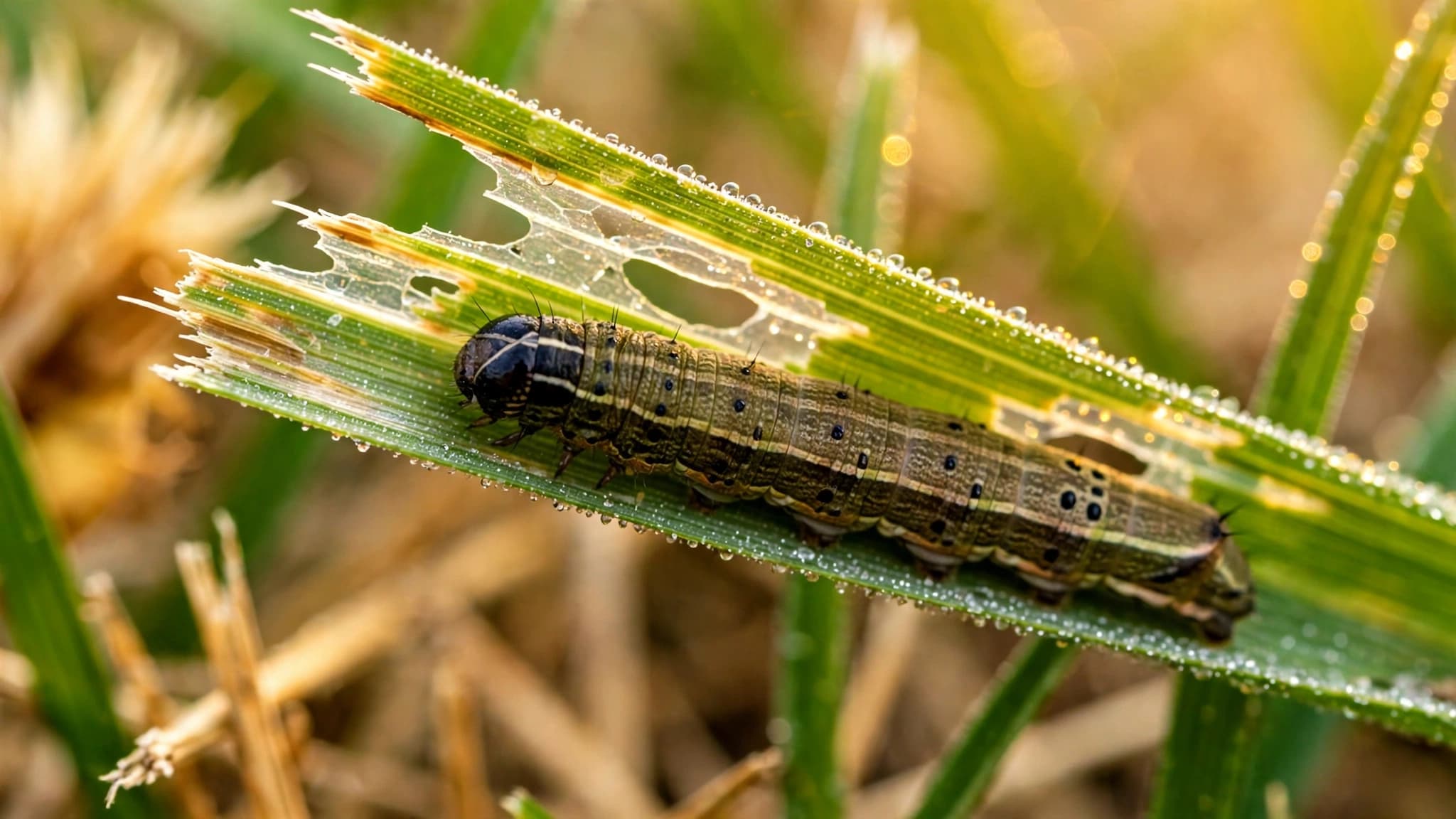
The caterpillar of a plain gray-brown moth is called fall armyworms. The moth is scarcely visible, however you will soon see the caterpillars when they begin feeding on turfgrass, sweet corn, tomatoes, peppers, cabbage and even flowers in your vegetable garden. (Source: University extension entomologists)
What Do Fall Armyworms Look Like?
- Size: Infants are small. Caterpillars grow to approximately 1 /2 inch.
- Color: Green, tan, brown or almost black, occasionally all in the same yard.
- Head: This is the typical giveaway: a pale, upside-down, Y on the face. (Source: University of Georgia Extension)
- Rear end: There are four dark dots at the tail in a square.
- Stripes: Narrow light lines along the back, the stripe on each side broader.
The moths deposited fuzzy gray-tan egg clusters on leaves and on fence posts, and on house siding. Eggs may be 100 or more in one cluster. The caterpillars then after two to three weeks of constant feeding burrow into the soil to pupate. (Source: University extension entomologists)
Look-Alikes to Rule Out
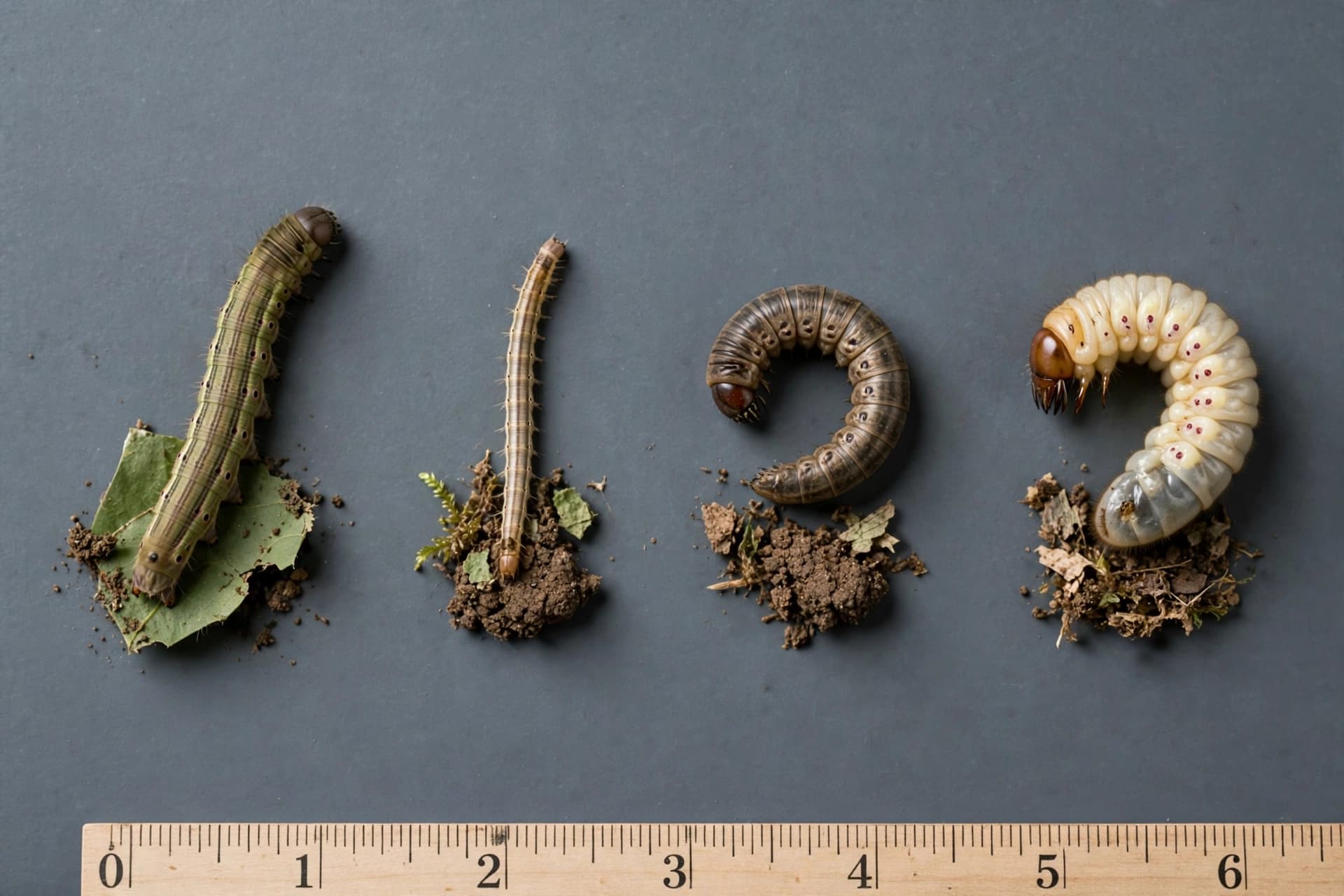
| Pest | Key clue | Where you'll find it3 |
|---|---|---|
| Fall armyworm | Inverted "Y" on head; four dots in a square | Lawns, corn, veggies; hides in thatch by day |
| Sod webworm | Smaller and spotted; silk-lined tunnels | Lawn thatch; moths zigzag up when you mow |
| Cutworm | Plump and smooth; curls into a "C" | Soil surface; snips seedlings at the base |
| White grub | Cream-colored, C-shaped, tan head | Underground; turf peels up like a carpet |
Fall Armyworm Signs: How to Spot Them Early
Finding an outbreak within the first few days is the difference between thin spotting a yard and bare yard. These caterpillars most frequent the cool days in the evening and at night, and conceal themselves in the thatch and soil during the high sun. That is, you will frequently witness the harm but not the criminal.
Be alert to these red flags:
- Drought-looking spots: Irregular brown spots which remain brown when watered.
- Young larvae on window-paned: The larvae scraps the surface off the leaves resulting in pale, see-through streaks. The article states that knowledge does not exist independently.<|human|>According to the article, there is no knowledge existing alone.
- Ragged chewing: Larger caterpillars cut and tear off pieces of grass, corn leaves, and other leaves.
- Dark droppings: The heavily infested areas are frequently covered with greenish-black spots on the soil. (Source: University extension)
- Bird flocks: Flocks at work on a lawn are often eating caterpillars.
- Moths and egg masses: Moths around light poles and fuzzy masses of eggs on fences or walls.
Caterpillar marches: When the food is finished, hungry caterpillars march across driveways and walls in search of more food.
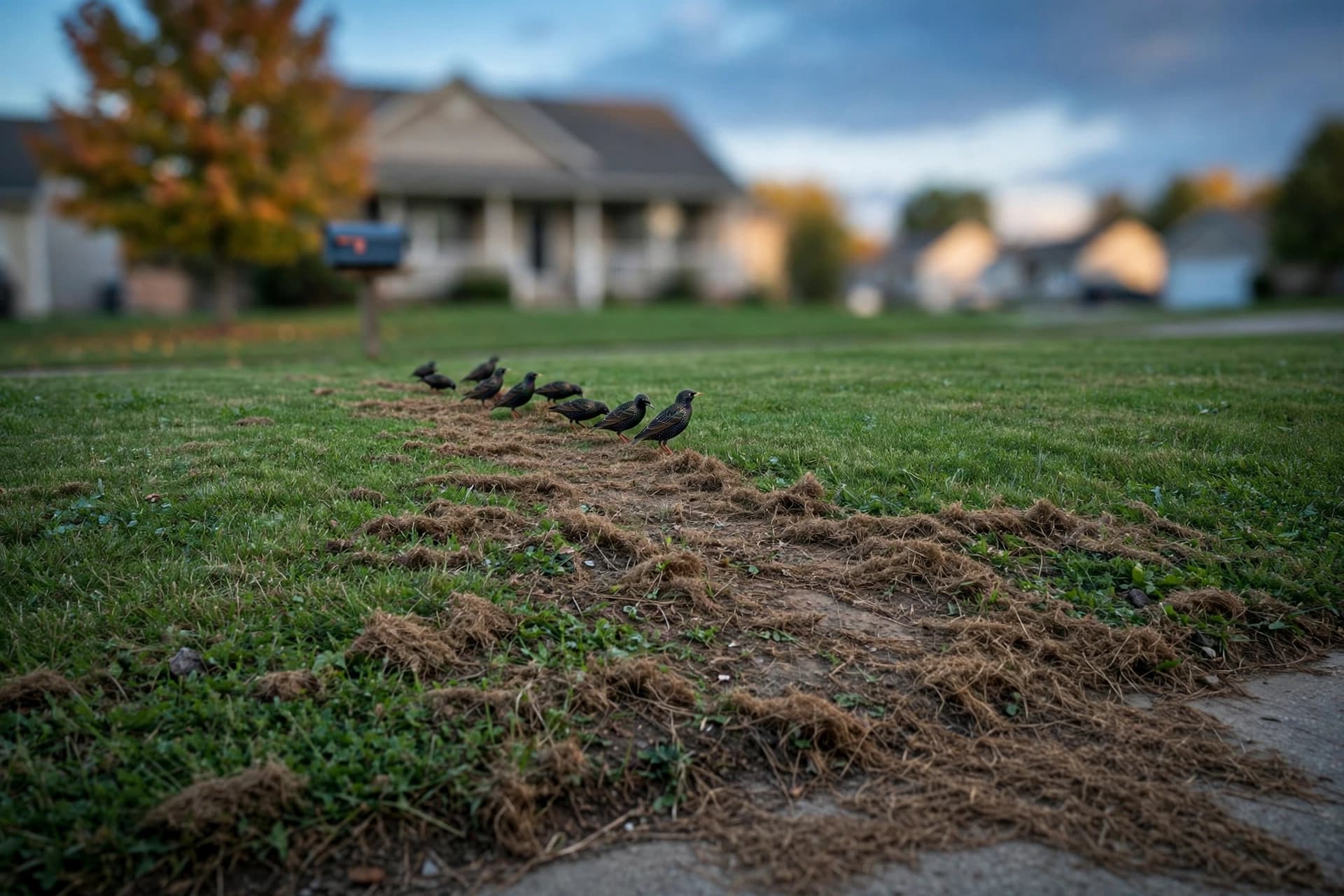
When Are They Most Active?
Trouble is not only in autumn as the name suggests. According to Texas A&M entomologists, infestation may start as early as June, and this is based on the spring rain. During late summer through to the first frost, there is a buildup of pressure in most of the locations. The film is filmed on a farm owned by a man and his wife, who are shown as being of the same age.<|human|>The movie is recorded on a farm belonging to a man and his wife, which are depicted as of the same age.
Speed matters, too. A lawn can be destroyed in two or three days by six or more caterpillars per square foot. Check off the rest of your fall garden to-do list with pair so you will not be caught off guard.
Soapy Water Test for Armyworms: A 5-Minute Check
Don't spend a dime before you know what you are fighting. One of the tricks, which are free and suggested by the extension programs, is a soap flush. The soap annoys the caterpillars which are hidden, and they wriggle where you can see and count them.
The following is how to do it:
- Add approximately 2 tablespoons of the mild liquid dish soap (no bleach) into the 1 gallon of water in a watering can.
- Select an area where the green grass and the damaged grass collide, as the caterpillars concentrate on that area of feeding.
- Gradually pour mixture over an estimated area of 3-foot by 3-foot, approximately a square yard.
- Wait 1-3 minutes and observe the thatch.
- Count the caterpillars, and do the same in 3 or 4 other places.
- Rinse with simple water.
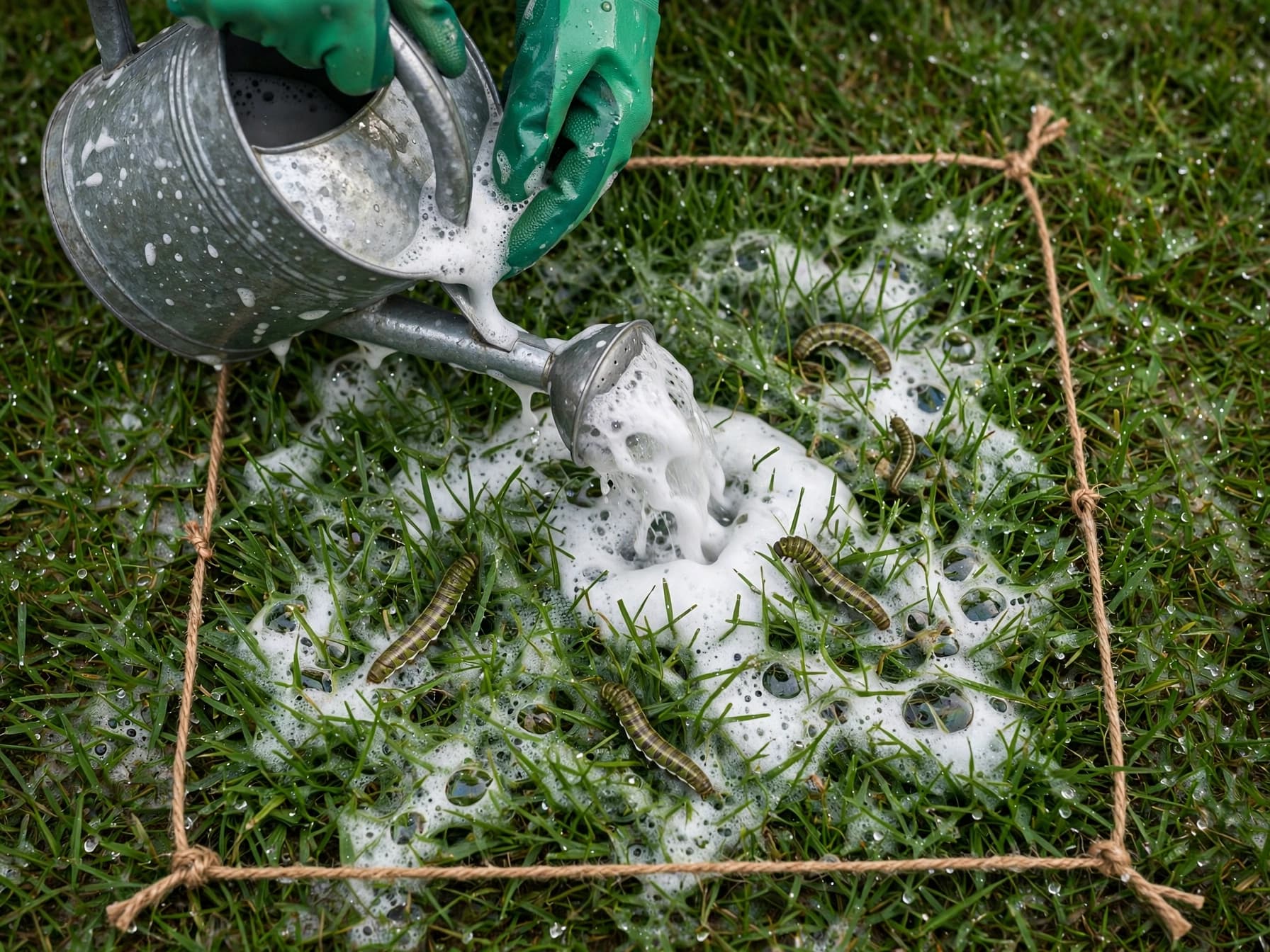
The extension programs recommend 1-3 tablespoons of soap to 1 gallon, added over an area of approximately a square yard, and caterpillars will emerge within a minute or a few minutes. The success of a business organization depends on how it manages its risks.<|human|>Luckily, the prosperity of any business organization is determined by the ability to deal with its risks.
How to Read Your Results
Since your pour is 9 square feet, then you would divide your number by nine which would be a per-square-foot number. About 27 caterpillars per pour = the three-per-square-foot treatment trigger.
- Less than 3/per square foot: Re-test after every two to three days. Certain lawns in the home can be treated without any feeding during the late season. (Source: Oklahoma State University Extension)
- 3 or more per square foot: Why not treat within one or two days, particularly when you notice new damage.
- 6 or above per square foot: Treat immediately.
How to Get Rid of Armyworms Without Chemicals
Typically what gardeners refer to here is without synthetic insecticides, and you do have some choices. Begin with the mildest tools and only increase when your counts remain high. This table shows a comparison of your options in a glance:
| Method | Best for | Speed | Bee-and-pet safety |
|---|---|---|---|
| Hand-picking | Garden beds, small patches | Immediate | Very safe |
| Bt spray | Caterpillars under ½ inch | Slower | Very safe |
| Natural enemies | Long-term prevention | Gradual | Very safe |
| Row covers + egg patrol | Vegetable beds | Preventive | Very safe |
| Spinosad (next section) | Larger caterpillars | Fast | Toxic to bees while wet |
Fix 1: Drown and Hand-Pick.
Go out at dusk with headlamp and bucket of soapy water. Flick caterpillars round and in it will submerge. Two daily inspections of three days would be sufficient in vegetable beds. Wear gloves, when squeamish.

Fix 2: Apply Bt to Young Caterpillars.
Bt (Bacillus thuringiensis var. kurstaki) is a bacterium used as a spray in the garden that is sold as a soil bacterium. Caterpillars will consume treated foliage and thus will not harm the bees, birds, and pets when labeled as such. (Source: U.S. EPA)
The catch is size. Bt products are only used on small caterpillars, less than half an inch in length. (Source: University of Georgia Extension) Evening is the best time, thoroughly cover leaves or blades, and repeat this after heavy rains as directed by the label. Avoid milkweed and other host plants to butterflies, as Bt is damaging to any caterpillar feeding on it.
Fix 3: Summon Natural Enemies.
Caterpillars and eggs are eaten by birds, parasitic wasps, ground beetles and lacewings. They are wiped out by broad-spectrum sprays and this may leave your yard susceptible to repeat attacks. Plant small-flowered natives to feed adult beneficial insects. The tutorial on planting a pollinator garden can demonstrate how, and a shallow birdbath is a way to attract the songbirds.
Fix 4: Beds and Crush Eggs.
Floating row covers prevent the laying of eggs on seedlings and young corn by the moths. Check underside of check leaves each week to check fuzzy clusters of eggs. Stamp them to death with your hands or wipe with a soapy rag. It can be done in a few minutes and prevents numerous issues even before they begin.
Spinosad for Armyworms: When to Use It (and When Not To)
Spinosad is a soil bacterium product and is permitted in organic farming and most preparations have an OMRI listing. Caterpillars are sensitive to treated foliage, so they tend to cease feeding fast when feeding on it, or when touching it. It acts on larger caterpillars, unlike Bt, which is important since caterpillars three-quarters of an inch or longer are almost mature and more difficult to manage. (Source: University of Nebraska–Lincoln Extension)
Use spinosad when:
Most caterpillars are less than a half inch long.
- Your soap flush has three or more per square foot with new damage.
- Damage continues to expand following a round of Bt.
Use it safely:
- Always read through the label. It contains lists of rates, application limits and waiting periods on edible plants. (Source: U.S. Environmental Protection Agency)
- Spray at dusk. Spinosad is also toxic to the bees when wet hence avoid anything that is in blossom and allow it to dry. (Source: U.S. EPA registered product labeling)
- Protect water. Store it out of the ponds, streams and storm drains.
- Play with children and pets only after all the treated grass is dry.
Omit on light infestations, on flowering beds with pollinators, and cool-season lawns late in the year which may self-heal. Bt or hand-picking is more suitable in such cases.
How to Get Rid of Fall Armyworms: Your 7-Day Action Plan
- Day 1, morning: Run a soap flush in three or four locations and count.
- Day 1, evening: Size/count treat. Bt on most small caterpillars, spinosad on larger, and hand-weeding in the garden.
- Day 2: Morning water, mow high, and withhold fertilizer. Green, new growth only nourishes ravenous caterpillars.
- Day 3: Re-inoculate the same spots. In case of small caterpillars, repeat Bt as indicated on the label.
- Days 4-7: Search each night and destroy any groups of eggs on fences, siding and plants.
- Day 7: Two clean days in a row are a good indication that you have left the worst behind.
Help Your Lawn Recover
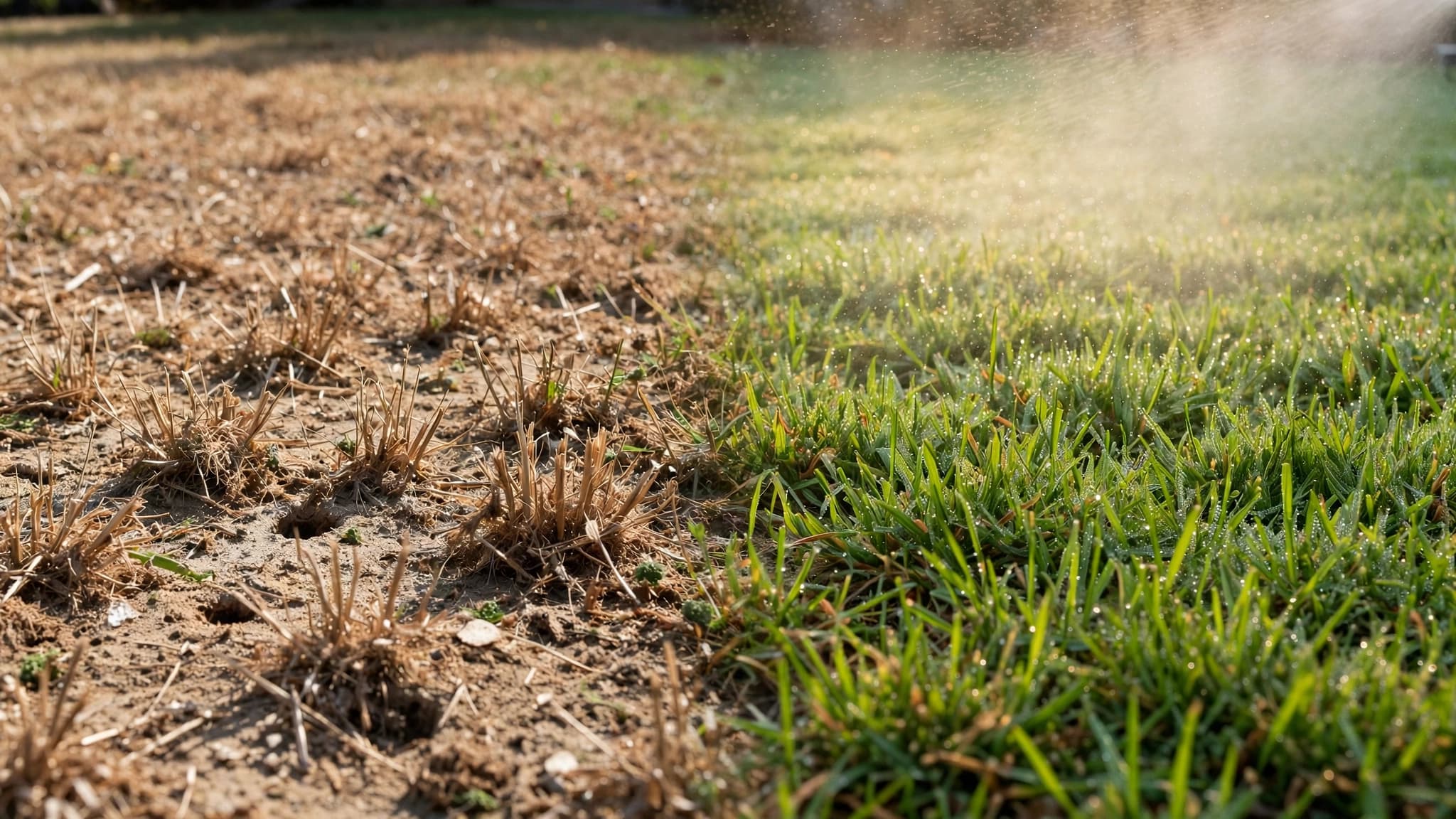
The positive aspect is that caterpillars consume blades, rather than necessarily the roots, therefore most lawns recovered. Bermudagrass and zoysia may not be significantly harmed, and cool-season lawns are likely to rebound later in the year. This enables the project to be initiated promptly.<|human|>This allows the project to be started at the right time.
After the caterpillars have died, water approximately 1 inch each week (including rainfall) and rake dead debris. Bare spots should be over seeded in case of a cool-season lawn. Once new growth has come, add a light feeding. Our soil, compost and fertilizer guides will instruct us how and our lawn care library will take care of the rest of the season.
Final Thoughts: Act Early, Win Easily
Caterpillar infestations are frightening, but can be overcome early on: make sure you confirm with a soap flush, treat at dusk, and do a bit of lawn work afterward. Majority of healthy lawns recover. Wish to have your grass and garden pest-free throughout the season? Read our pest and disease control guides next to know how to spot and prevent other invaders to your lawn before they multiply.
Reference:
University of Georgia Extension (Bartow County) – Fall Armyworms in Lawns and Pastures (head marking, soap flush, Bt limits, spinosad as a treatment option)
University of Nebraska–Lincoln CropWatch – Fall Armyworms in Pastures, Alfalfa, Small Grains, Cover Crops and Lawns (soap flush ratio, three-per-square-foot threshold, caterpillar size and control difficulty)
Texas A&M AgriLife Extension – Armyworm Guidance for Texas Lawns (June onset, soap flush, six-per-square-foot damage speed, rainfall link)
Oklahoma State University Extension – Remain Vigilant in Scouting for Fall Armyworm in Pasture, Lawns and Wheat (window-paning, lawn recovery, late-summer-to-frost timing)
Land-grant university extension entomology programs (e.g., UGA, Texas A&M, Oklahoma State): general biology, including host plants, egg masses, life-cycle timing, and seasonal migration
Organic Materials Review Institute (OMRI) Product Listings (organic-approved spinosad formulations)
U.S. Environmental Protection Agency – Pesticides (label requirements, Bt and spinosad bee and mammal risk statements)
Frequently Asked Questions
How to get rid of fall armyworms in your lawn fast?
What do fall armyworms look like, and how big do they get?
Does the soapy water test for armyworms hurt my grass?
Is spinosad for armyworms safe for bees and pets?
Will my lawn grow back after armyworm damage?
Do fall armyworms come back every year?
About Philemon John
Philemon John is the Lead Author of Broad Gardening and has more than 10 years of experience growing and caring for plants in the backyard. He is particularly passionate about vegetable gardening, soil building and pest management and offers real-life advice and tips to support home gardeners.