Vegetable Garden Crop Rotation Plan: Map It in 5 Steps

By Philemon John
Lead Author & Cultivator • Peer Reviewed & Soil Tested
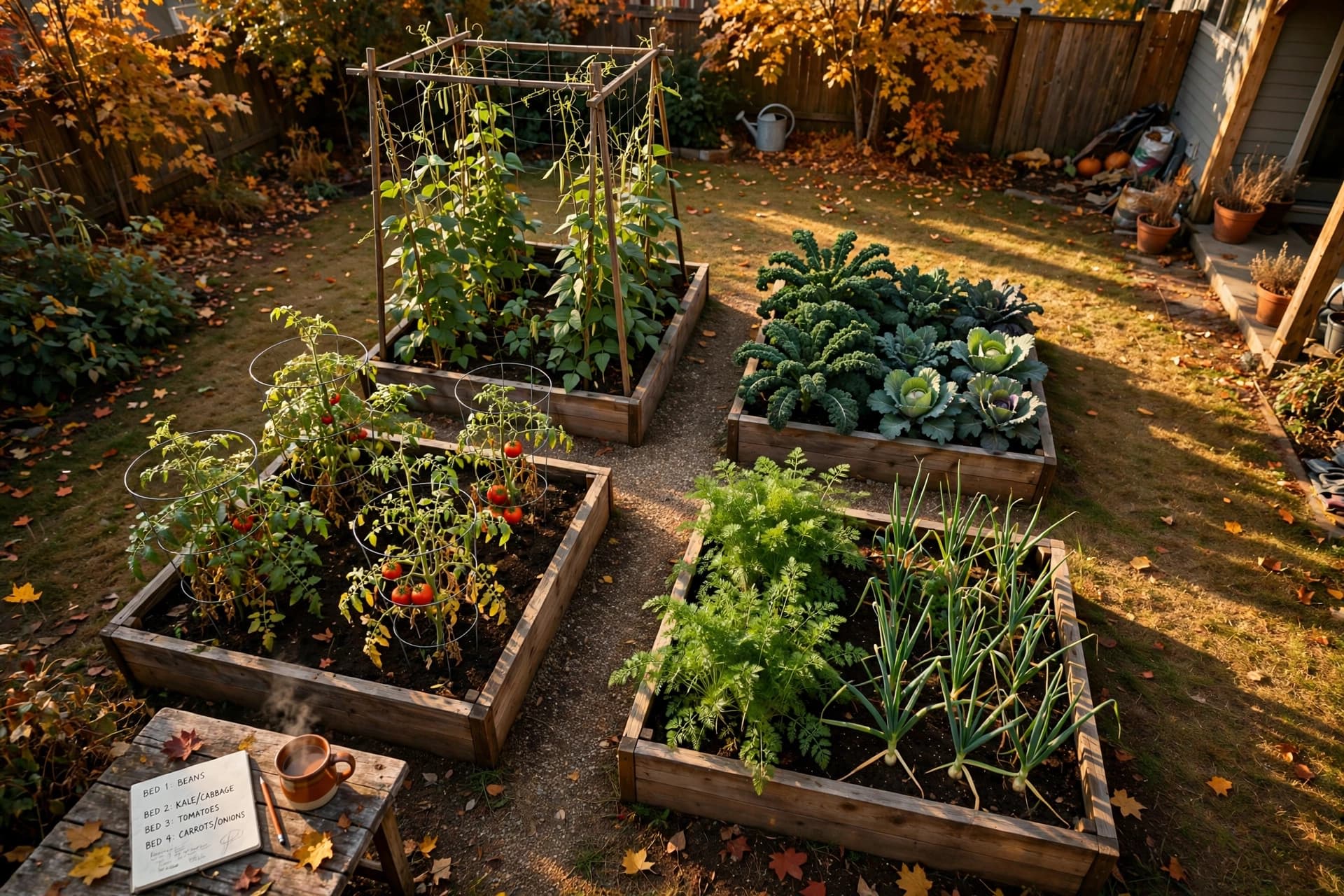
It's early October. The first cool nights have blackened the tomato vines, the last peppers are ripening on the counter, and you are standing in a half empty bed and asking yourself: "What happens next spring?It's the first cool nights, the last peppers are ripe on the counter and you're wondering: "What happens next spring? This is a time that almost every gardener will experience and your actions now will determine next year's crop success or disease problems. You'll learn how to draw your beds, categorize plants into 4 groups and create a basic 4-year rotation.
Quick Answer: Rotate each plant family to a different bed for each season and don't plant the same plant family in the same bed for 3 to 4 years. The simplest way is to make a sketch of your beds, divide the plants into four categories (legumes, leafy greens and brassicas, fruiting crops, and roots and alliums), and rotate each plant category 1 bed each year. (Source: University extension services)
What Crops to Rotate Each Year (and Why It Matters)
Rotation is simply the rotation of each vegetable family to a different location each season. Family diseases, pests and nutrient needs are shared between plants in the same family. If they are left in the same soil for many years, they add up and harvests begin to dwindle.
The extension plant pathologists and soil scientists tell of the following problems that can arise when a plant family is planted in place:
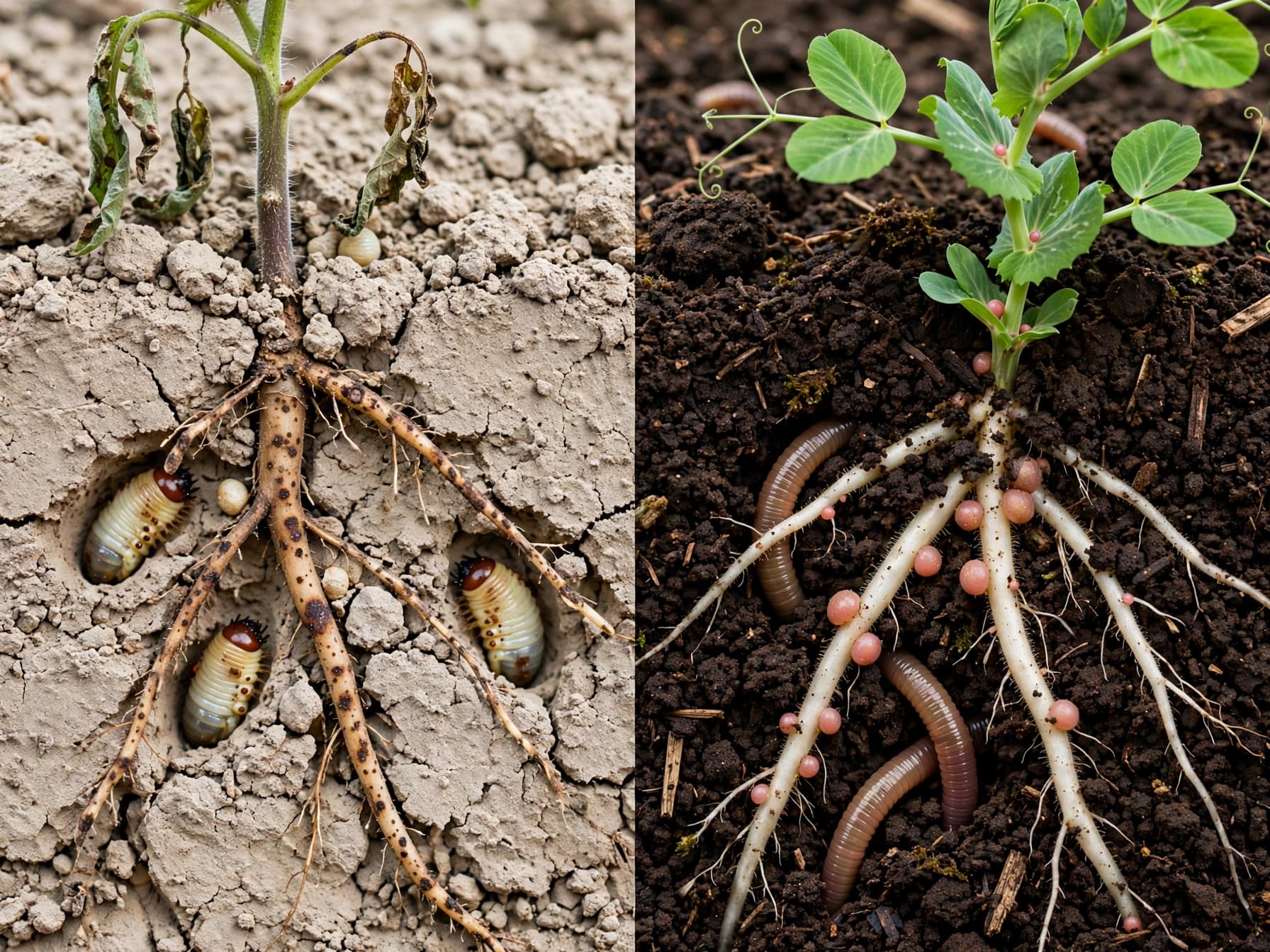
- Disease buildup. Over wintering of fungi and bacteria in soil and plant debris. Tomatoes suffer from early blight and fusarium wilt, and the clubroot spore remains in soil for up to 20 years, in cabbage family crops. (Source: University extension)
- Pest cycles. Colorado potato beetles and cabbage root maggots overwinter in the ground around their host plants, and look for food in the spring when they are hungry. (Source: University extension services)
- Nutrient imbalance. The heavy feeders, such as tomatoes, corn and cabbages, remove a lot of nitrogen from the soil, while beans and peas work with the nitrogen-fixing bacteria of their roots to replenish the soil with nitrogen. (Source: USDA Natural Resources Conservation Service)
Rotation isn't magic. It reduces your risk but will not prevent airborne spores or insects from flying in from neighbors' yards. Nonetheless, it is one of the most affordable tools that you have, as it only requires a pen and paper.
So, which plants are moved? Every annual vegetable. Perennials, such as asparagus, rhubarb and chives remain in the ground. When growing strawberries for fall plantings, provide them with a permanent bed outside the cycle.
Crop Families to Rotate: The 4 Groups That Matter
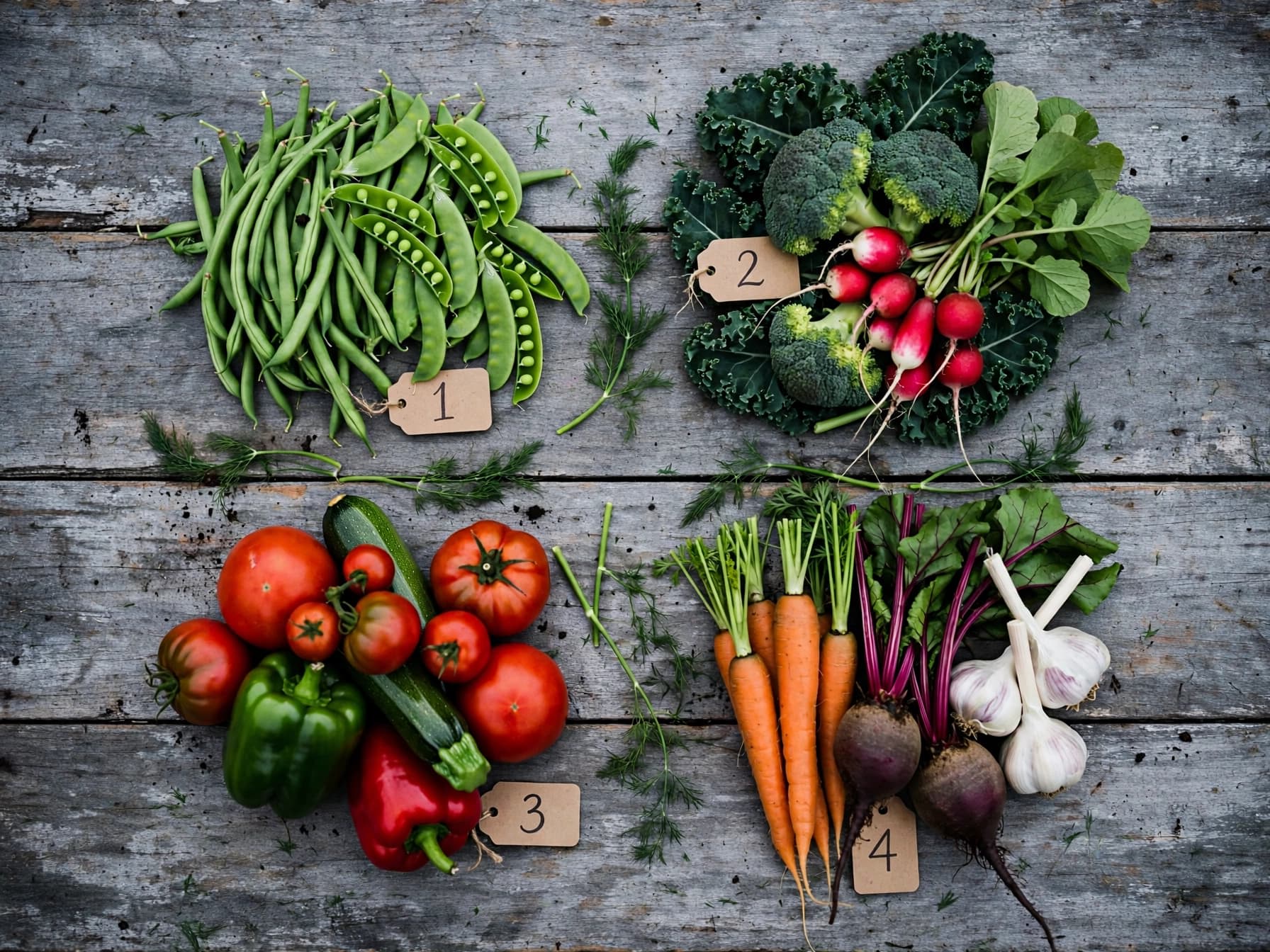
For the home gardener, there are only four working groups of vegetable botanists. The plants within each group have similar pest pressure and have similar nutrient requirements.
| Group | Common Plants | Plant Families | Feeding Style |
|---|---|---|---|
| 1. Legumes | Bush beans, pole beans, peas, edamame | Pea family | Add nitrogen to soil |
| 2. Leafy Greens & Brassicas | Cabbage, broccoli, cauliflower, kale, collards, Brussels sprouts, radishes, turnips, lettuce, spinach | Cabbage family (lettuce and spinach grouped by feeding style) | Heavy nitrogen users |
| 3. Fruiting Crops | Tomatoes, peppers, eggplant, potatoes, squash, cucumbers, melons, pumpkins, sweet corn | Nightshade, gourd, and grass families | Heavy feeders |
| 4. Roots & Alliums | Carrots, parsnips, beets, onions, garlic, leeks, shallots | Carrot, beet, and onion families | Light feeders |
There are a few plants that don't behave the way you may think, so remember these peculiarities:
- Although radishes and turnips grow underground, they are related to cabbages, and are in Group 2.
- Potatoes are tubers, but they are still in Group 3 as they are also a nightshade.
- Sweet corn is a grass, but as far as eating goes, it is a big mouth and should be planted with the other big feeders in Group 3.
The most important rule in the entire system: Do not plant tomatoes, peppers, eggplant or potatoes in a bed that had a nightshade in it within the last three years. They are susceptible to similar diseases such as early blight, late blight. (Source: University extension)
How to Build a Garden Map for Crop Rotation
The bed map is the key component of the entire system. It's simple and only requires graph paper, a pencil, a tape measure and a camera from your phone, and you'll be finished in about an hour.
Step 1: Measure and Sketch Your Beds
Use a tape-measure and sketch each bed on graph paper. The ideal number of squares in a garden is 1 square per foot. Include paths, fences, trees and a north arrow so you can see at a glance sunny and shady areas.
Step 2: Label Each Bed
Label each bed with a letter (A, B, C, D) and stake or tag it. If there is only one large bed, mark four quadrants of the bed and label them. Quadrants are not as protective as a separate bed, but they do better than planting the same in the same bed.
Step 3: Note Seed List This Season
Before removing any plants, make notes of what has grown in each bed and take some photos. Record any problems, including any tomato blight or yellowing in the bean row. These notes indicate the required reprieve for particular families of plants in their respective beds.

Step 4: Sort Each Bed Into a Group
Match each of the crops in each bed with the four groups listed above. Mixed beds are prevalent – use the most disease-prone plants to label the bed. A fruiting bed is, for instance, a bed of tomatoes and basil.
Step 5: You will assign Next Year's Groups
Have each group move one bed forward, followed by leafy greens and brassica, followed by fruiting crops, followed by roots and alliums, followed by legumes. Record the new assignments on your sketch and store a picture of your sketch on your phone. You'll know where everything is next spring.
Crop Rotation Chart for Vegetable Garden Beds (4 year template)
If you want 4 beds that are the same size, here's a simple template for you. Once you have located the bed that your tomatoes and peppers were in this season, call it Bed C, follow the chart from Bed C.
| Bed | Year 1 | Year 2 | Year 3 |
|---|---|---|---|
| Bed A | Legumes | Leafy Greens & Brassicas | Fruiting Crops |
| Bed B | Leafy Greens & Brassicas | Fruiting Crops | Roots & Alliums |
| Bed C | Fruiting Crops | Roots & Alliums | Legumes |
| Bed D | Roots & Alliums | Legumes | Leafy Greens & Brassicas |
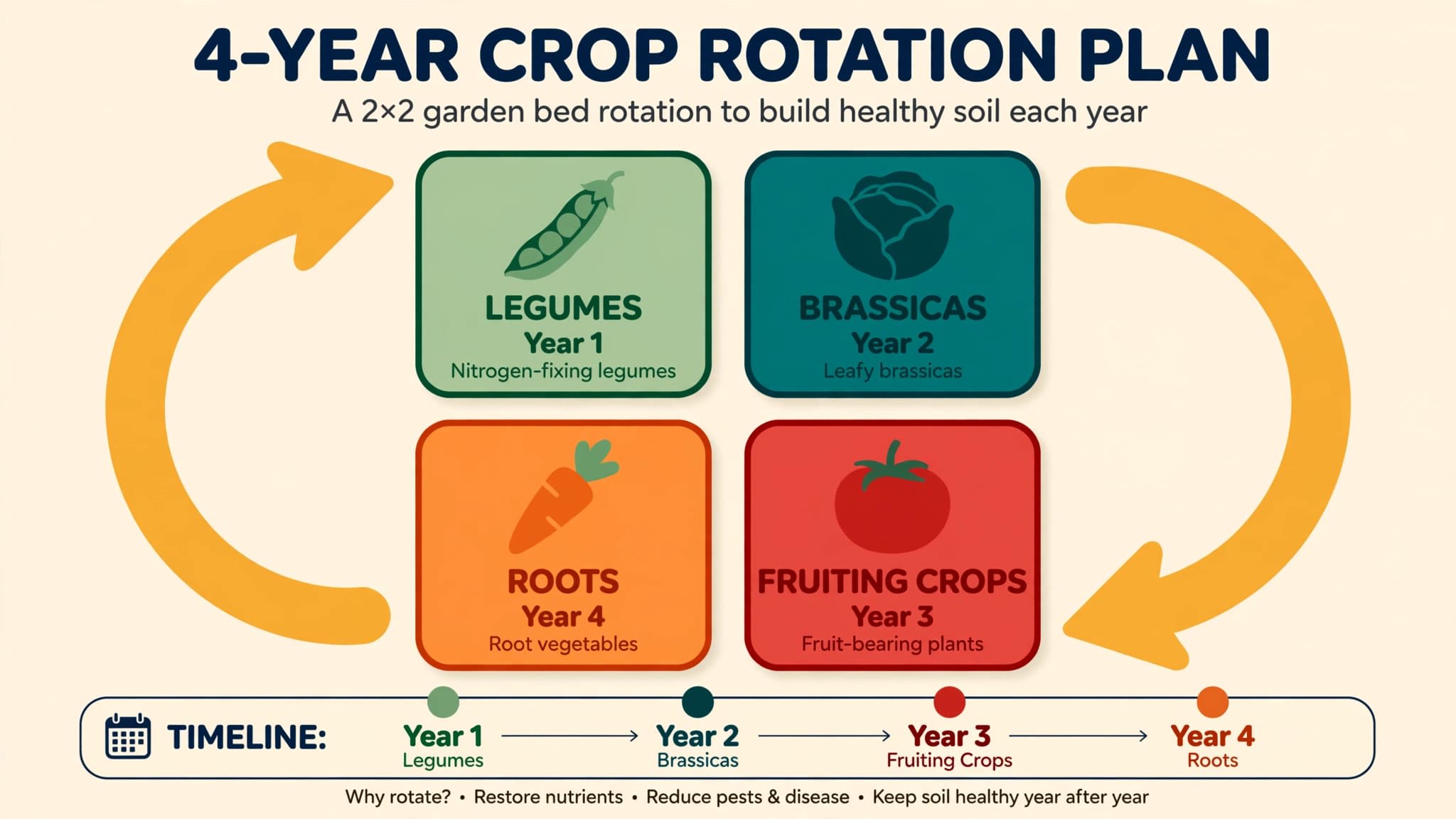
This is repeated in Year 5 with each group spending 4 years away from their starting bed. That space allows soil-borne problems to fade away.
The reason this order will work:
- Legumes first. They apply nitrogen to the subsequent crops.
- Second, leafy greens and brussel sprouts. They are the greatest nitrogen consumers, and therefore, they grow well after beans and peas.
- Fruiting crops third. They enjoy well prepared, fertile soil.
- Roots and alliums are last. Prefer an unexcessively high nitrogen soil that can lead to leaves and misshapen roots.
Make a copy of the chart and fill in the year column with this season's year and save this with your seed packets in your notebook or spreadsheet.
Vegetable Garden Rotation Schedule for 1, 2, 3, or 4 Beds
Not all have four identical beds and that's OK. To find the cycle best suited to a space use this table.
| Beds | How to Rotate | Years Before a Group Returns | Best For |
|---|---|---|---|
| 4 beds | One group per bed; shift everything forward each year | 4 | The gold standard for home gardens |
| 3 beds | Bed 1: fruiting crops. Bed 2: legumes with roots and alliums. Bed 3: leafy greens and brassicas. Shift forward each year | 3 | Medium-sized yards |
| 2 beds | Swap heavy feeders (fruiting crops, leafy greens, brassicas) with lighter ones (legumes, roots, alliums) | 2 | Small yards, with limited disease protection |
| 1 bed or containers | Divide the bed into four quadrants; replace the potting mix in pots each season | Varies | Patios and tiny spaces |
The shorter the time, the less protection, but a two-year rotation is better than re-growing the same plants in the same location.
If there is a second planting (e.g. fall spinach after bush beans), mark a bed with its primary spring or summer crop. If possible, use a plant family other than the main crop for the follow-up.
Fall Crop Rotation Planning: A Step-by-Step Checklist
It is best to lay out next year's plans in the fall. It's still fresh in your mind as it came out of the ground, the earth is still soft, and there's still time to refine before the spring rush. Do this checklist as beds clear and follow our advice on what to do before the first frost for the remainder of your yard.
- Clear spent plants. Remove and throw away infected vines as opposed to the compost pile, such as blighted tomatoes or mildewed squash. If you don't feel confident that your compost consistently heats up above 140° F, don't compost them. (Source: University extension composting guidance)
- Test your soil. Your state Cooperative Extension office may conduct a basic test for $10 to $30 and provide you with the nutrient needs of each bed. Be careful when buying amendments as some have sewage sludge in them (Source: State extension soil testing labs).
- Plant garlic to correct bed. This year's bed of fruiting plants is next year's bed of roots-and-alliums; the ideal place to plant garlic in the fall. Cloves are most often planted 4-6 weeks prior to the ground freezing. Source: University Extension Services.
- Protect bare soil. Plant a cover crop in planted empty beds. Oats will typically die back in a severe frost, and winter rye will continue to grow through spring. (USDA Natural Resources Conservation Service) See how cold your winters are on the USDA Plant Hardiness Zone Map. Healthy shredded leaves also provide protection for the soil as described in our article on leaving leaves in garden beds.
- Label groups for the following year. Stake each bed with its new group and tape your new sketch in a place that you will see in the spring.

Conclusion:
A rotation system doesn't have to be complicated or take up a lot of space in a big yard. It requires some whimsical drawing, four plant groups and a habit for writing down what grew where. So do it this fall and next spring you won't have to guess when to plant. Before the beds are too fresh in the memory, watch our video about fall cover crops for vegetable gardens, to cover and nourish the soil throughout the winter.
References:
- University Extension Services — University of Minnesota Extension and Cornell University's Vegetable MD Online: plant disease persistence, clubroot, early blight, fusarium wilt, pest overwintering, recommended rotation intervals, and fall garlic planting timing.
- USDA Natural Resources Conservation Service (NRCS), "Cover Crop Conservation Practice Standard (Code 340)": nitrogen fixation by legumes, crop nutrient use, cover crop selection, and winter-kill.
- State Extension Soil Testing Labs (Land-Grant Universities; find yours through the USDA National Institute of Food and Agriculture directory): typical home soil test fees. (Fees vary by state; confirm current prices before publishing.)
- University Extension Composting Guidance — for example, Penn State Extension and the Cornell Waste Management Institute: compost pile temperatures and handling of diseased plant debris.
- USDA Agricultural Research Service, "USDA Plant Hardiness Zone Map"
Frequently Asked Questions
What is a vegetable garden crop rotation plan?
How long should a vegetable garden rotation schedule be?
What crops to rotate each year in a small garden?
Can I plant tomatoes in the same spot two years in a row?
When is the best time for fall crop rotation planning?
Do raised beds and containers need rotation too?
About Philemon John
Philemon John is the Lead Author of Broad Gardening and has more than 10 years of experience growing and caring for plants in the backyard. He is particularly passionate about vegetable gardening, soil building and pest management and offers real-life advice and tips to support home gardeners.